home

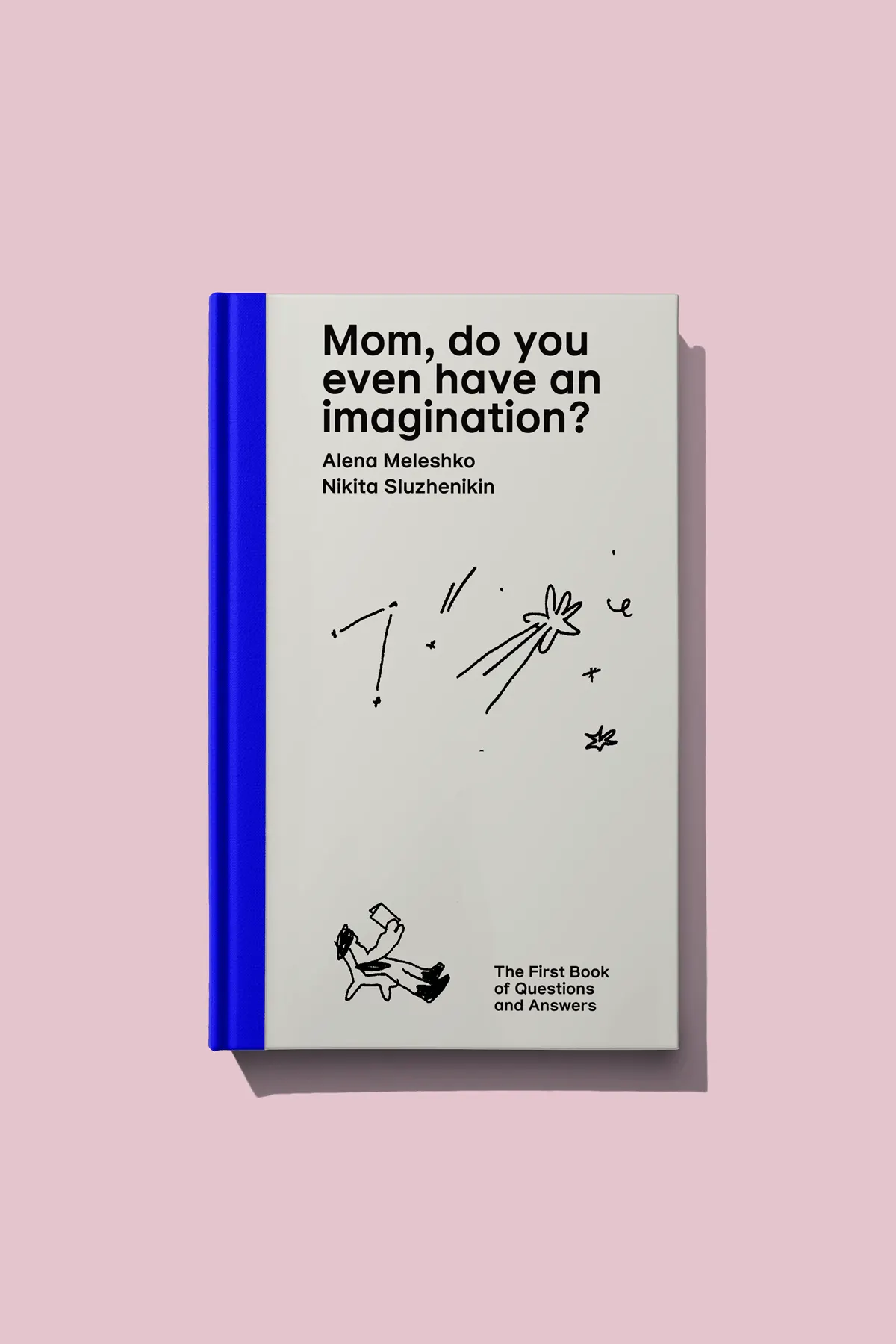
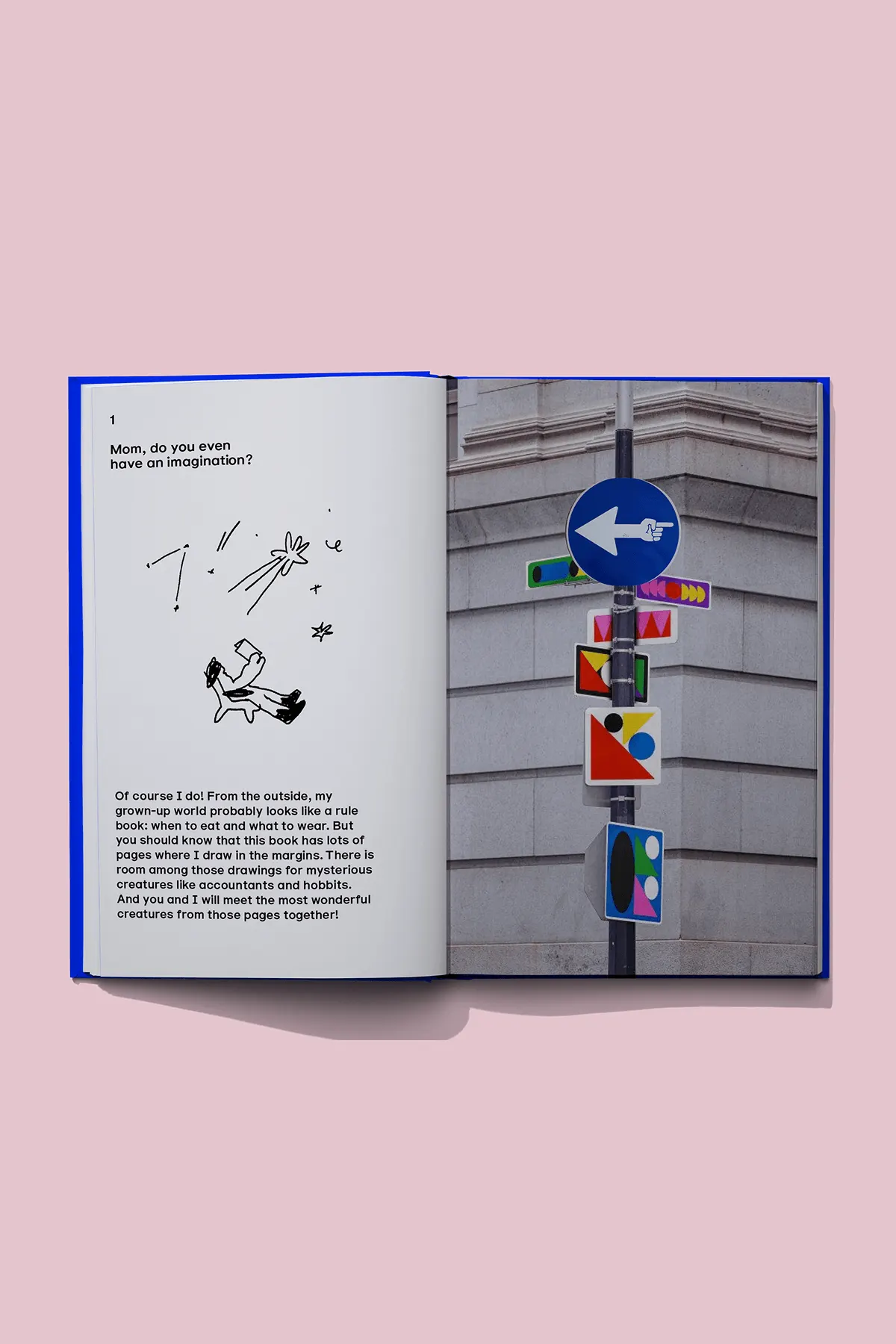
Mom, do you even have an imagination?

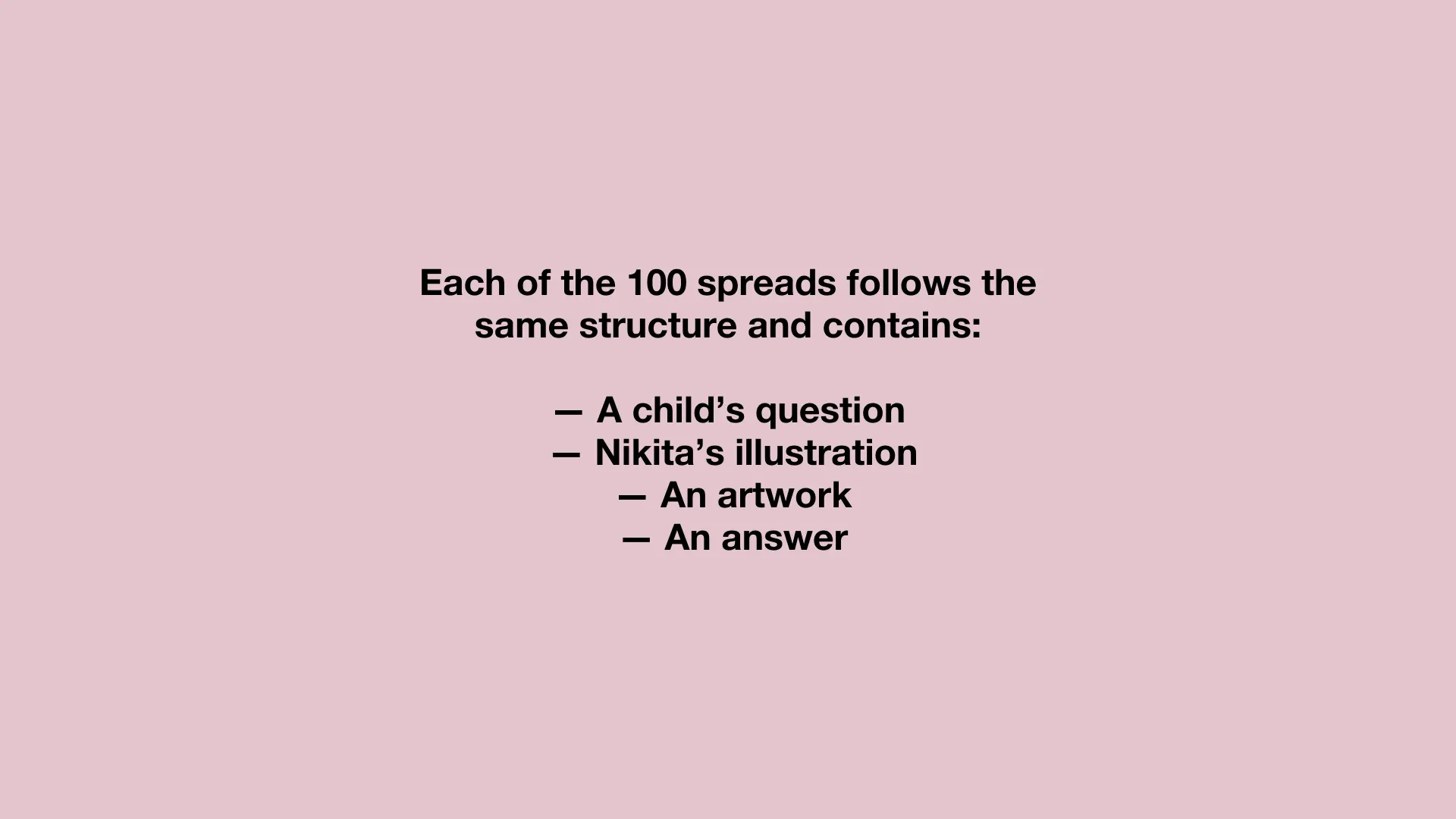
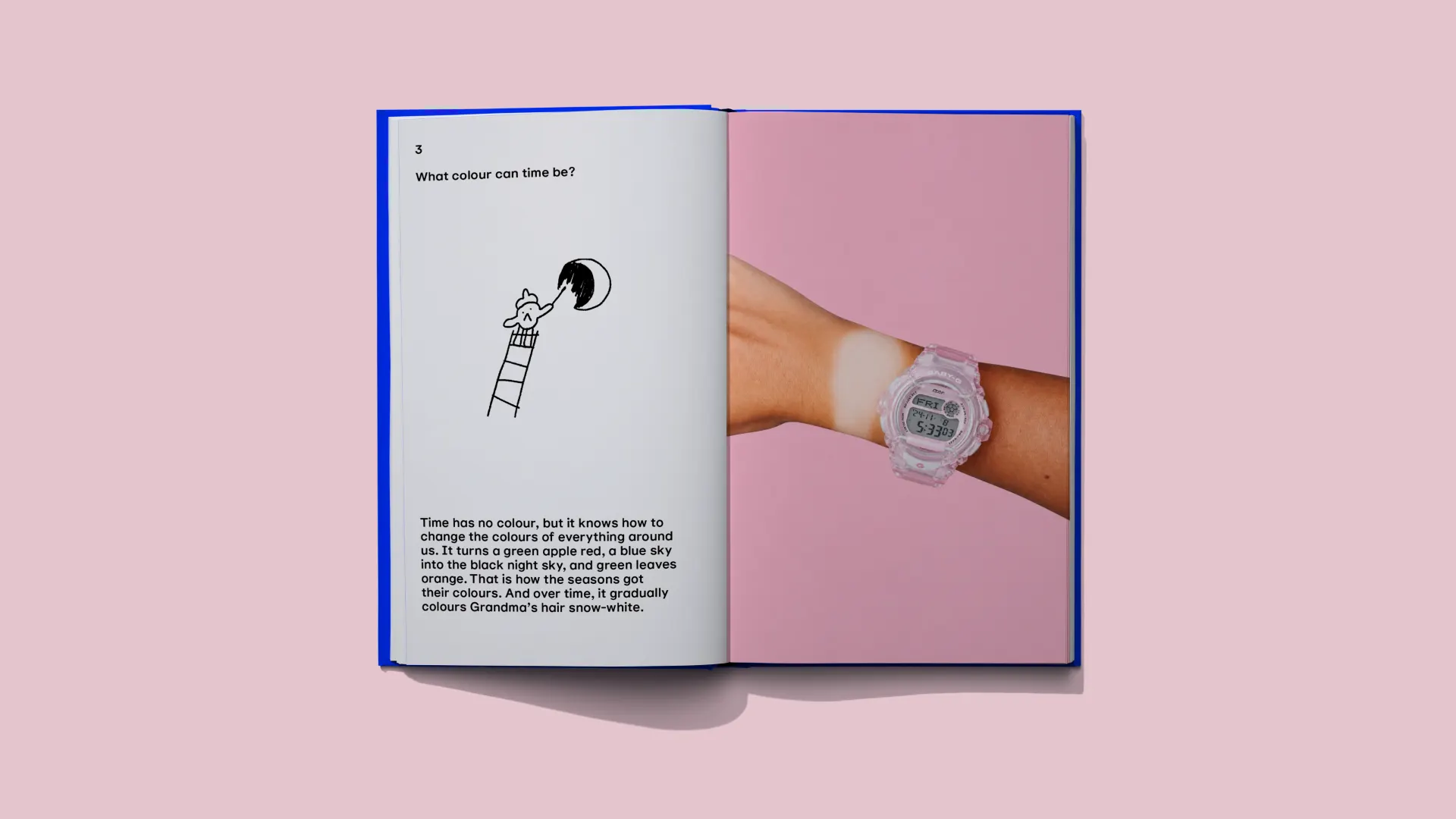
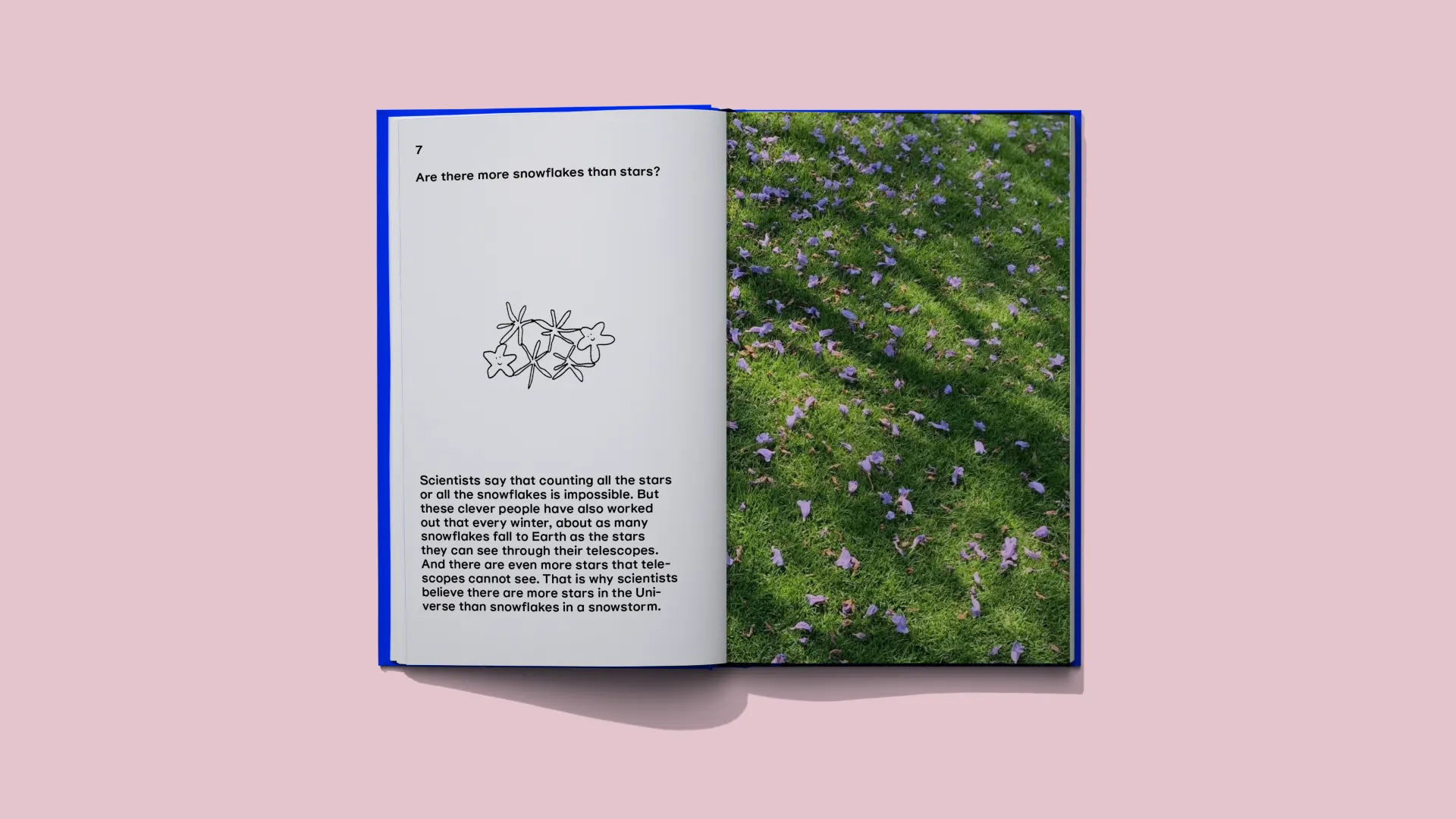
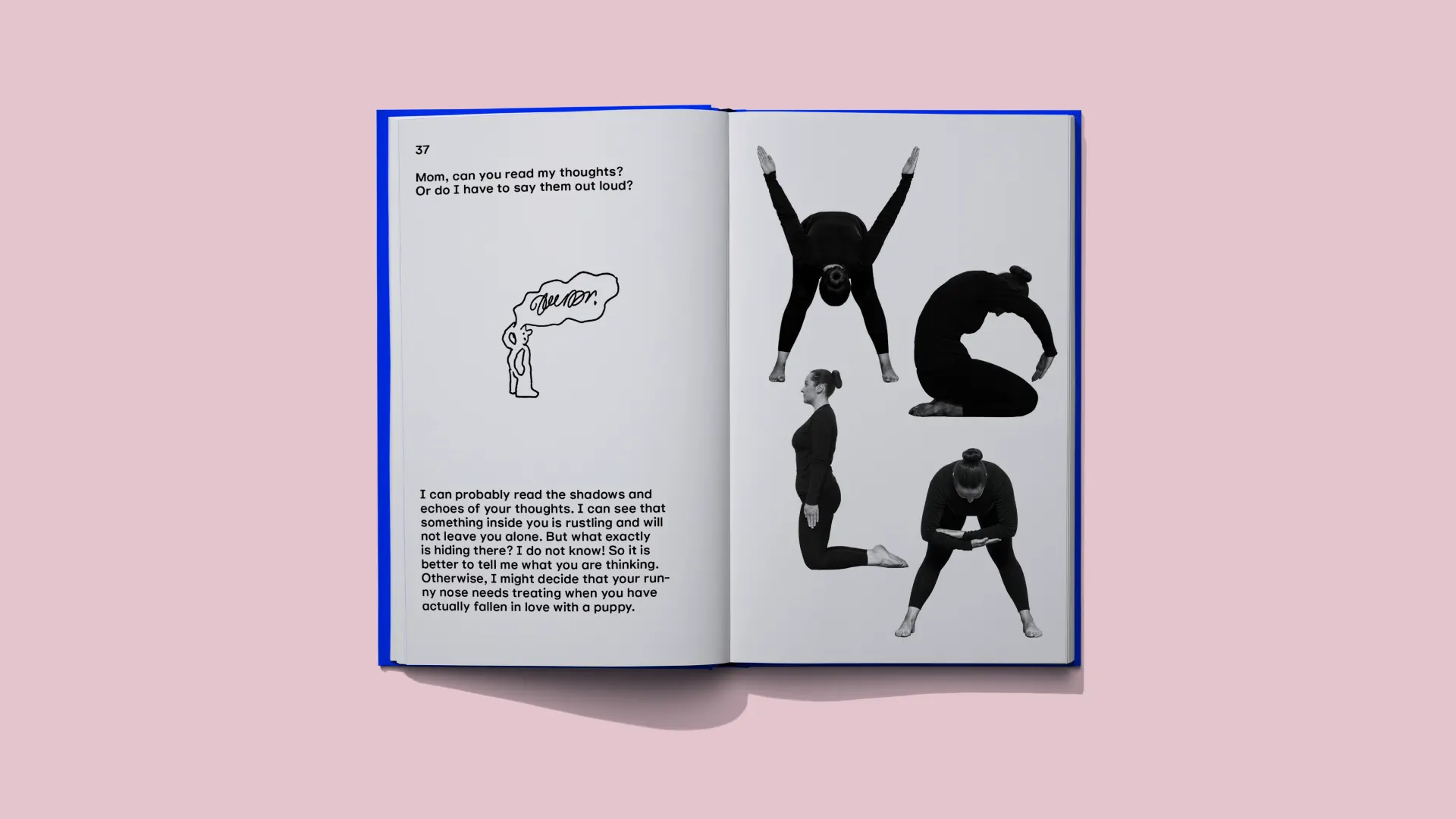
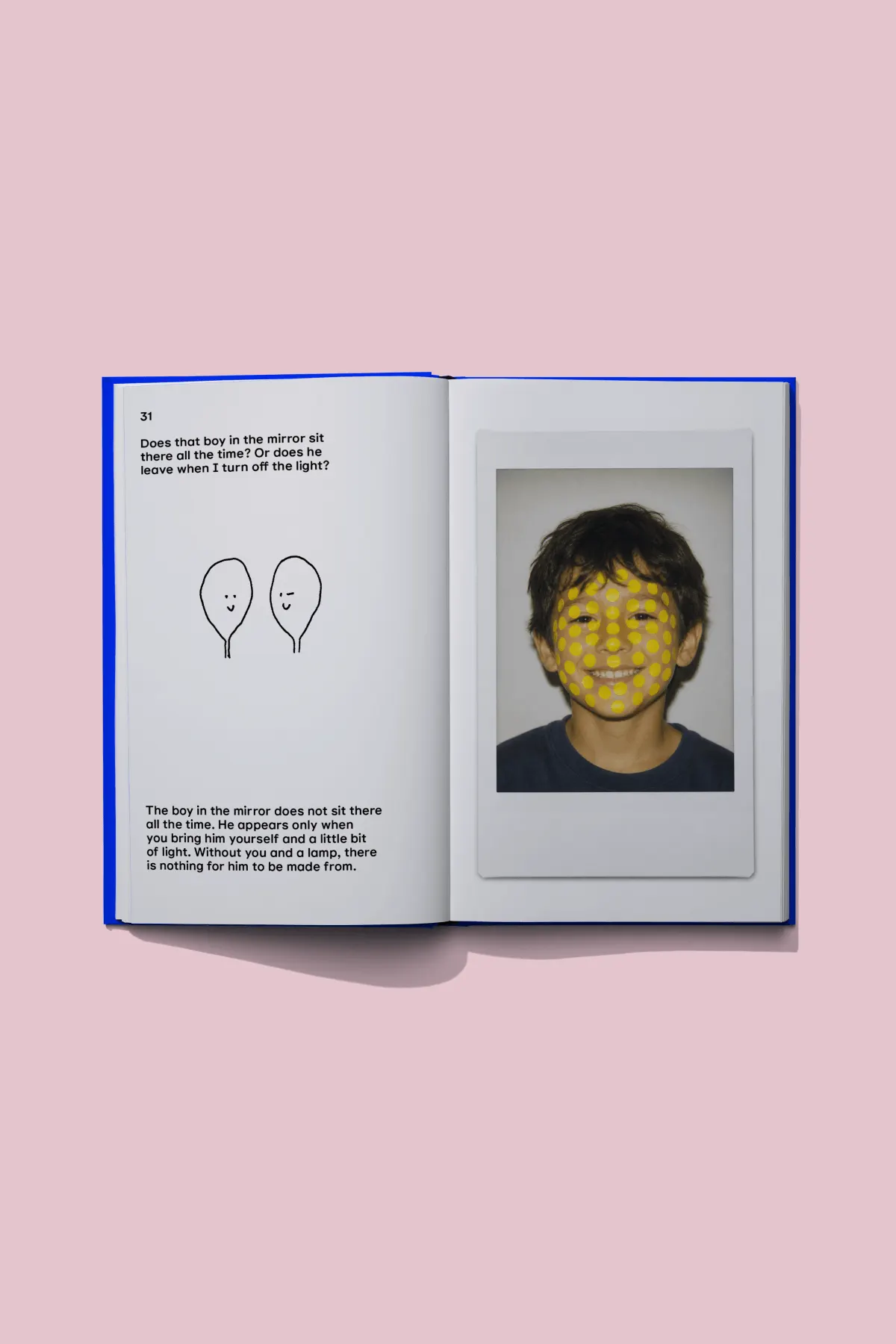
The Book of Questions 1 Mom, do you even have an imagination? / A family book for children at the intersection of philosophy and contemporary art The Book of Questions 3 100 questions; 100 answers; 100 illustrations; 100 artworks. The Book of Questions 5 Each of the 100 spreads follows the same structure and contains: — A child’s question / — Nikita’s illustration / — An artwork / — An answer The Book of Questions 7 The Book of Questions 8 The Book of Questions 9 The end of the book provides clues to the artworks → The Book of Questions 11 For example: What does a snail say? The Book of Questions 13 The Book of Questions 14 So, the idea is to respond to every question a child asks, using the words of parents and the language of contemporary art. The Book of Questions 16 Together with children, we think about everything under the sun: from the daily lives of people and snails to the edges of the Universe and the properties of time. The Book of Questions 18 The Book of Questions 19 The Book of Questions 20 The Book of Questions 21 The Book of Questions 22 The Book of Questions 23 The Book of Questions 24 The Book of Questions 25 OK. And why do we need a book like this? For children — to practise asking questions, looking for answers and finding them. Or, as adults put it, to develop critical thinking and a philosophical view of everyday things. And, of course, to nurture curiosity.
For parents — to remember to look at familiar things from different, strange angles and find new answers to unexpected or familiar questions. Read the questions and answers → Study the illustrations → Decode the metaphors → Reflect → Come up with questions → Search for answers → Create By the way, the question “Mom, do you even have an imagination?” came from a four-year-old boy who loves drawing, art, hiking and asking personal questions. And the answer is… The Book of Questions 31 Can you guess why? Write us an email
1/32
The Book of Questions 1 Mom, do you even have an imagination? / A family book for children at the intersection of philosophy and contemporary art The Book of Questions 3 100 questions; 100 answers; 100 illustrations; 100 artworks. The Book of Questions 5 Each of the 100 spreads follows the same structure and contains: — A child’s question / — Nikita’s illustration / — An artwork / — An answer The Book of Questions 7 The Book of Questions 8 The Book of Questions 9 The end of the book provides clues to the artworks → The Book of Questions 11 For example: What does a snail say? The Book of Questions 13 The Book of Questions 14 So, the idea is to respond to every question a child asks, using the words of parents and the language of contemporary art. The Book of Questions 16 Together with children, we think about everything under the sun: from the daily lives of people and snails to the edges of the Universe and the properties of time. The Book of Questions 18 The Book of Questions 19 The Book of Questions 20 The Book of Questions 21 The Book of Questions 22 The Book of Questions 23 The Book of Questions 24 The Book of Questions 25 OK. And why do we need a book like this? For children — to practise asking questions, looking for answers and finding them. Or, as adults put it, to develop critical thinking and a philosophical view of everyday things. And, of course, to nurture curiosity.
For parents — to remember to look at familiar things from different, strange angles and find new answers to unexpected or familiar questions. Read the questions and answers → Study the illustrations → Decode the metaphors → Reflect → Come up with questions → Search for answers → Create By the way, the question “Mom, do you even have an imagination?” came from a four-year-old boy who loves drawing, art, hiking and asking personal questions. And the answer is… The Book of Questions 31
1/31

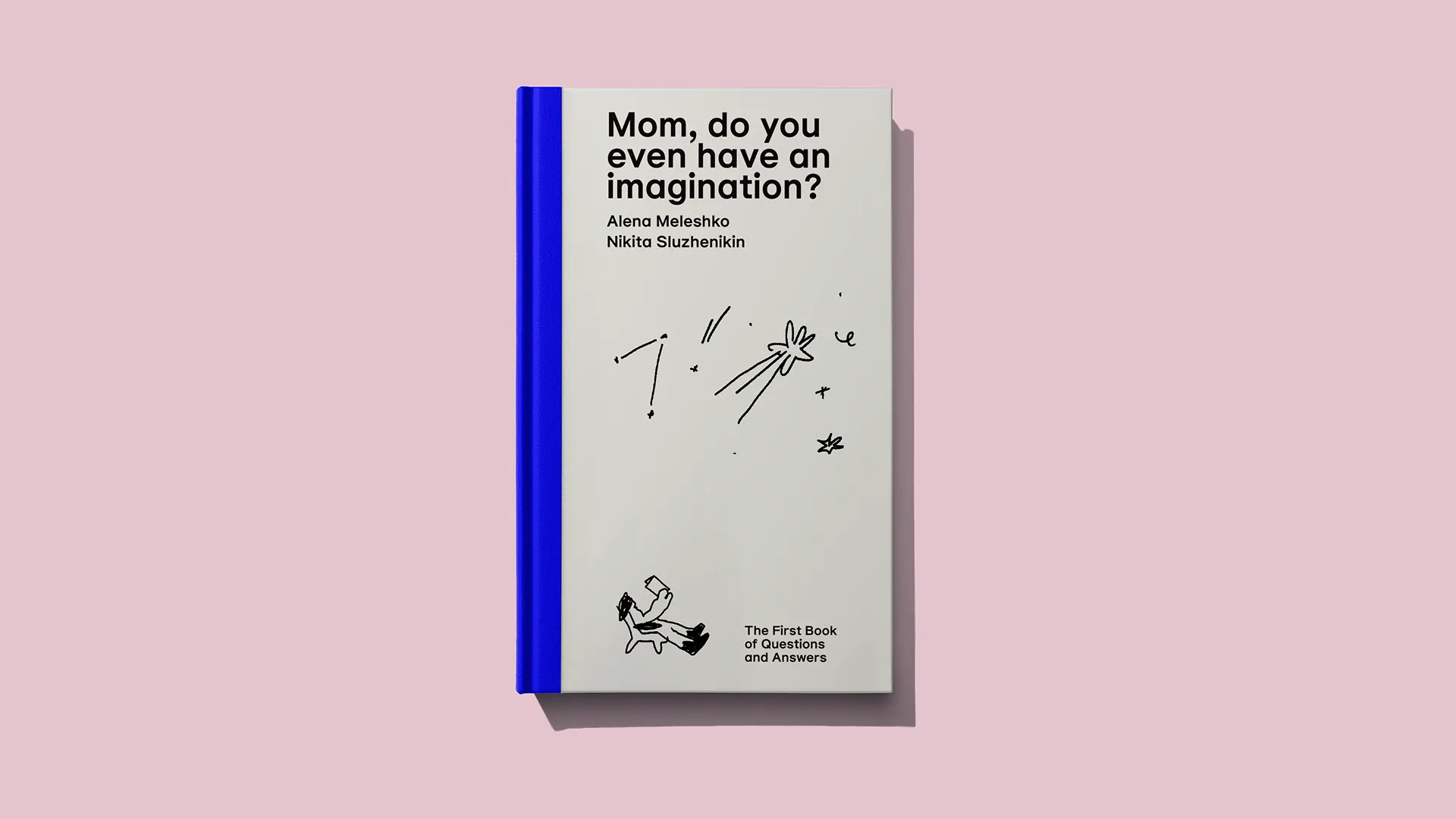
Mom, do you even have an imagination? / A family book for children at the intersection of philosophy and contemporary art

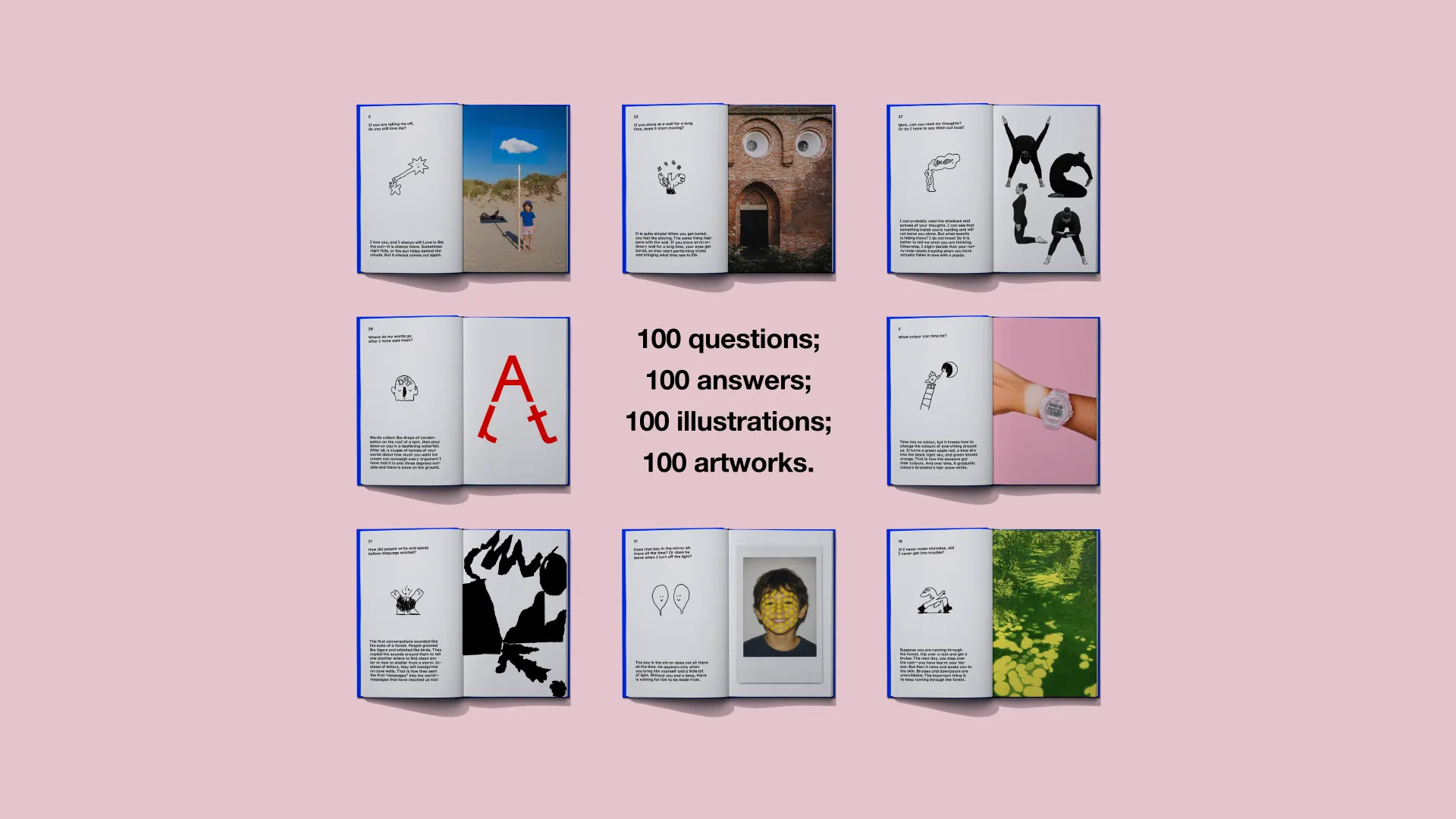
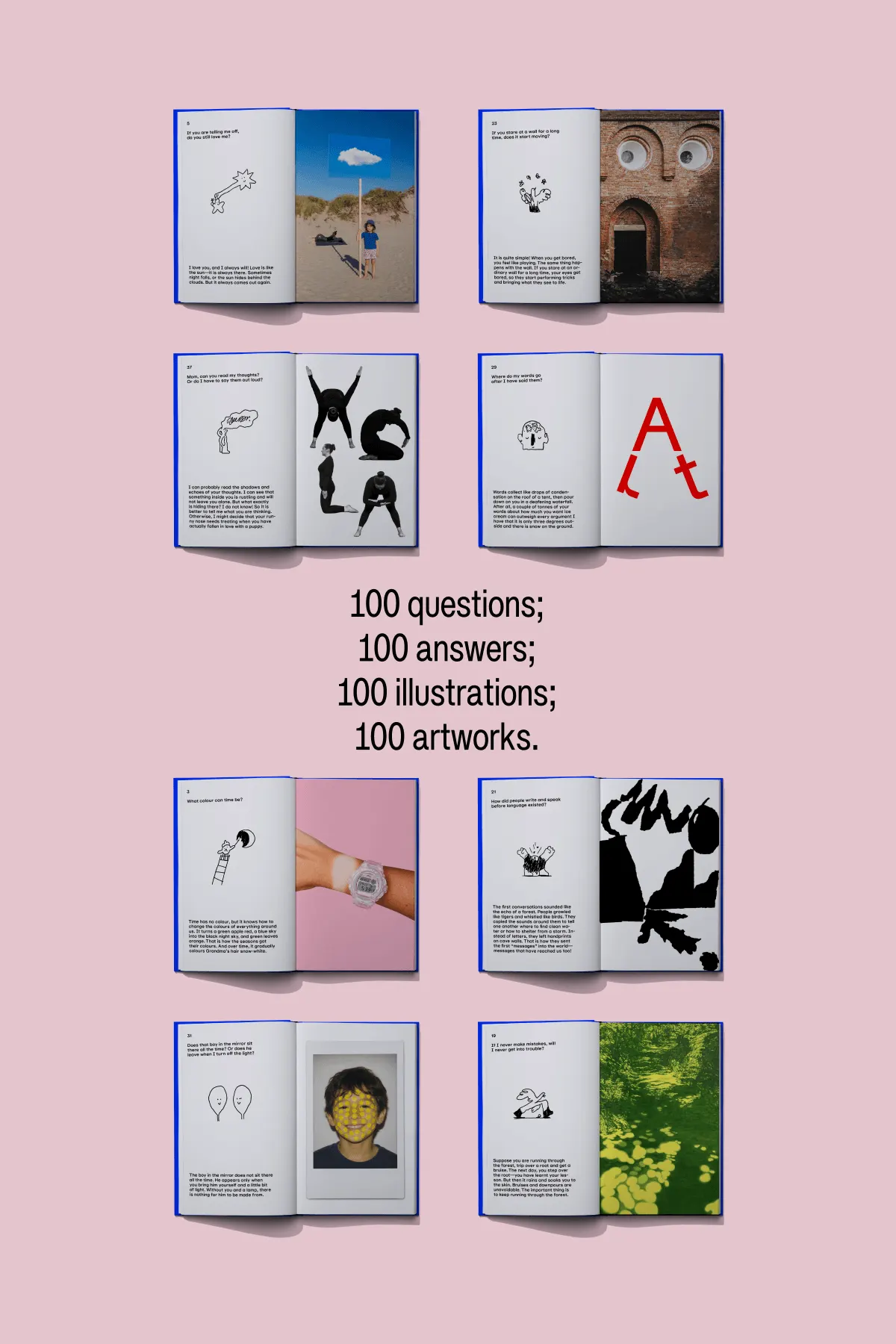
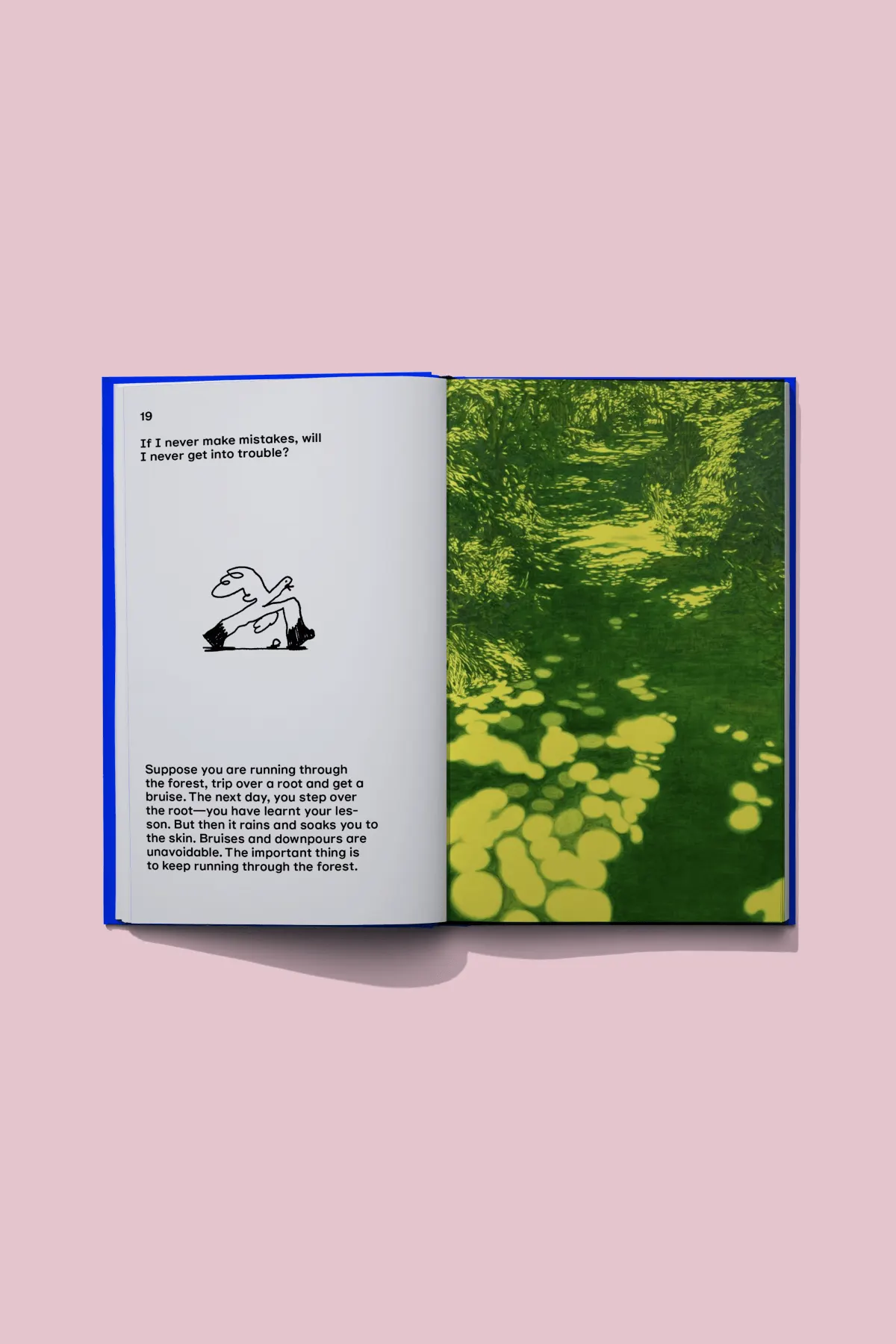
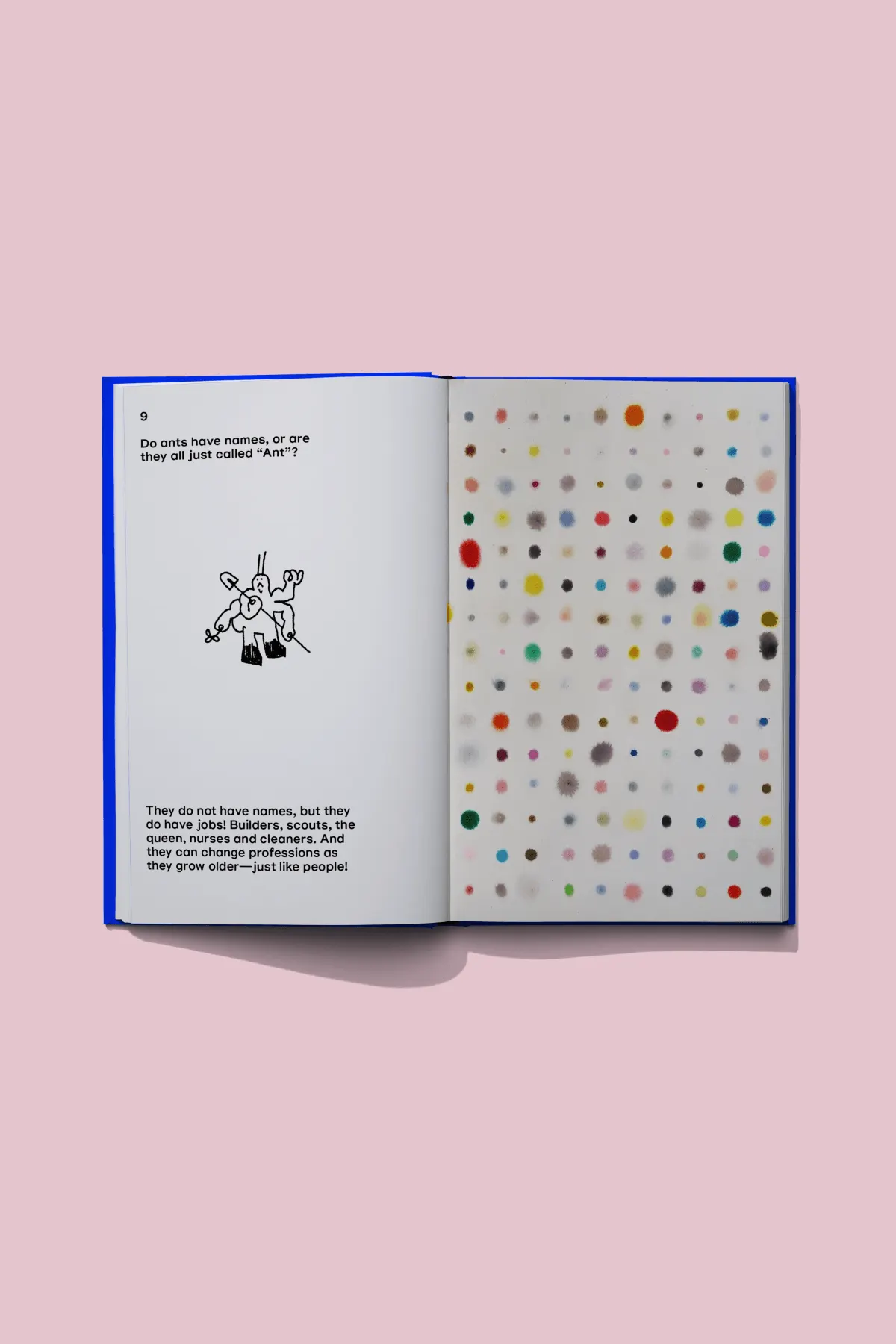
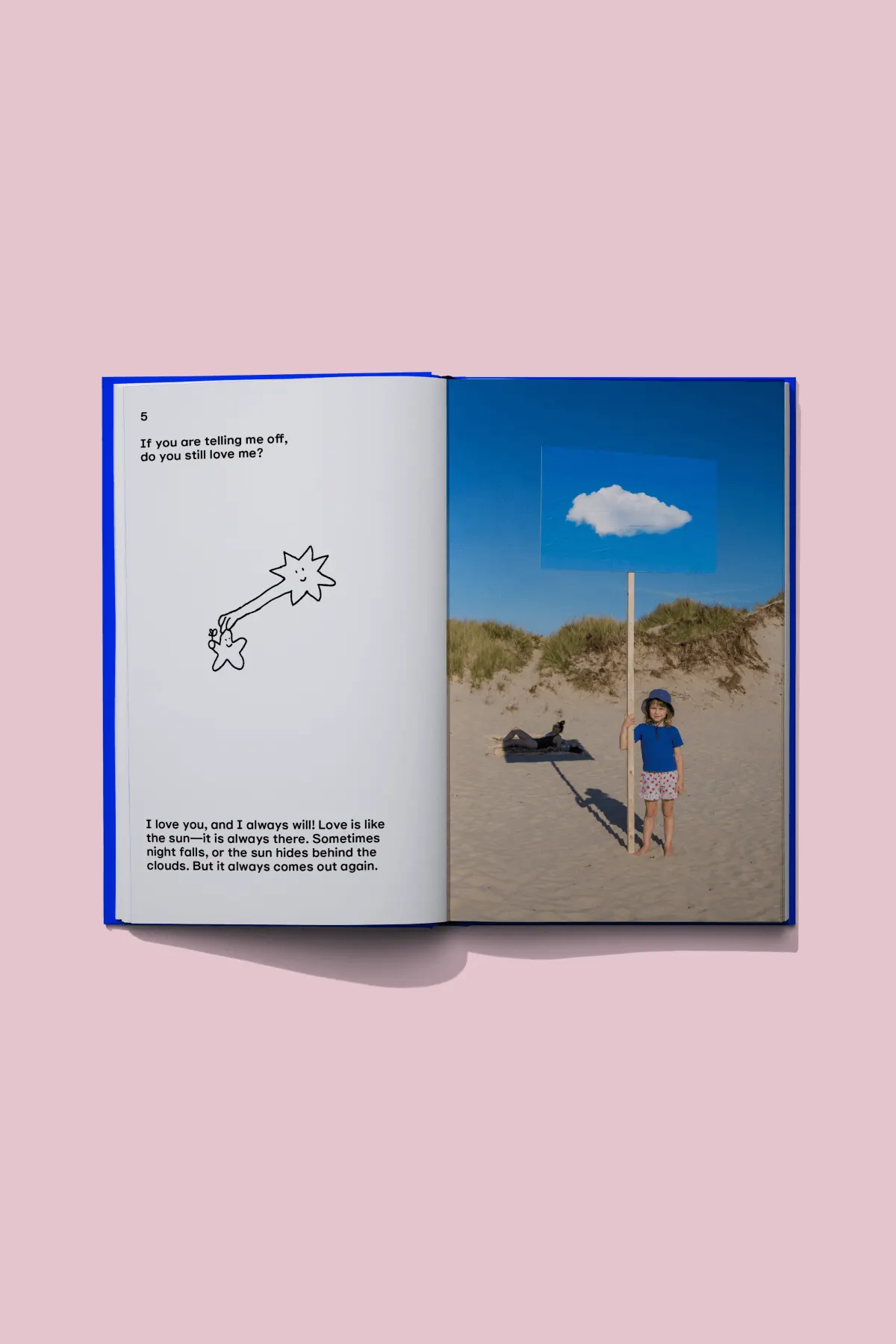
100 questions; 100 answers; 100 illustrations; 100 artworks.

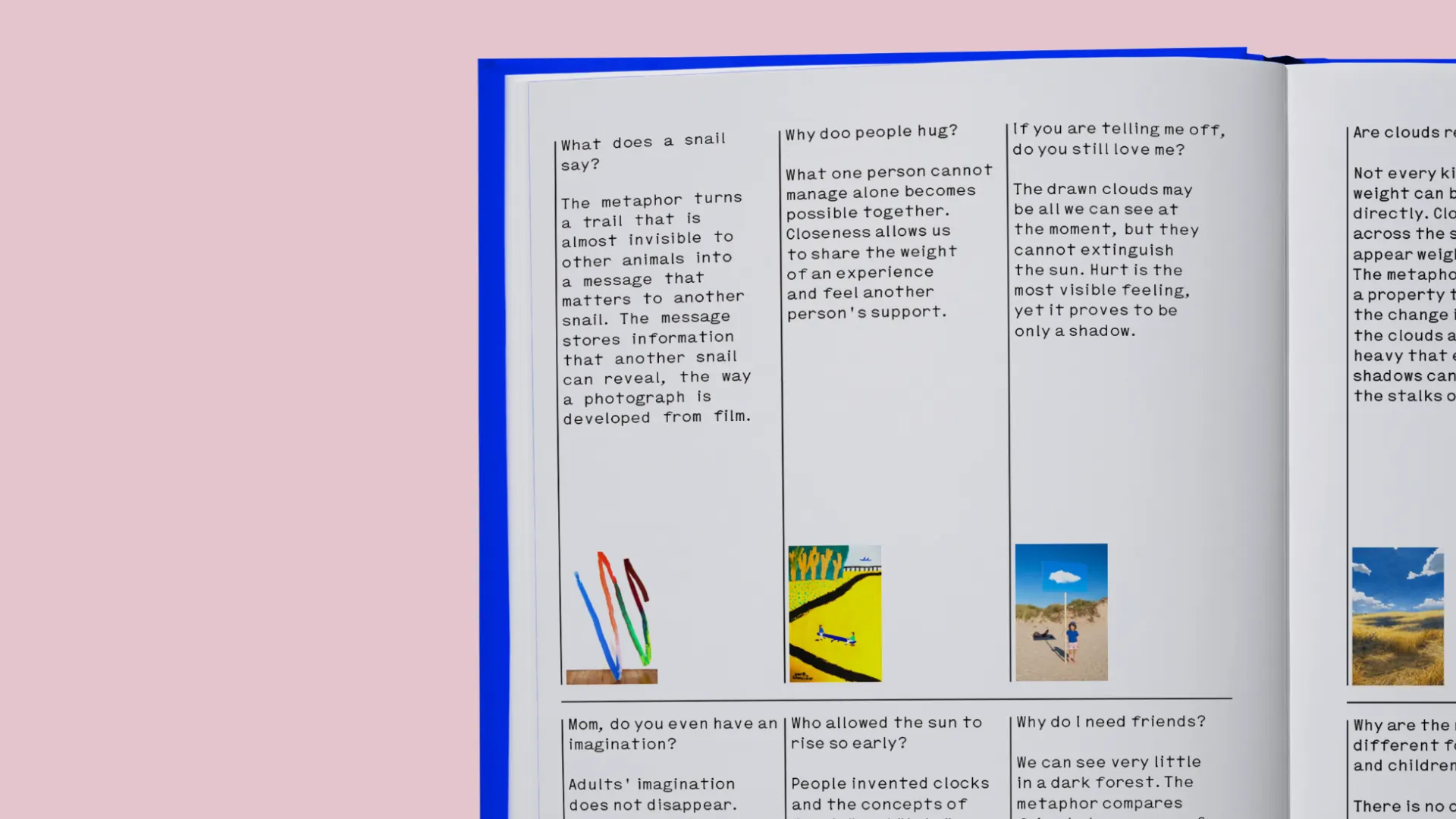
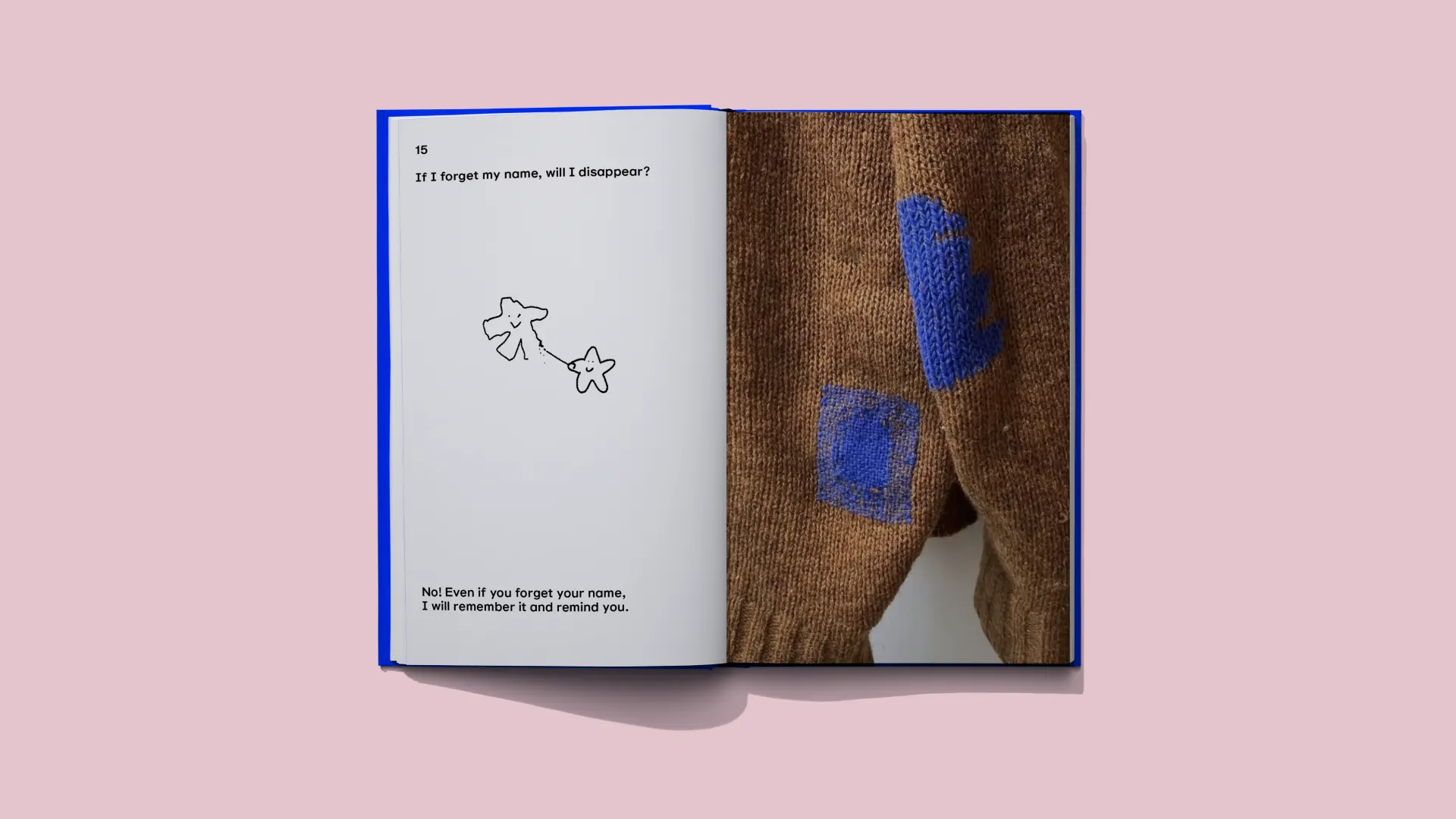
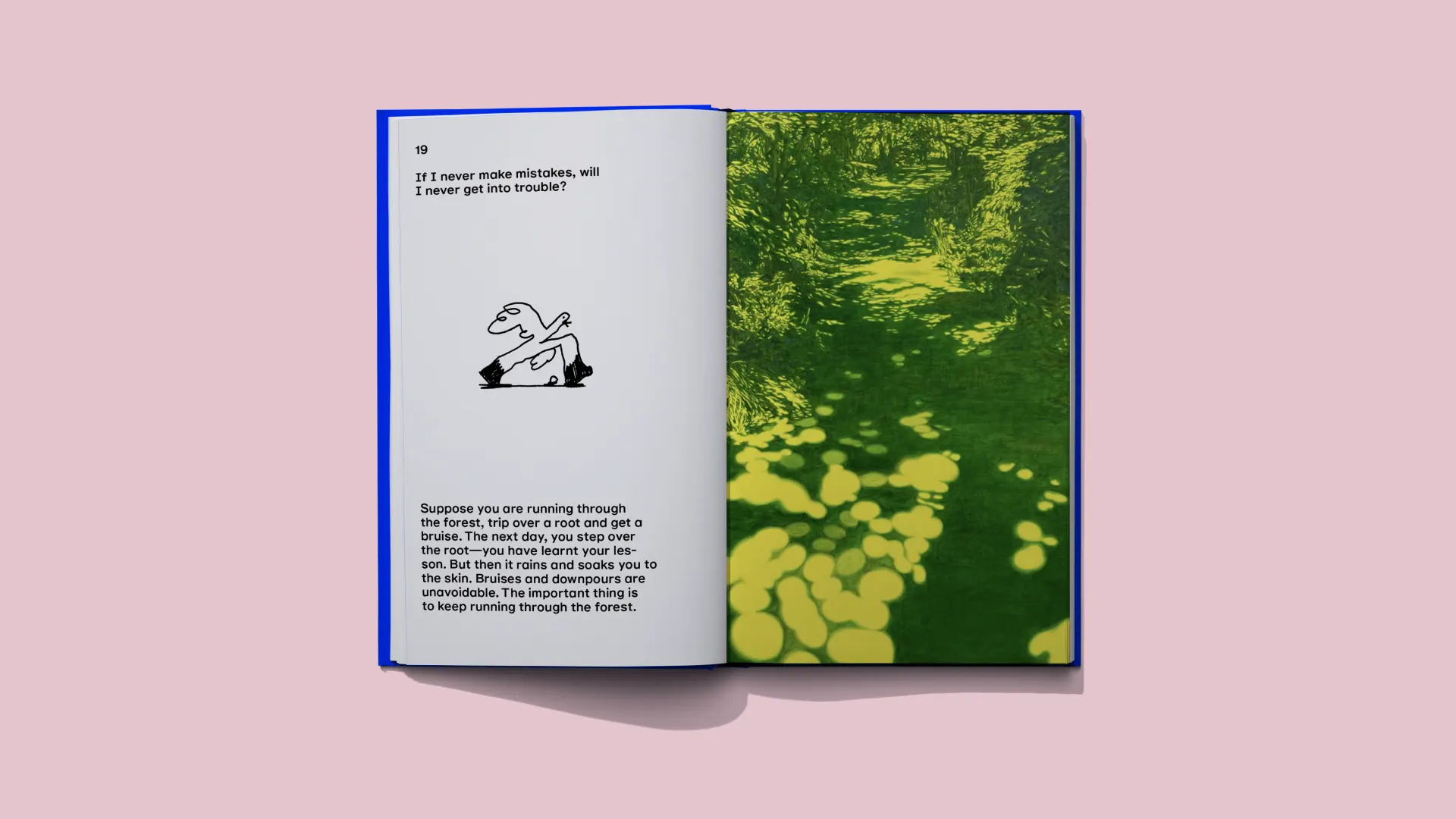
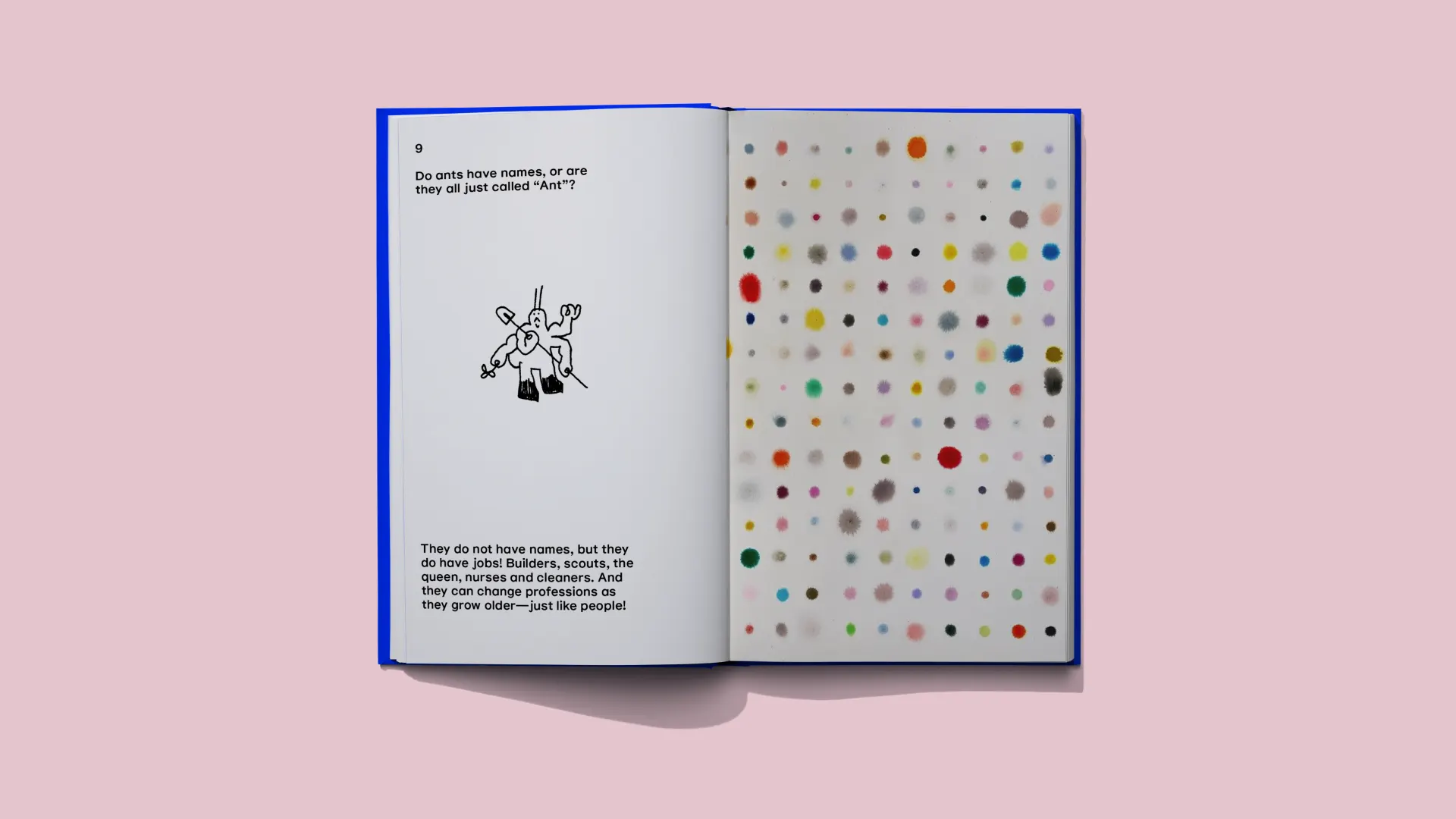
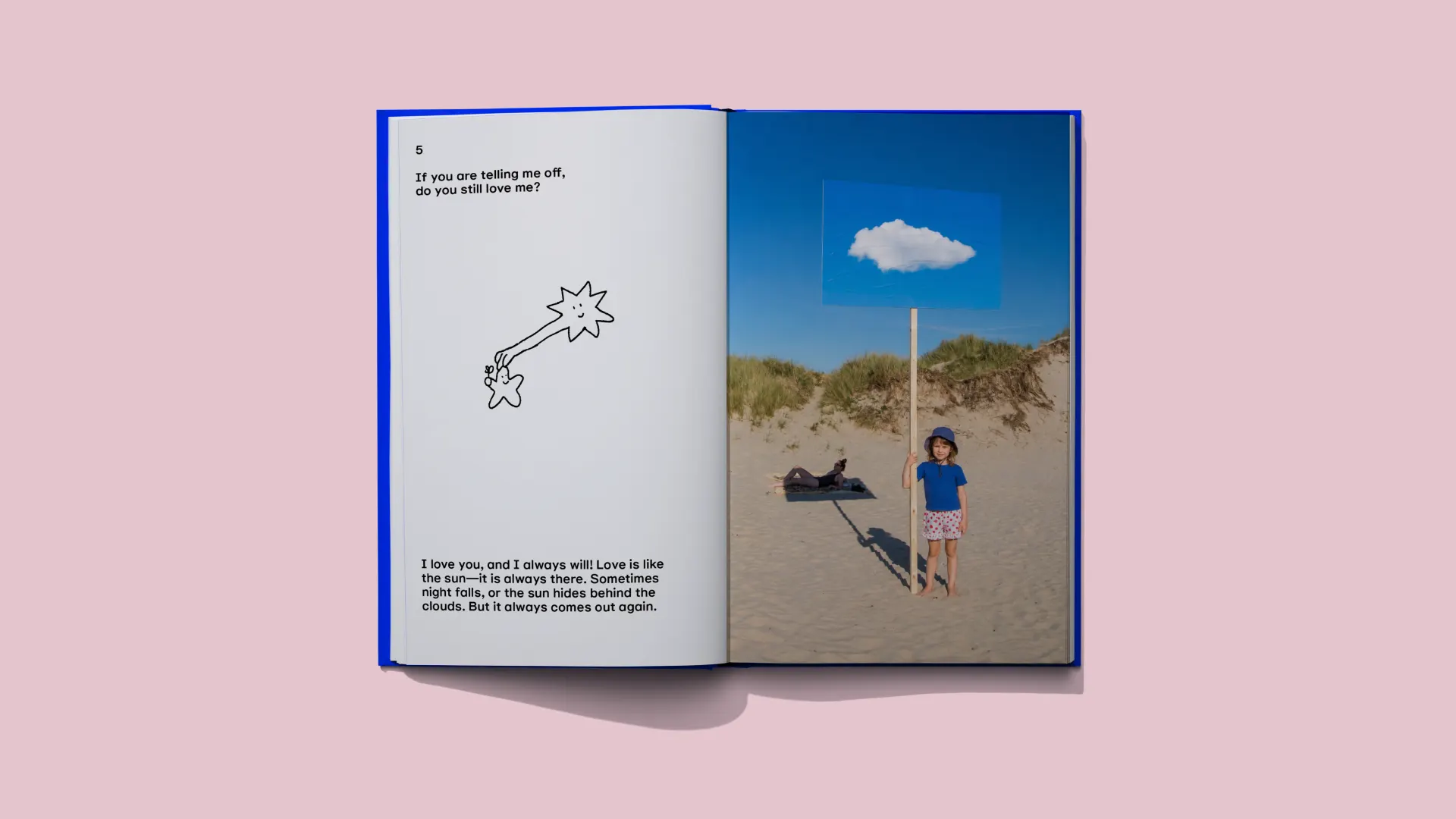
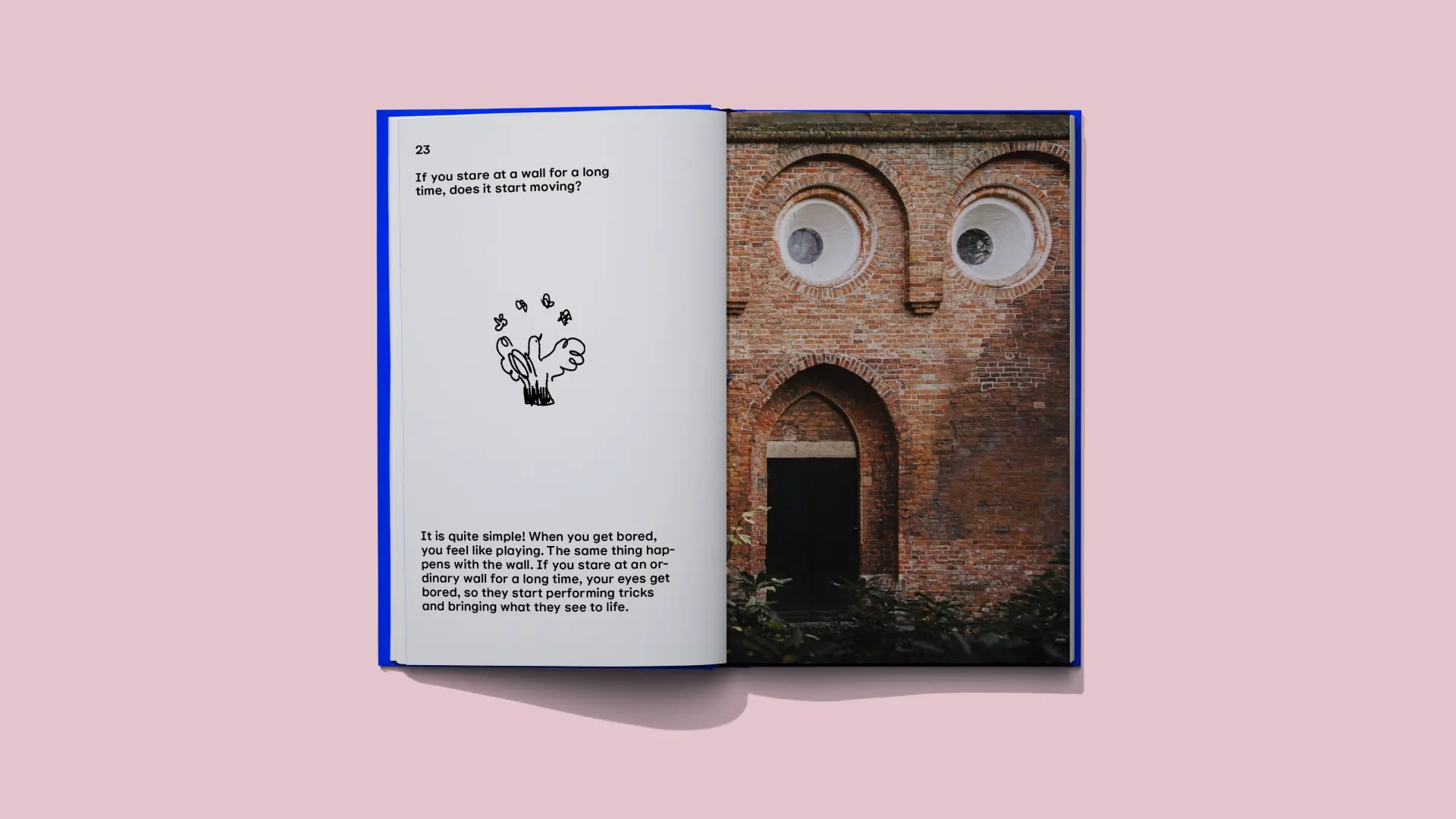
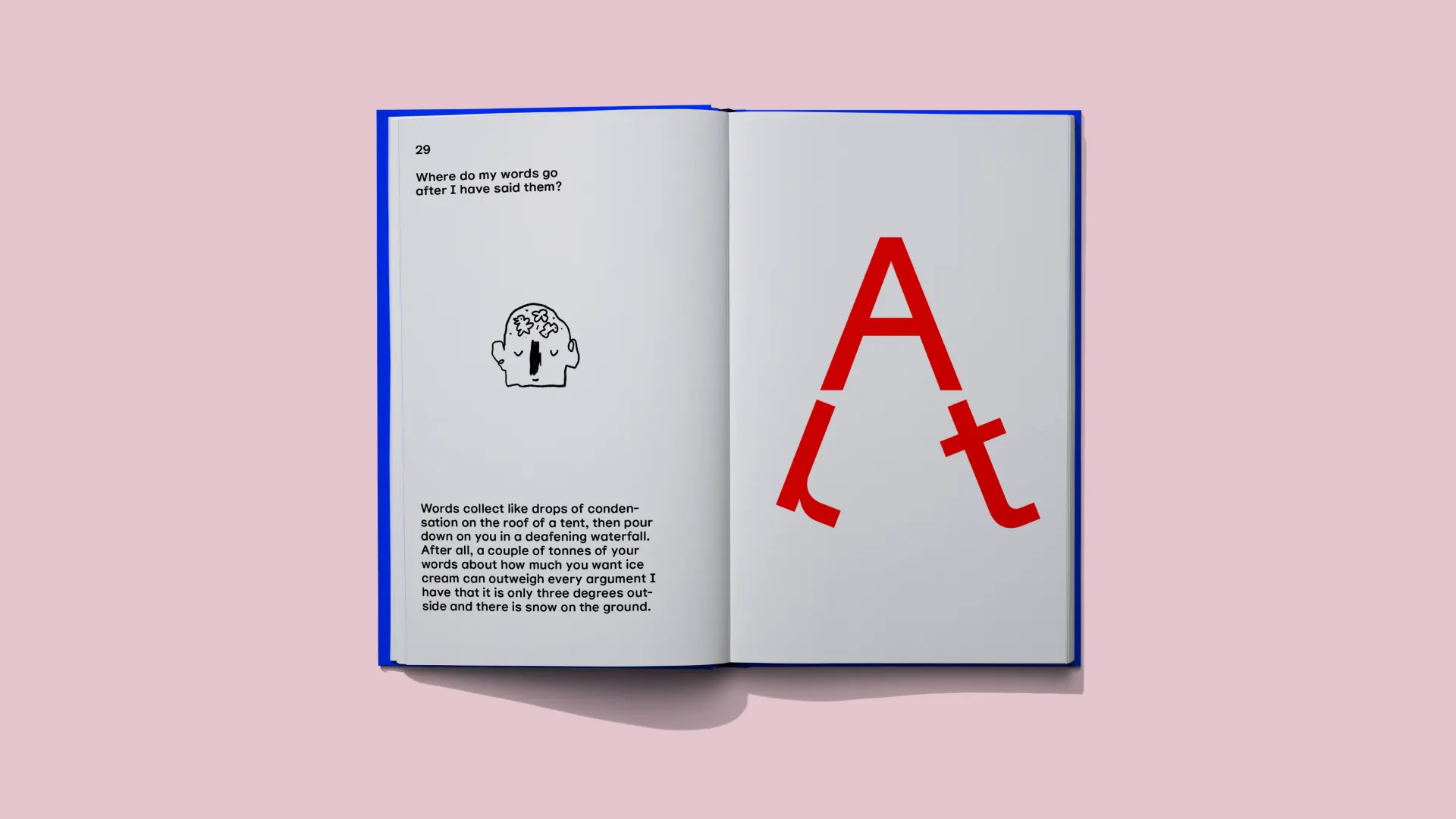
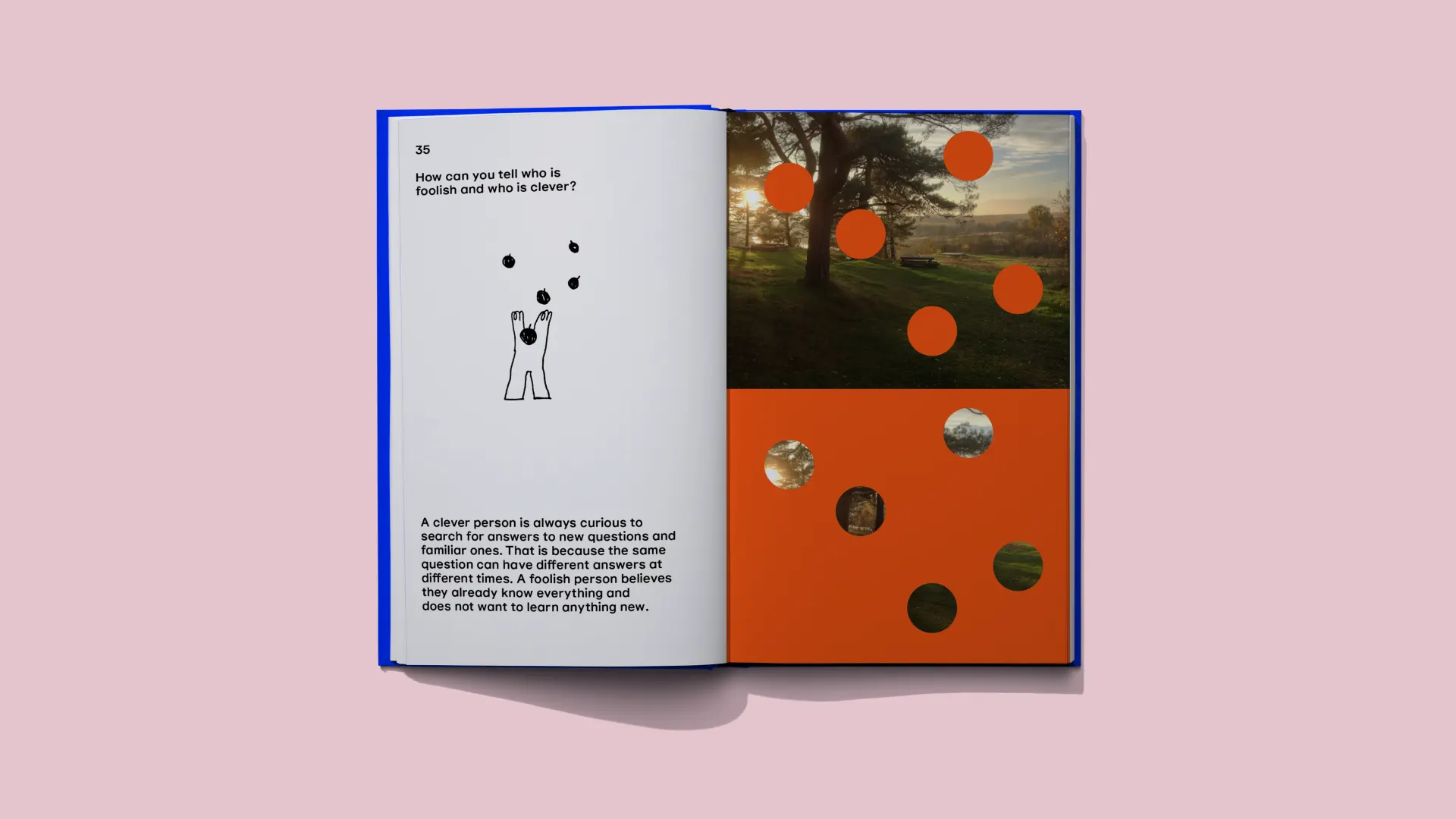
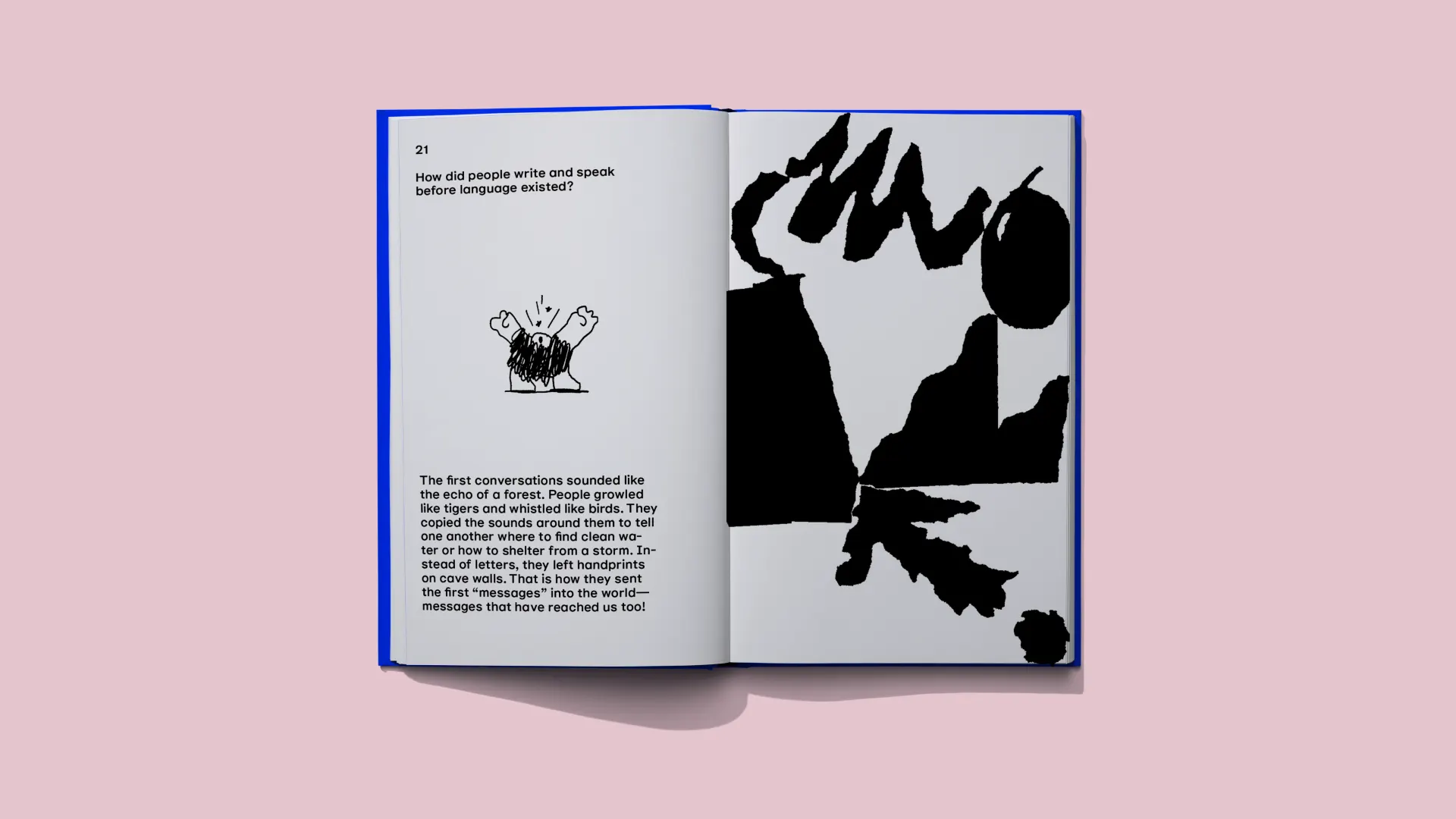
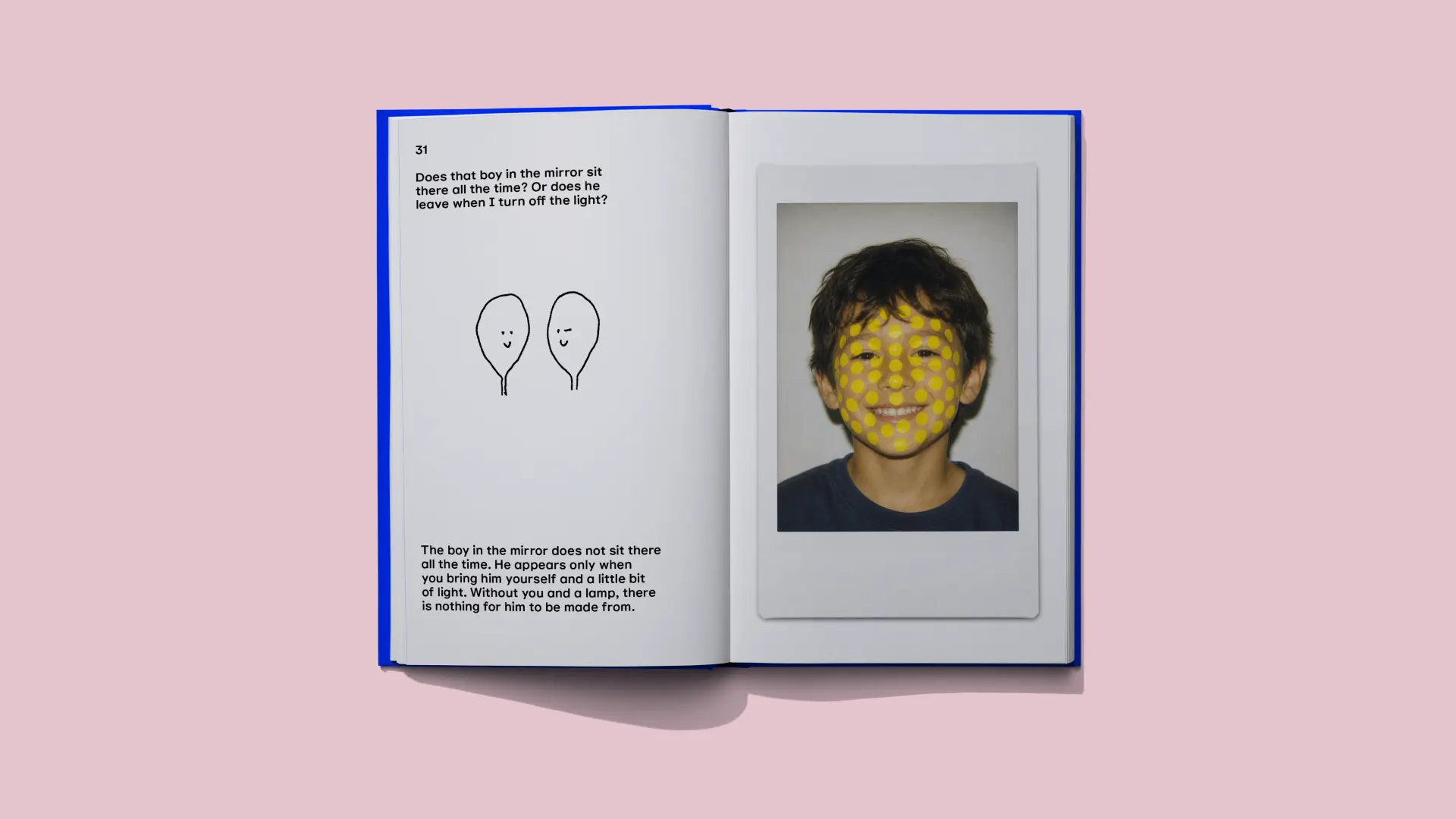
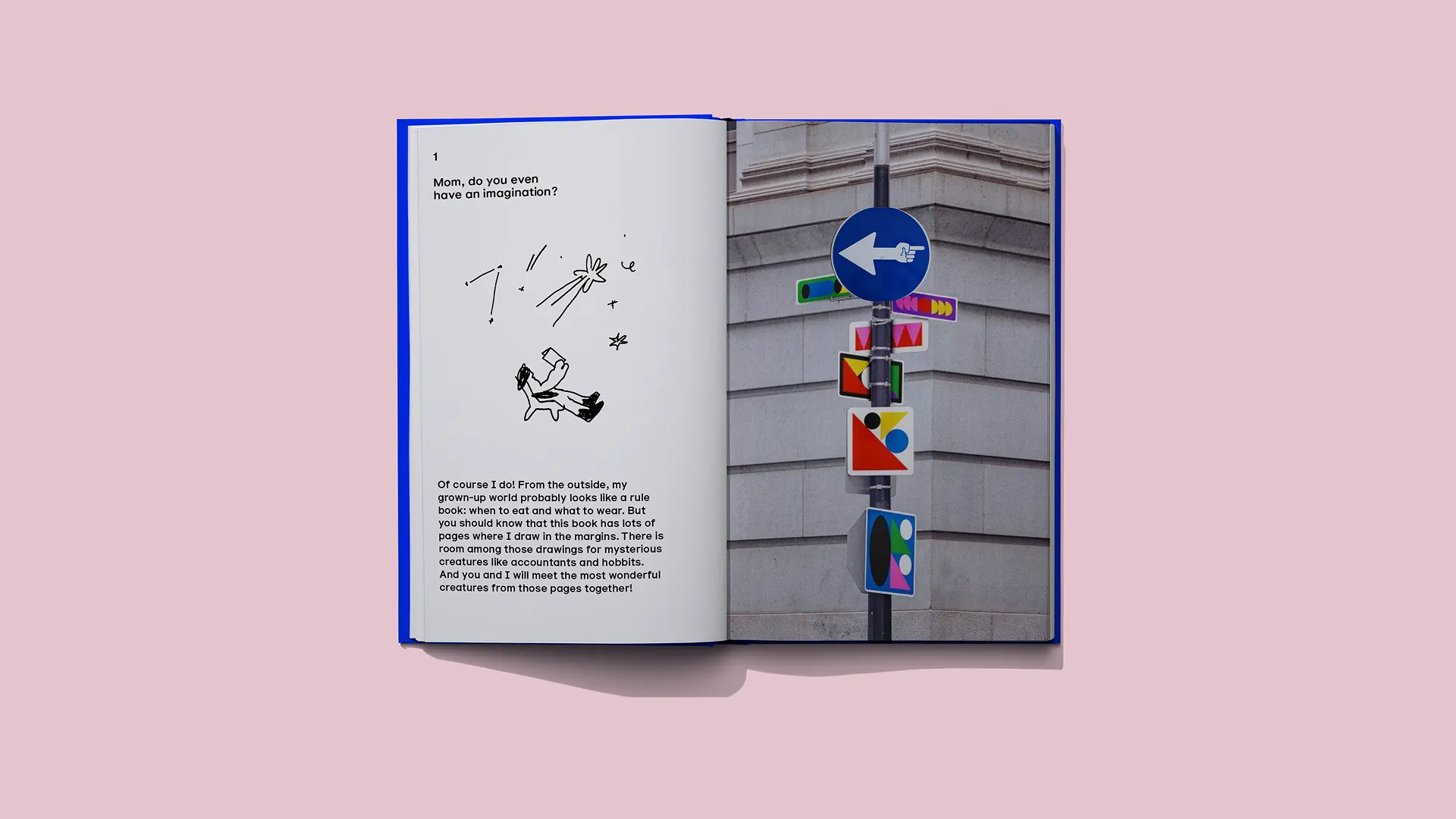
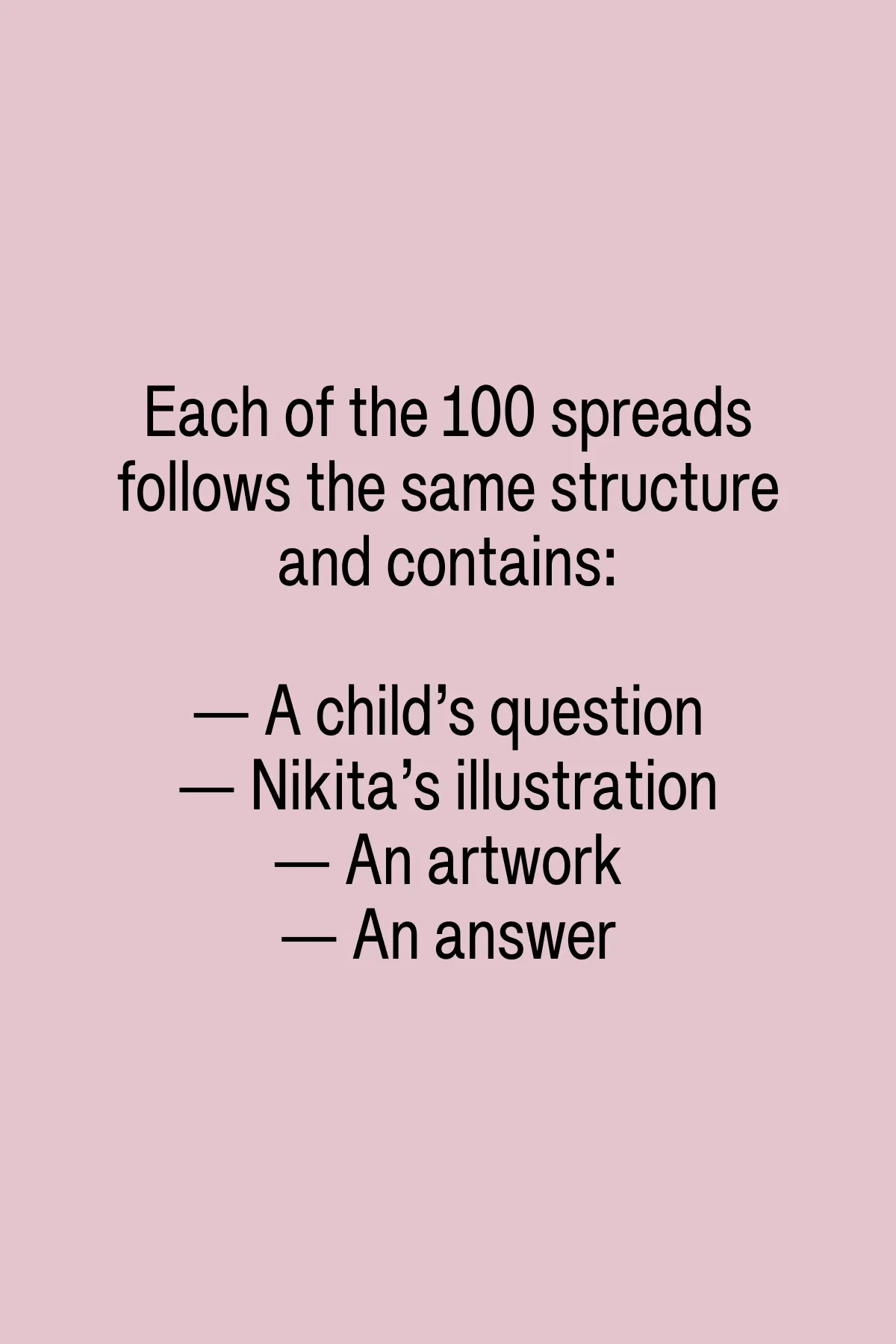
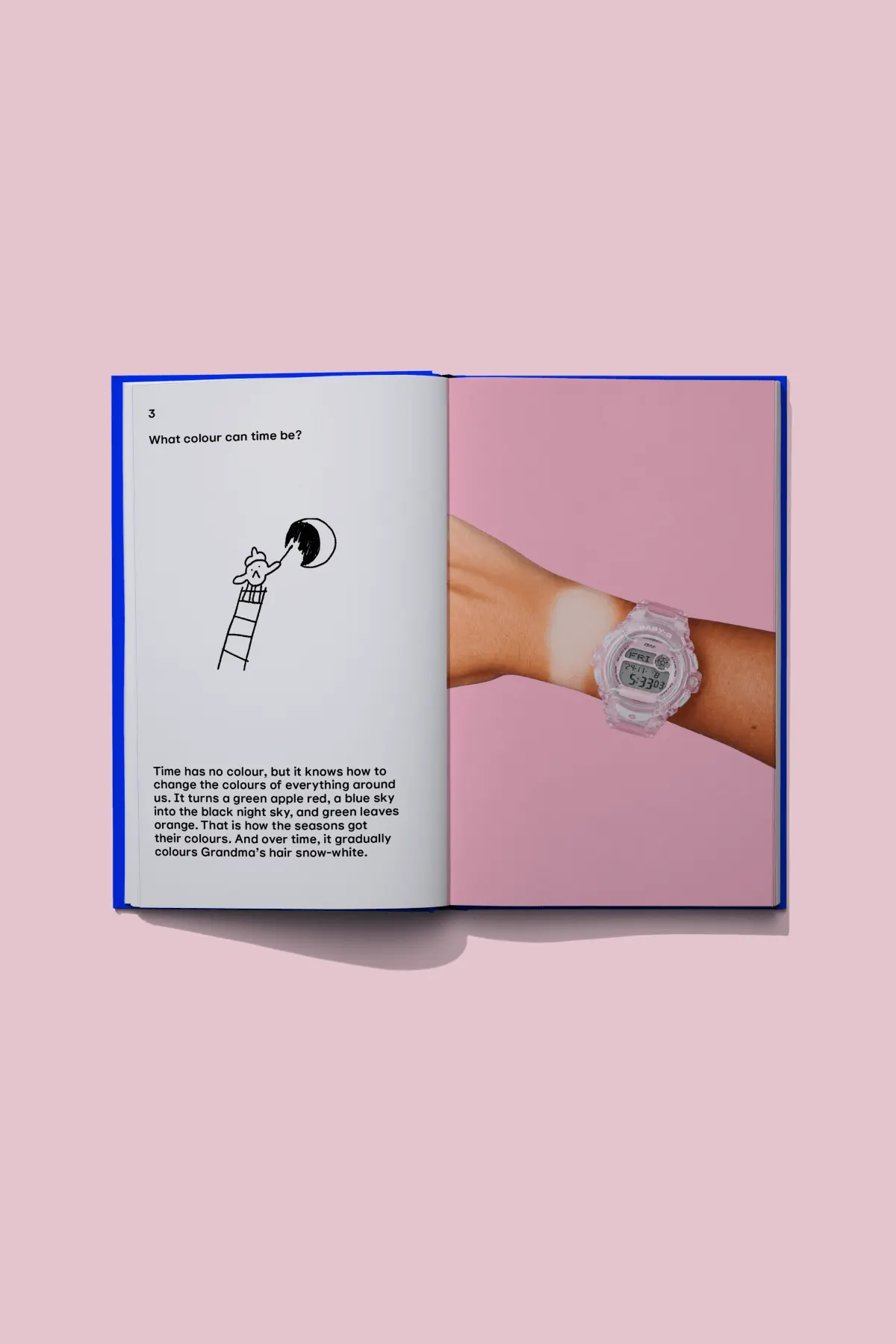
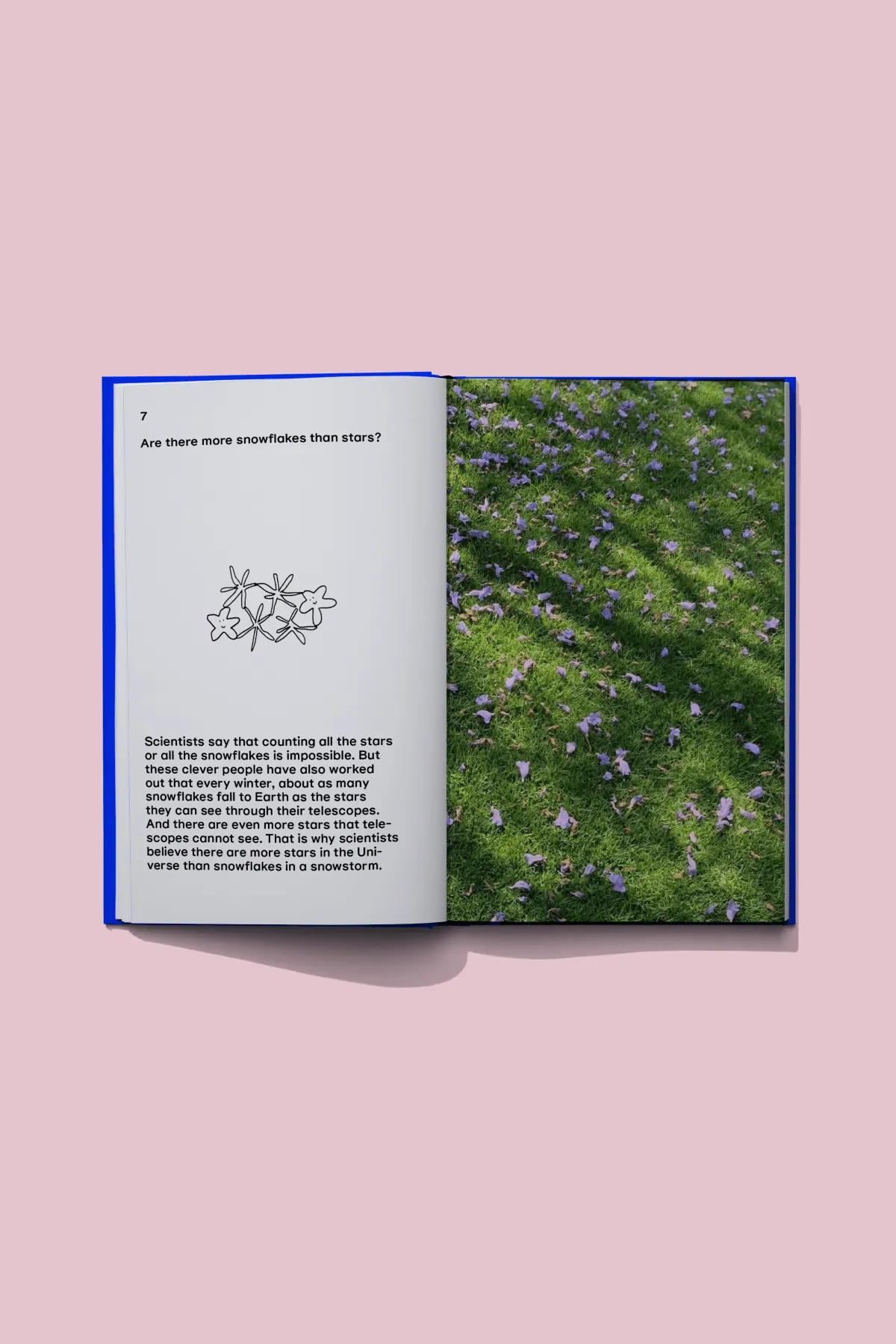
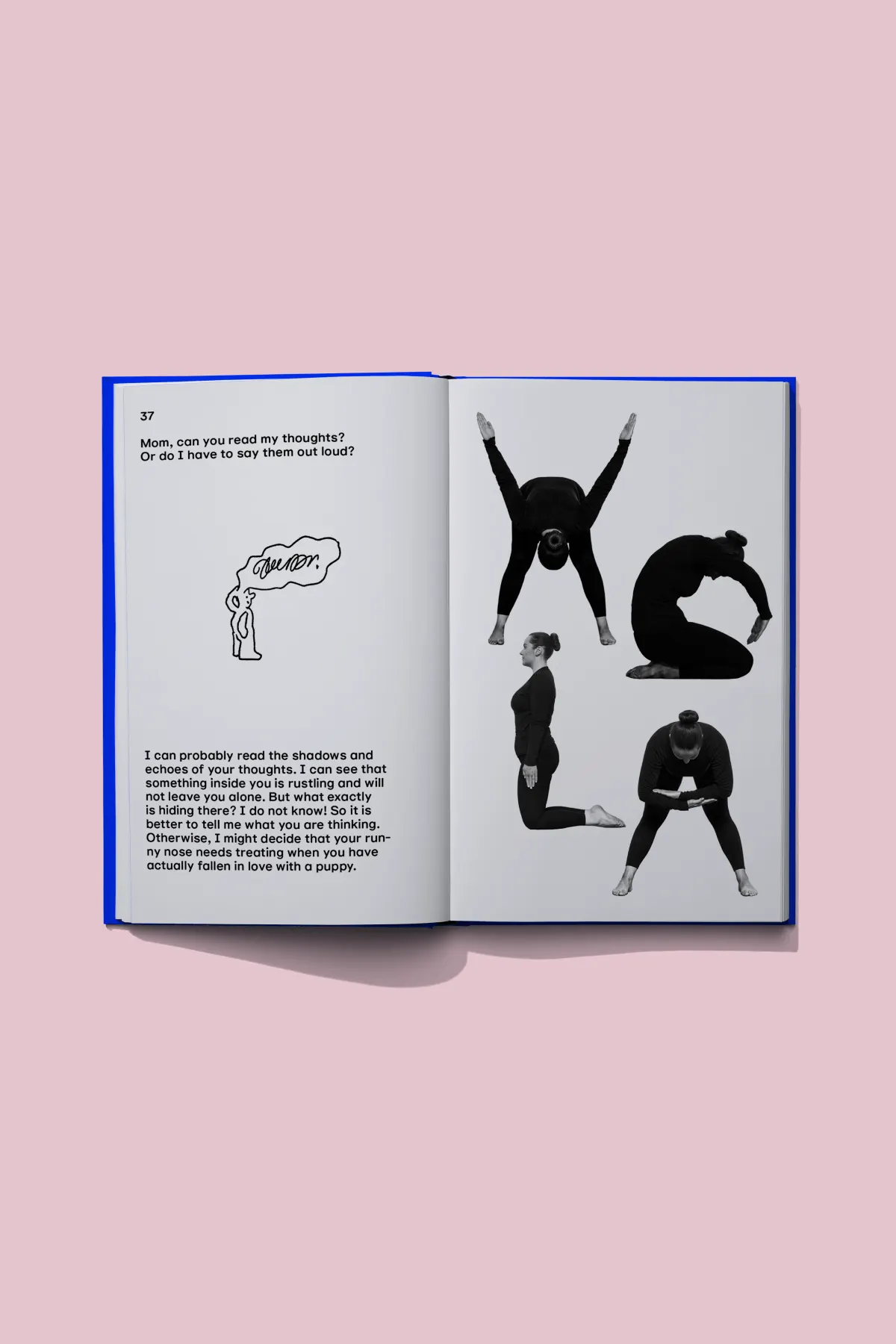
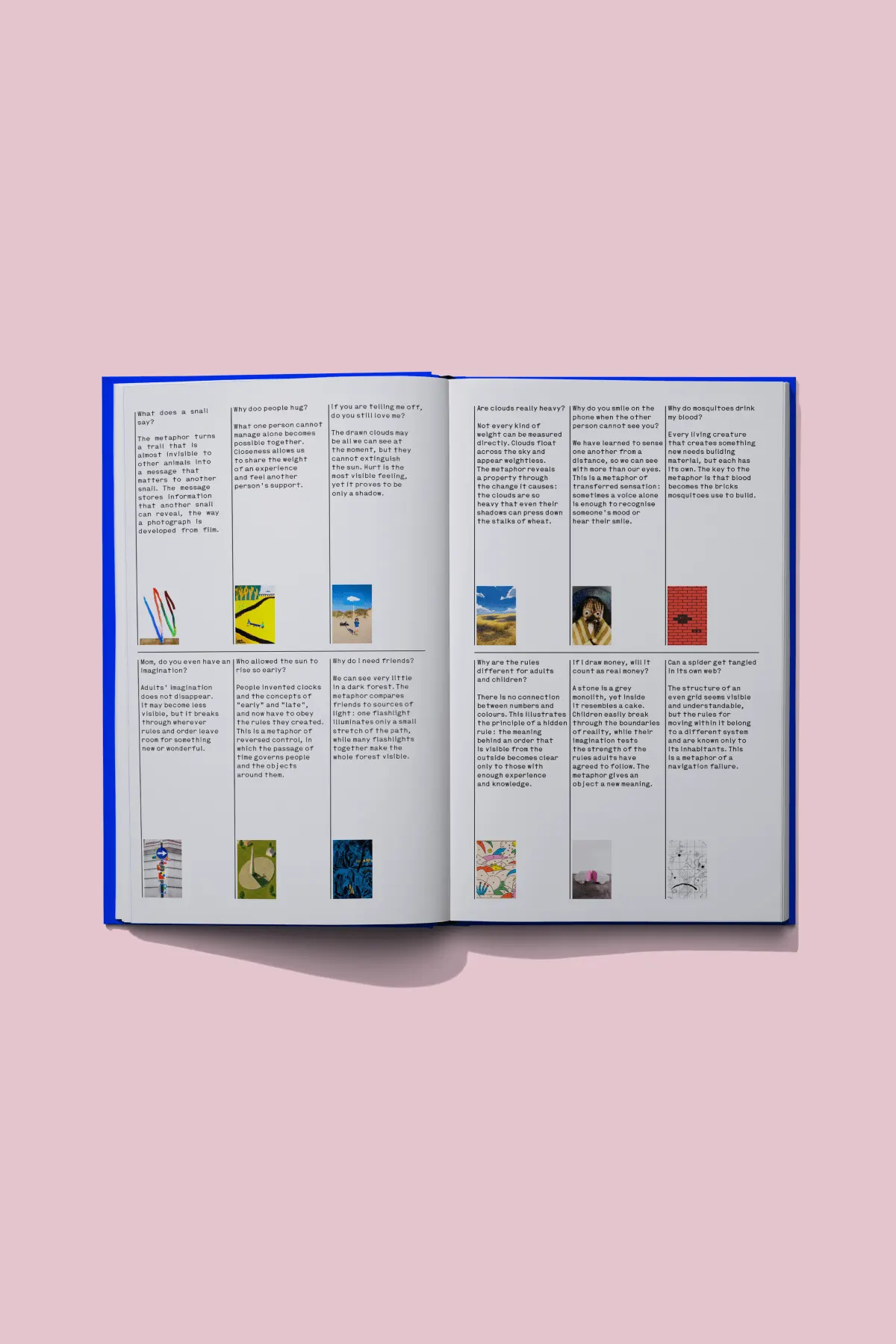
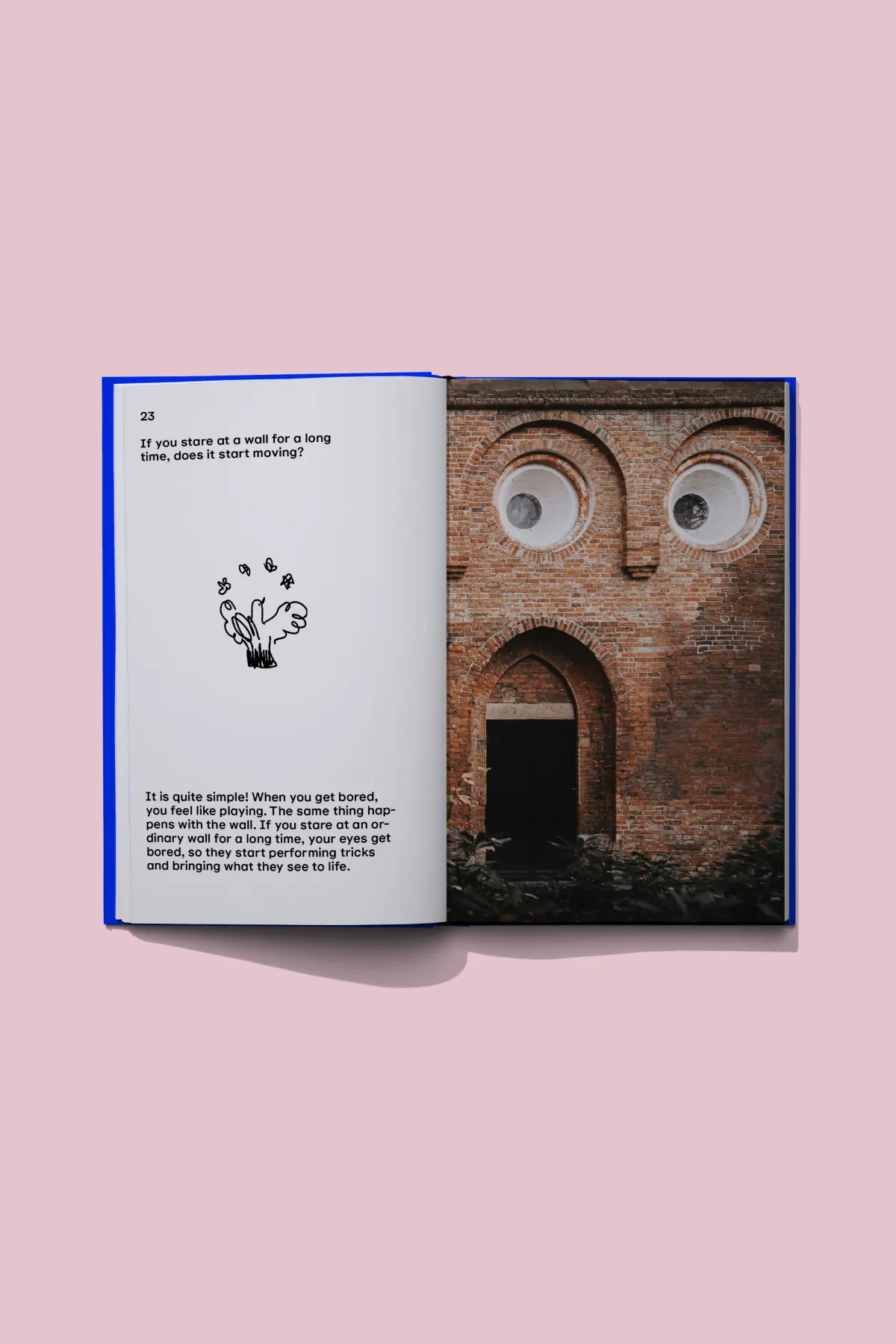
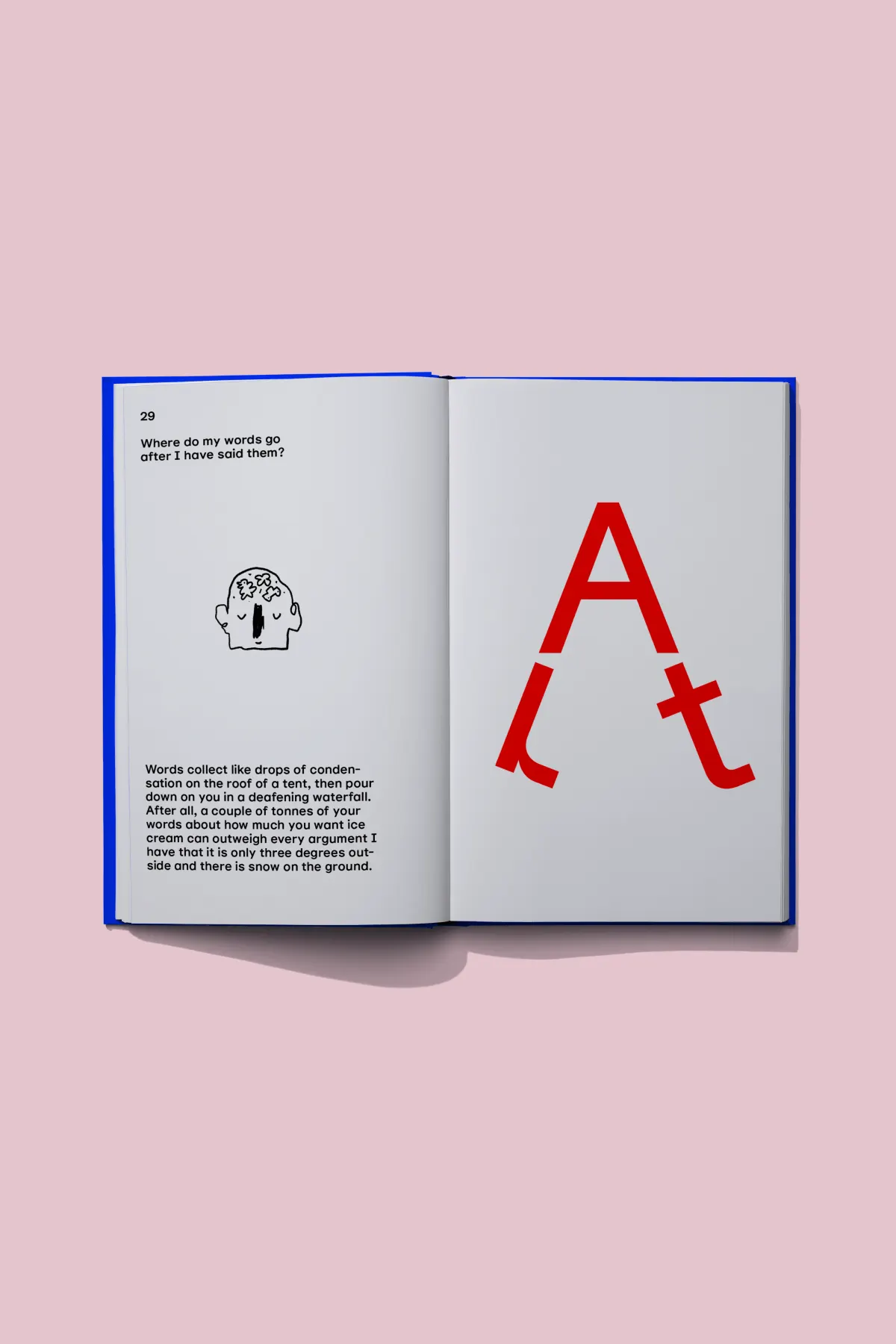
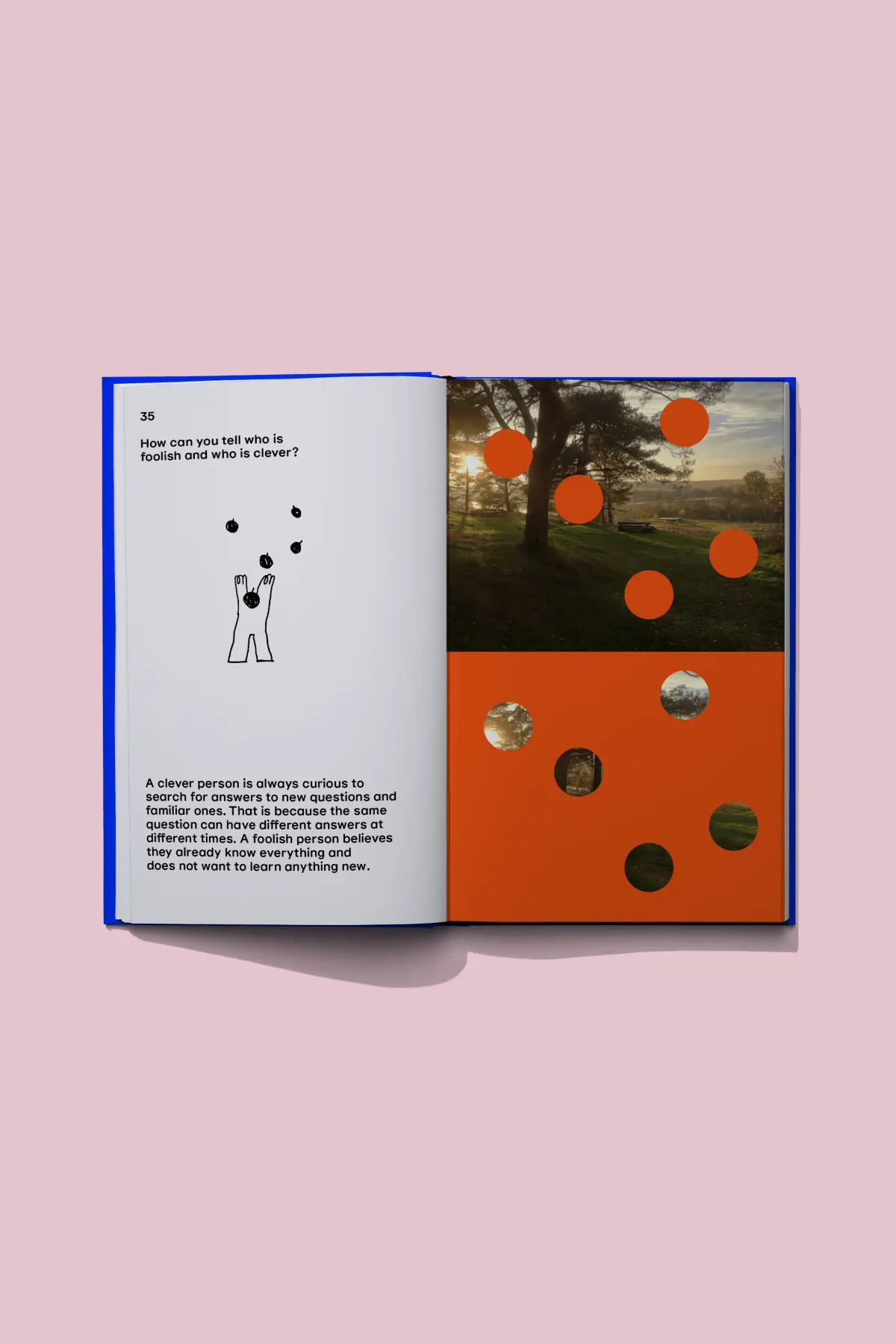
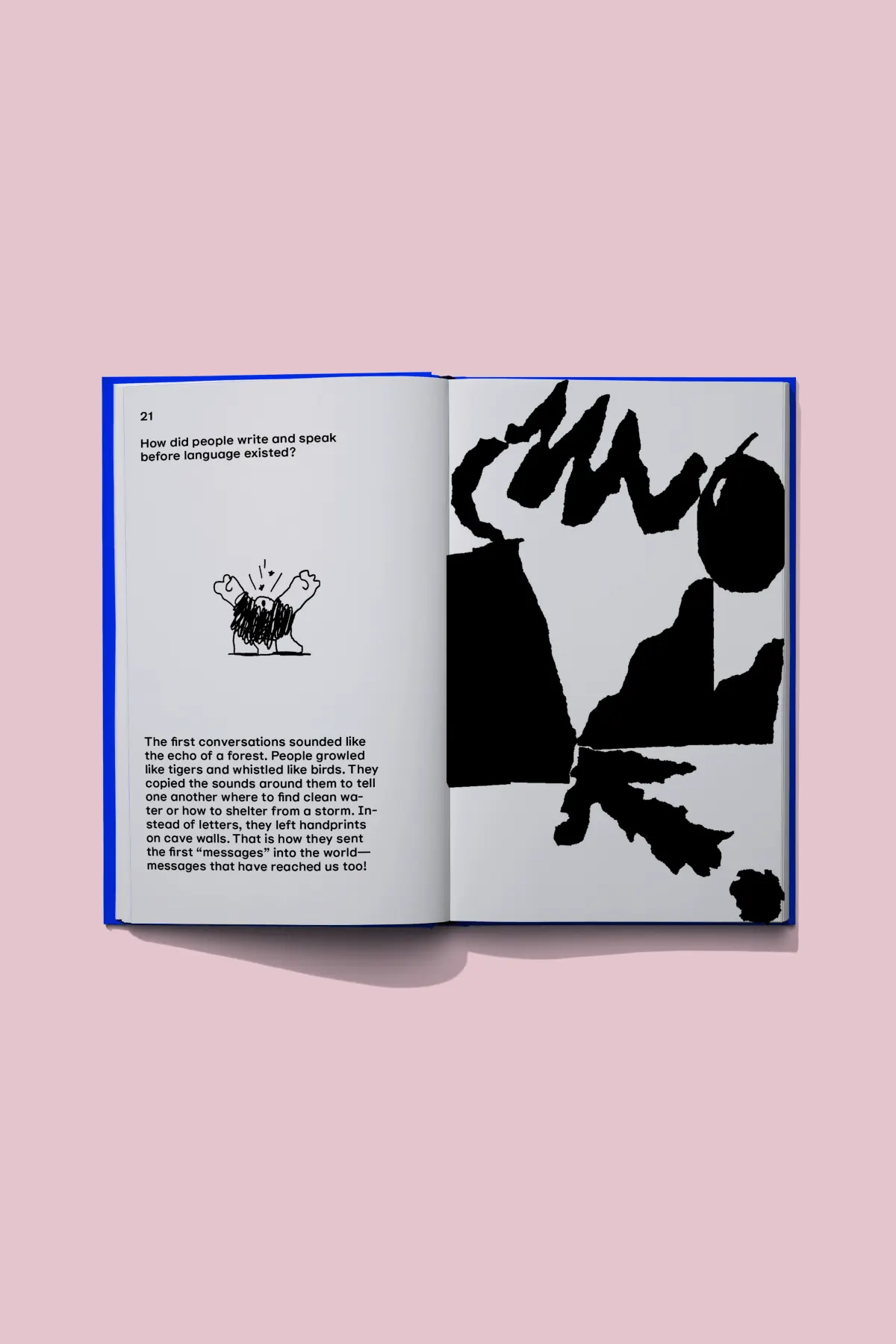
Each of the 100 spreads follows the same structure and contains: — A child’s question / — Nikita’s illustration / — An artwork / — An answer

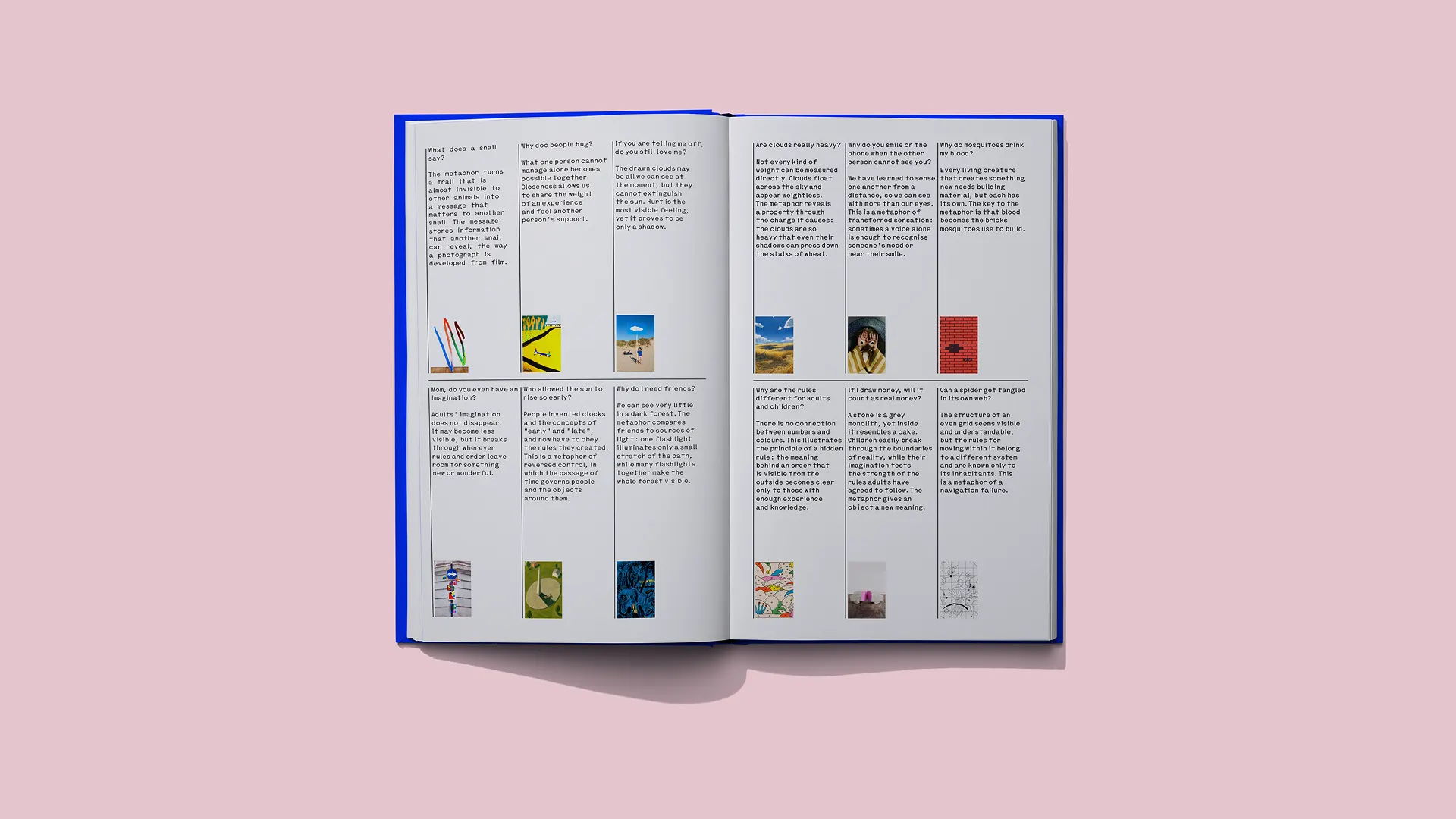
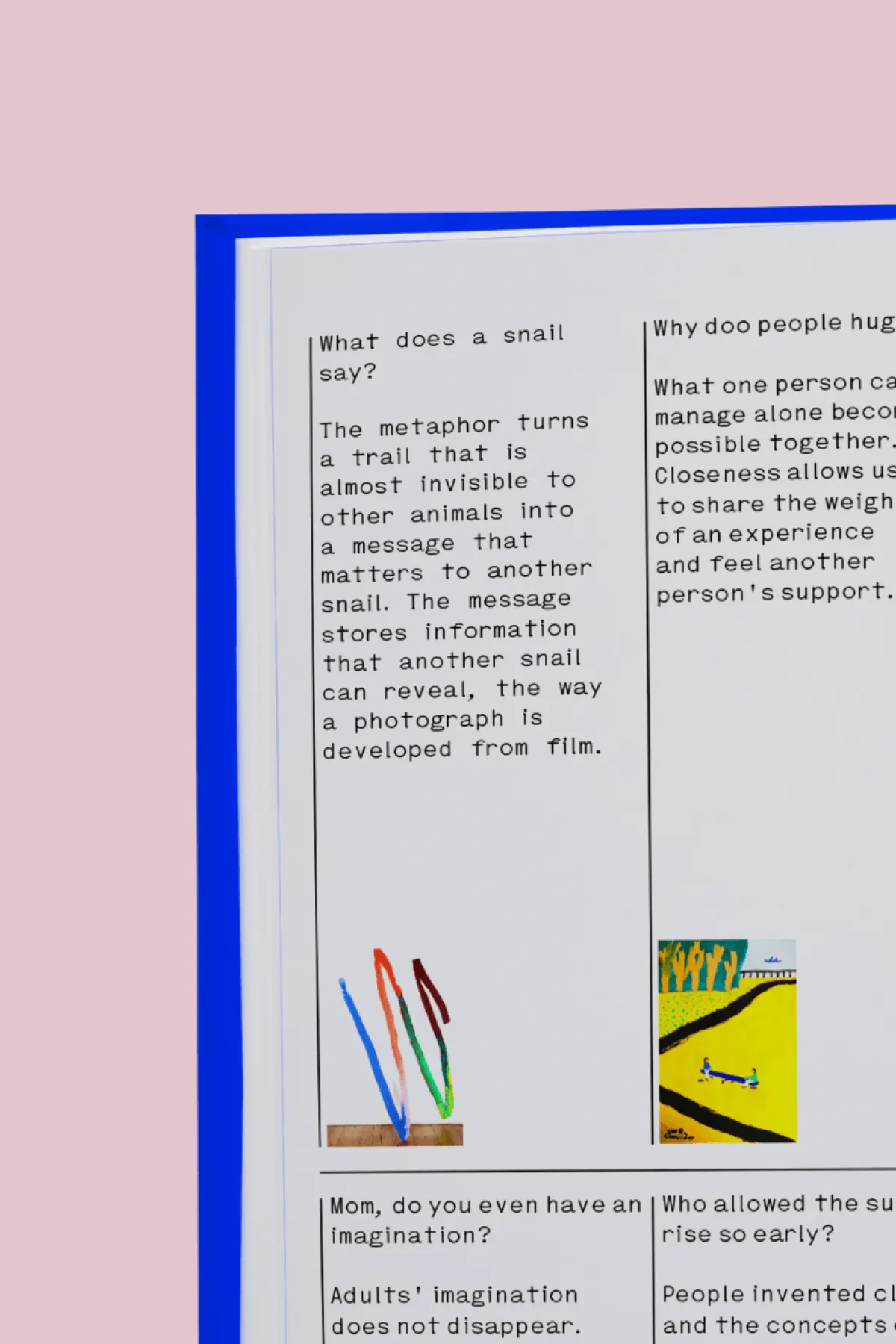
The end of the book provides clues to the artworks →

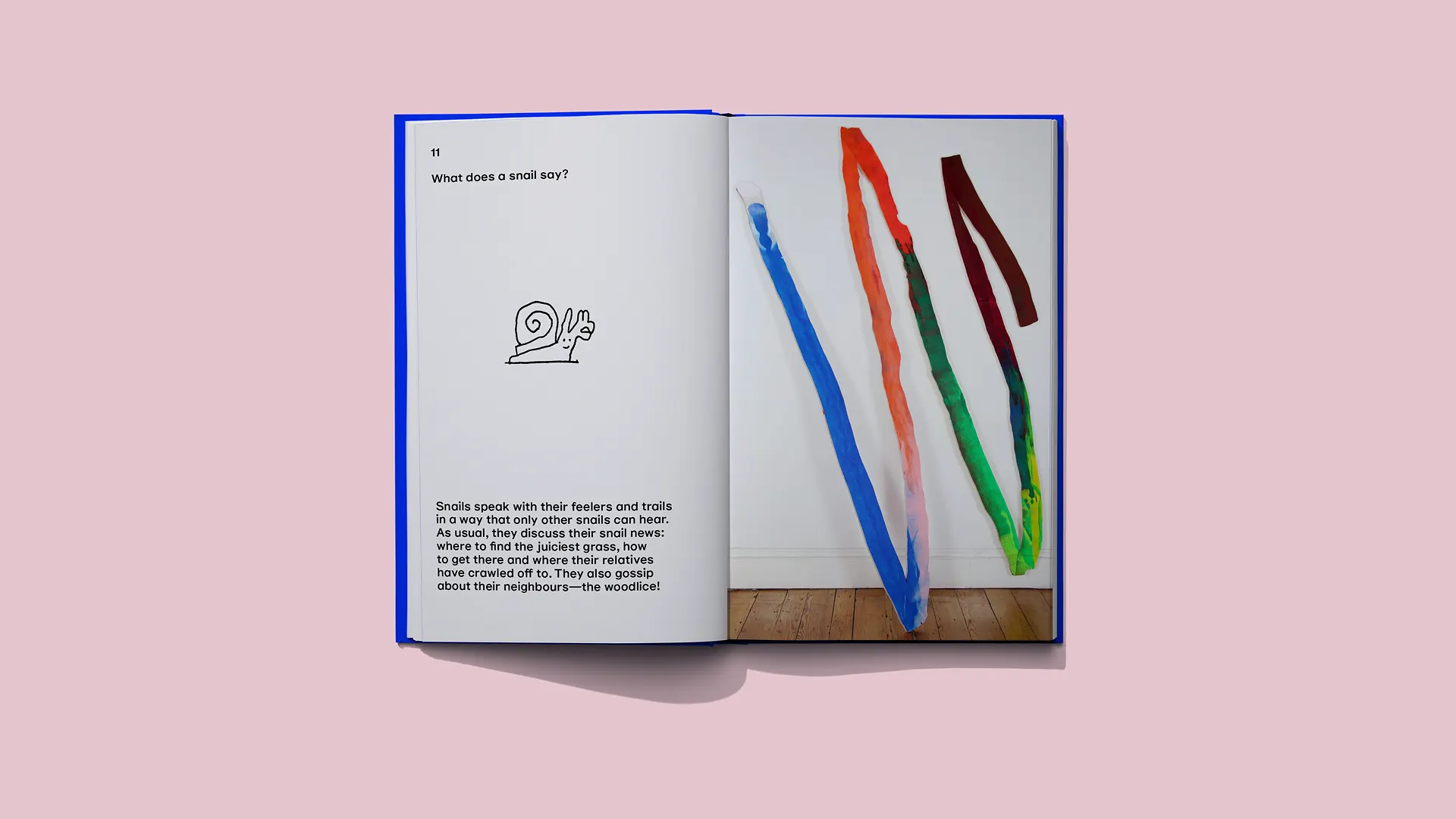
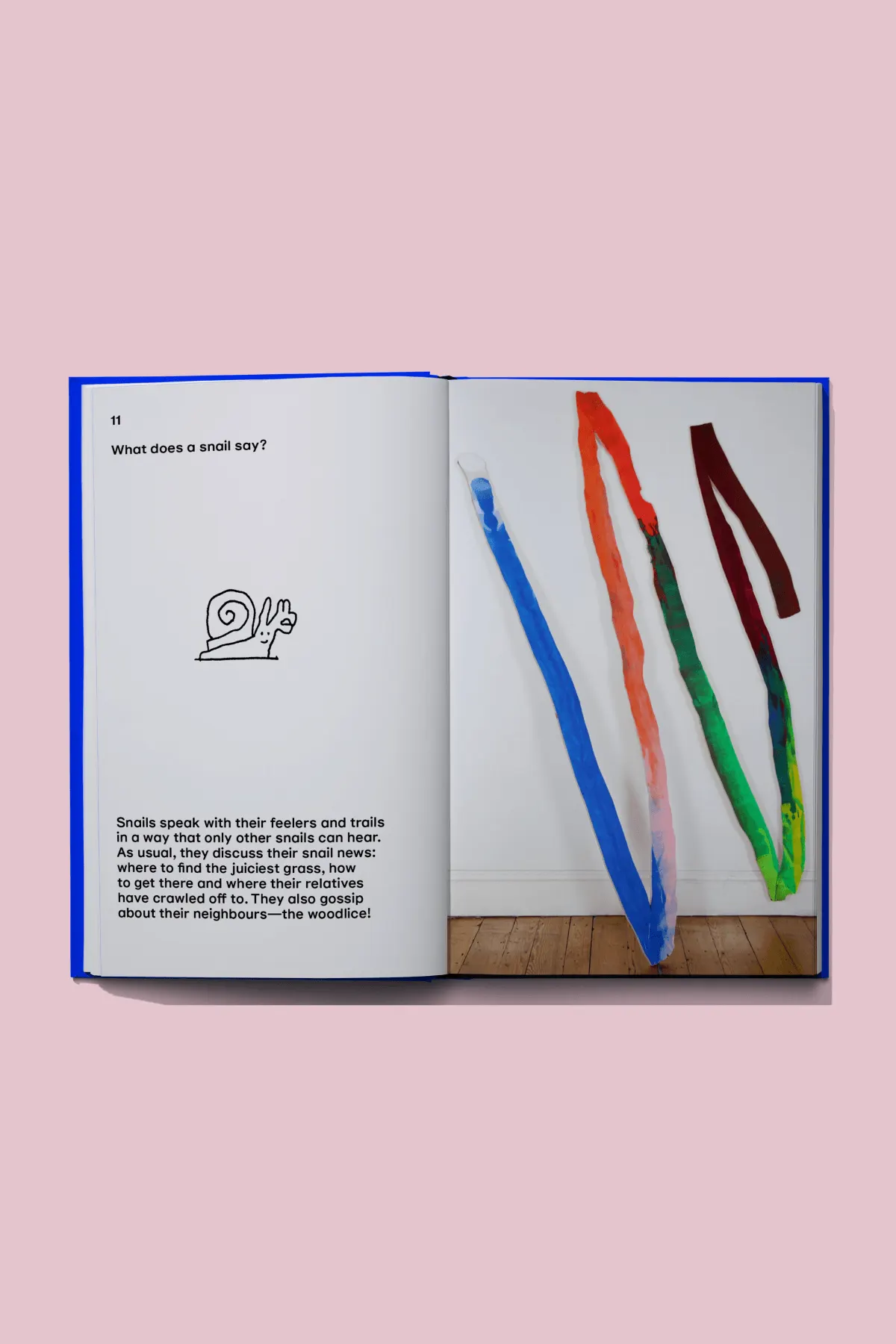
For example: What does a snail say?

So, the idea is to respond to every question a child asks, using the words of parents and the language of contemporary art.

Together with children, we think about everything under the sun: from the daily lives of people and snails to the edges of the Universe and the properties of time.

OK. And why do we need a book like this?

For children — to practise asking questions, looking for answers and finding them. Or, as adults put it, to develop critical thinking and a philosophical view of everyday things. And, of course, to nurture curiosity. For parents — to remember to look at familiar things from different, strange angles and find new answers to unexpected or familiar questions.

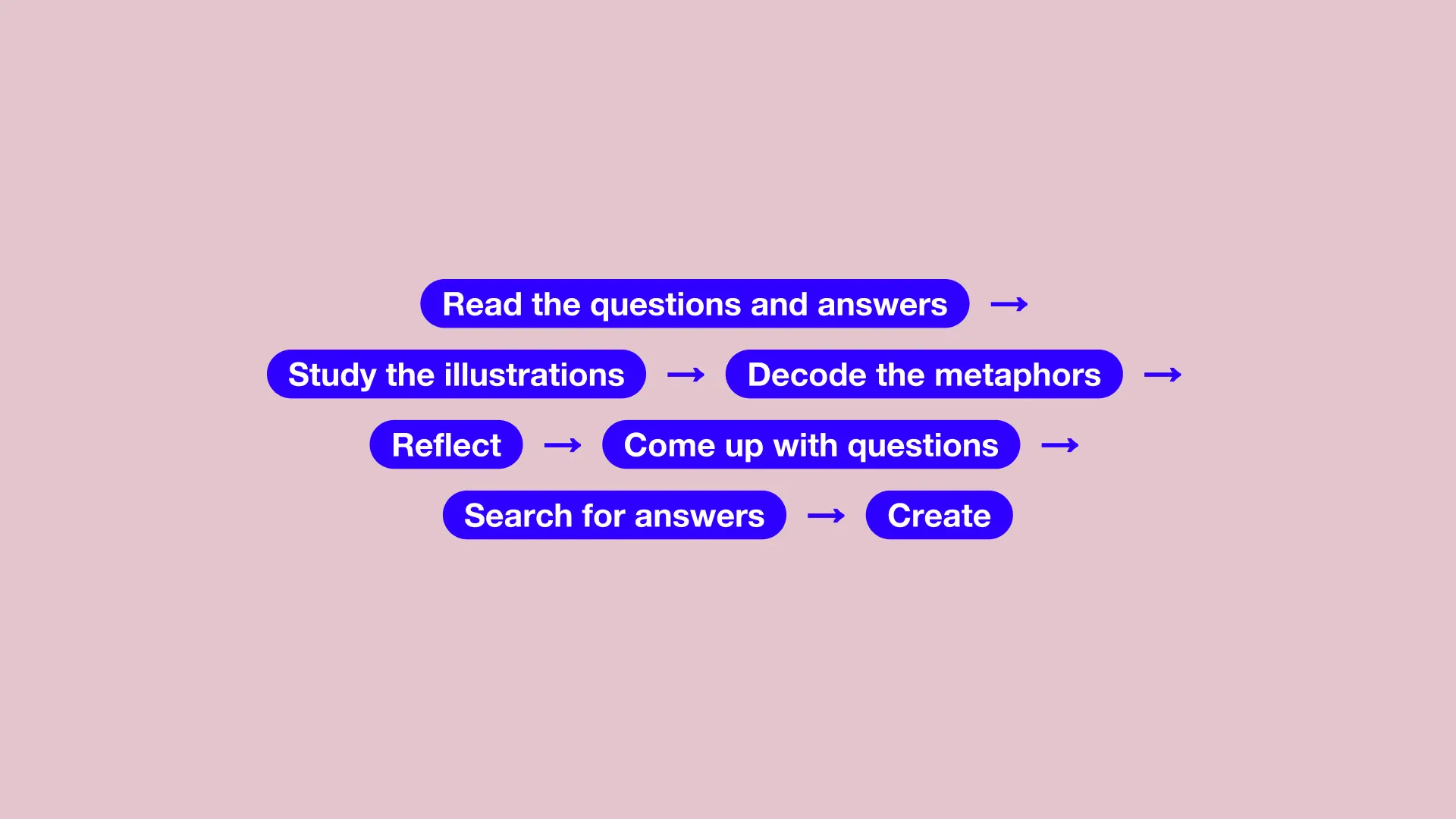
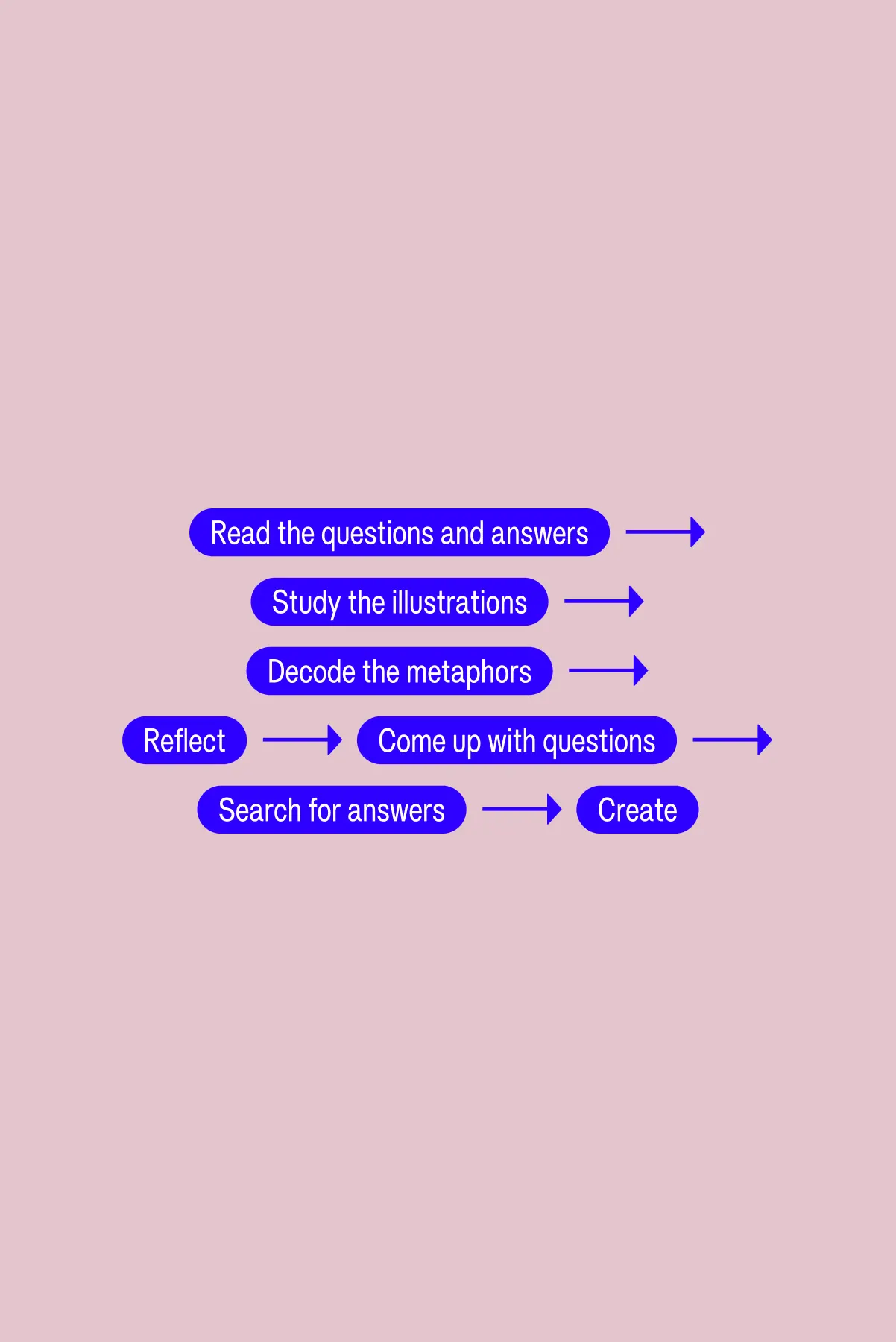
Read the questions and answers → Study the illustrations → Decode the metaphors → Reflect → Come up with questions → Search for answers → Create

By the way, the question “Mom, do you even have an imagination?” came from a four-year-old boy who loves drawing, art, hiking and asking personal questions.

And the answer is…

Can you guess why? Write us an email

Other books:

Vdokhnoles

Awakening the Spark,
or a Journey into the Vdokhnoles
Awakening the Spark,
or a Journey into the Vdokhnoles

A story about how friendship and
talents reveal themselves
A story about how friendship
and talents reveal themselves

Open the Cover
The Wind Blew

The Wind BlewThe Wind Blew

An illustrated novella about how
the wind changed the world
An illustrated novella about how the wind changed the world

Open the Cover