home

The Wind Blew

The Wind Blew 1 Nikita Sluzhenikin / Sasha Sivtsova / The Wind Blew / An illustrated novella about how the wind changed the world. A book about children — and a wind that changed the world forever. One morning, a powerful wind began to blow. And it never ever stopped again. What happens to the world if the wind never stops? How will people and the planet live in this new reality? The story begins with Jason. He is twelve years old. He finds the diary of his father, Espen. It turns out that the wind began to blow when Espen was twelve, too. At first, everyone waited for the wind to die down. But very soon it became clear: the old world would never return. The streets emptied, children stopped going to school, and roads and familiar landmarks disappeared. The wind could not be defeated. The world gradually changed. The wind wore the world down. People learned to hide. Cities divided into fenced areas and closed courtyards; houses became fortresses. The planet became dry, dusty and deserted. Nature began to change its shape. And many years later, children born after the wind began started coming out into the streets. For them, the wind was not a reason to seek shelter, but a reason to take one another by the hand and hold on so tightly that no one would be blown away. The children of the wind began to change the closed-off world everyone had grown used to. They held on to one another and taught the adults to do the same. The world had a chance. The world was never the same again. The wind kept blowing. But people learned to live with it, holding on to one another as their children had done. A landscape-format book, approximately 500 x 200 mm. Around 60–64 pages (30–32 spreads). At the heart of the diary is Espen’s coming of age. Age 12 — fear, escape, a new home. Ages 17–29 — a friend, the sea, a forest, a field, birds, clouds. Ages 30–38 — the children of the wind, conflict with adults, crisis, open gates, Jason’s birth. The book’s narrative and visual arc. Jason finds his father’s diary → follows his father through the years before his own birth → returns to the present → begins his own diary. Let’s divide the book into eight parts: the wind begins → panic → the world changes → life goes into hiding → children of the wind → crisis → the world opens up → the present colourful + blurry / monochrome + sharp / colourful + sharp chaos → dryness and fading → black-and-white crisis → light and colour Style transformation. colourful + soft graphite + blending The Wind Blew 20 near-monochrome + hard graphite The Wind Blew 22 monochrome + crisp hatching greyscale + linework pause / crisis. On the spread: “The wind goes ooooooh… All I can hear again is that long, drawn-out moan: ooh…” near-monochrome + sharp linework colourful + sharp linework colourful + sharp linework Completed so far: — a draft of the text / — an illustration concept. Next steps: — preparing sketches for every spread / — adapting the text / — drawing the illustrations
1/29
The Wind Blew 1 Nikita Sluzhenikin / Sasha Sivtsova / The Wind Blew / An illustrated novella about how the wind changed the world. A book about children — and a wind that changed the world forever. One morning, a powerful wind began to blow. And it never ever stopped again. What happens to the world if the wind never stops? How will people and the planet live in this new reality? The story begins with Jason. He is twelve years old. He finds the diary of his father, Espen. It turns out that the wind began to blow when Espen was twelve, too. At first, everyone waited for the wind to die down. But very soon it became clear: the old world would never return. The streets emptied, children stopped going to school, and roads and familiar landmarks disappeared. The wind could not be defeated. The world gradually changed. The wind wore the world down. People learned to hide. Cities divided into fenced areas and closed courtyards; houses became fortresses. The planet became dry, dusty and deserted. Nature began to change its shape. And many years later, children born after the wind began started coming out into the streets. For them, the wind was not a reason to seek shelter, but a reason to take one another by the hand and hold on so tightly that no one would be blown away. The children of the wind began to change the closed-off world everyone had grown used to. They held on to one another and taught the adults to do the same. The world had a chance. The world was never the same again. The wind kept blowing. But people learned to live with it, holding on to one another as their children had done. A landscape-format book, approximately 500 x 200 mm. Around 60–64 pages (30–32 spreads). At the heart of the diary is Espen’s coming of age. Age 12 — fear, escape, a new home. Ages 17–29 — a friend, the sea, a forest, a field, birds, clouds. Ages 30–38 — the children of the wind, conflict with adults, crisis, open gates, Jason’s birth. The book’s narrative and visual arc. Jason finds his father’s diary → follows his father through the years before his own birth → returns to the present → begins his own diary. Let’s divide the book into eight parts: the wind begins → panic → the world changes → life goes into hiding → children of the wind → crisis → the world opens up → the present colourful + blurry / monochrome + sharp / colourful + sharp chaos → dryness and fading → black-and-white crisis → light and colour Style transformation. colourful + soft graphite + blending The Wind Blew 20 near-monochrome + hard graphite The Wind Blew 22 monochrome + crisp hatching greyscale + linework The Wind Blew 25 pause / crisis. On the spread: “The wind goes ooooooh… All I can hear again is that long, drawn-out moan: ooh…” near-monochrome + sharp linework colourful + sharp linework colourful + sharp linework Completed so far: — a draft of the text / — an illustration concept. Next steps: — preparing sketches for every spread / — adapting the text / — drawing the illustrations
1/30

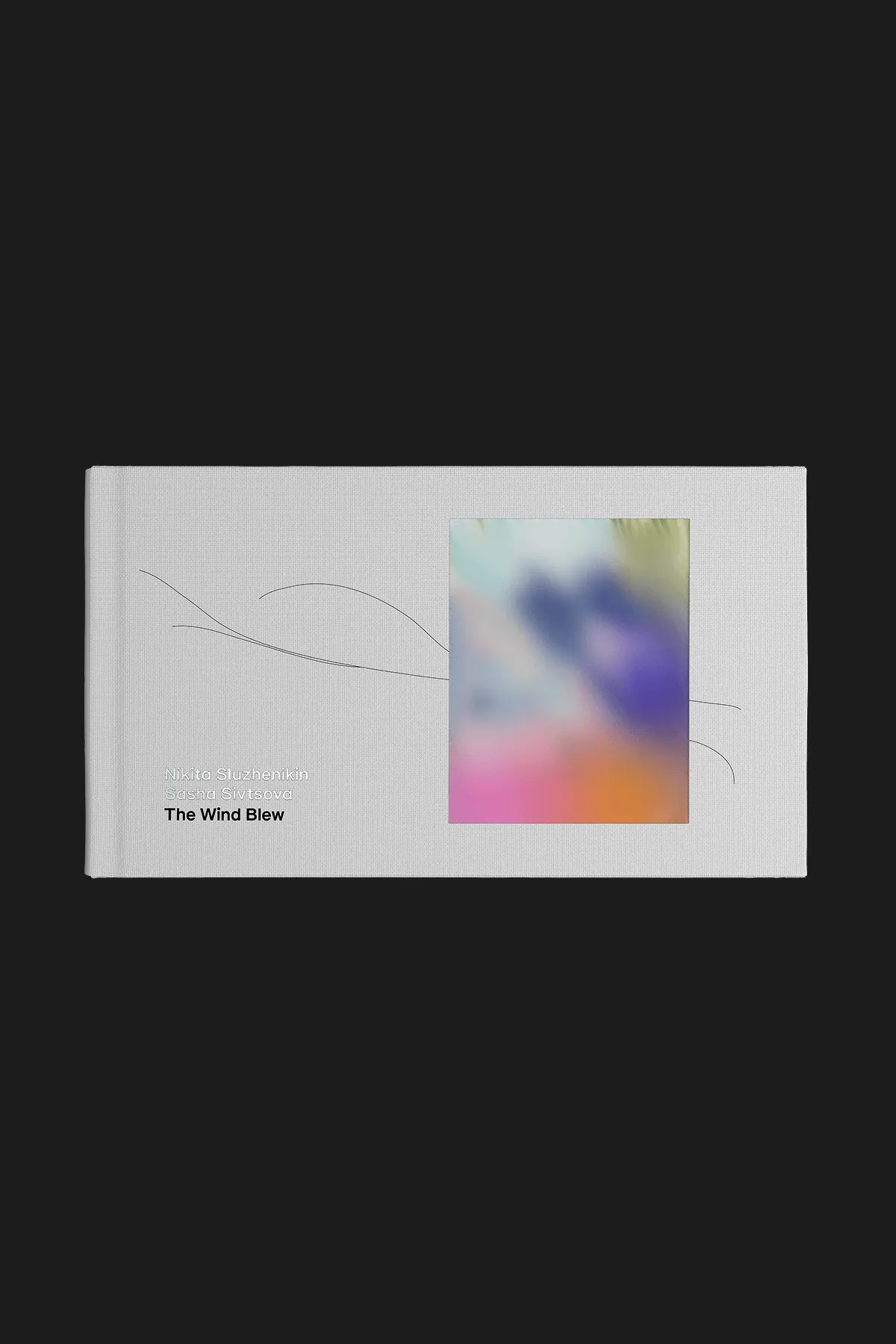
Nikita Sluzhenikin / Sasha Sivtsova / The Wind Blew / An illustrated novella about how the wind changed the world.

A book about children — and a wind that changed the world forever.

One morning, a powerful wind began to blow. And it never ever stopped again.

What happens to the world if the wind never stops? How will people and the planet live in this new reality?

The story begins with Jason. He is twelve years old. He finds the diary of his father, Espen. It turns out that the wind began to blow when Espen was twelve, too.

At first, everyone waited for the wind to die down. But very soon it became clear: the old world would never return. The streets emptied, children stopped going to school, and roads and familiar landmarks disappeared. The wind could not be defeated.

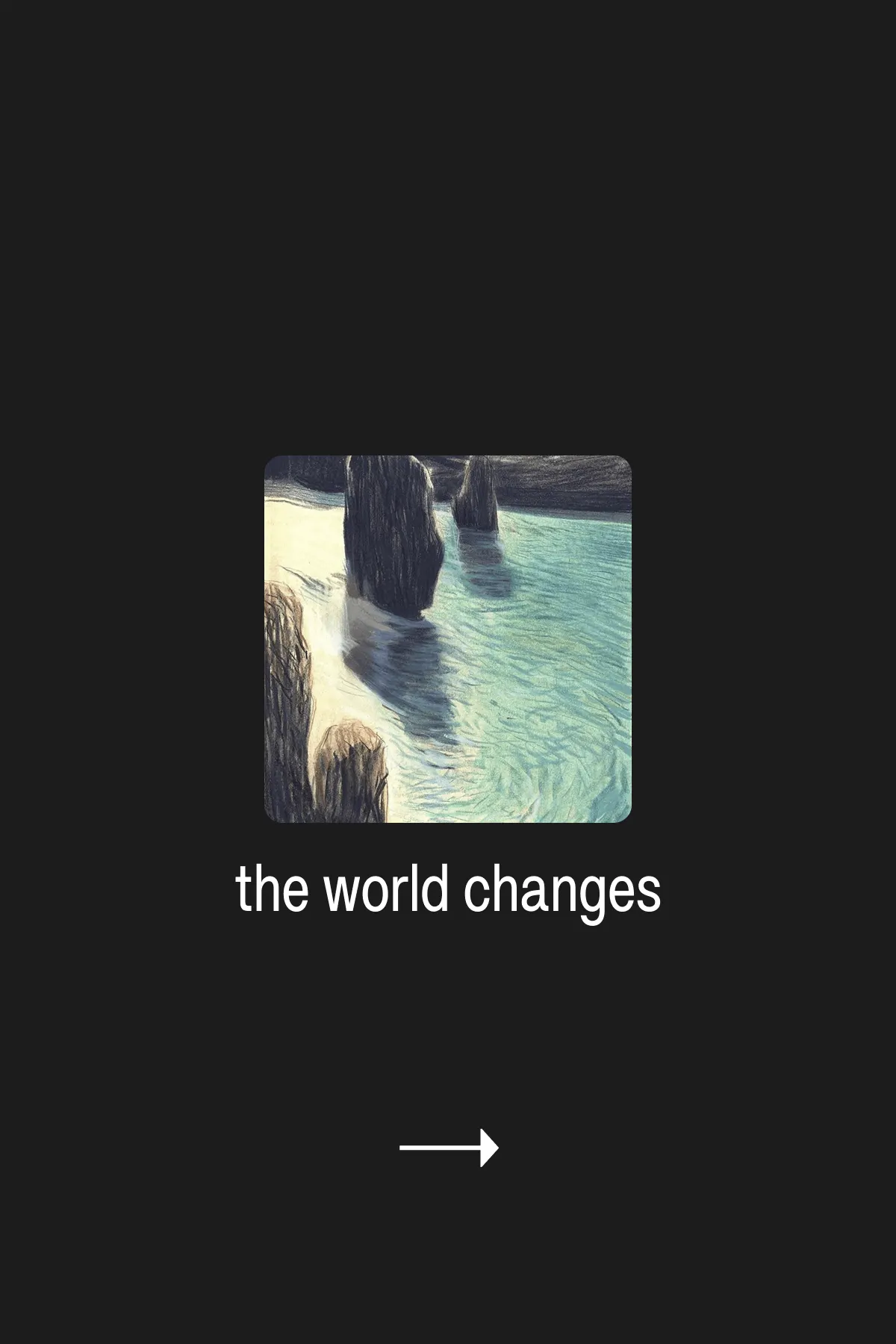
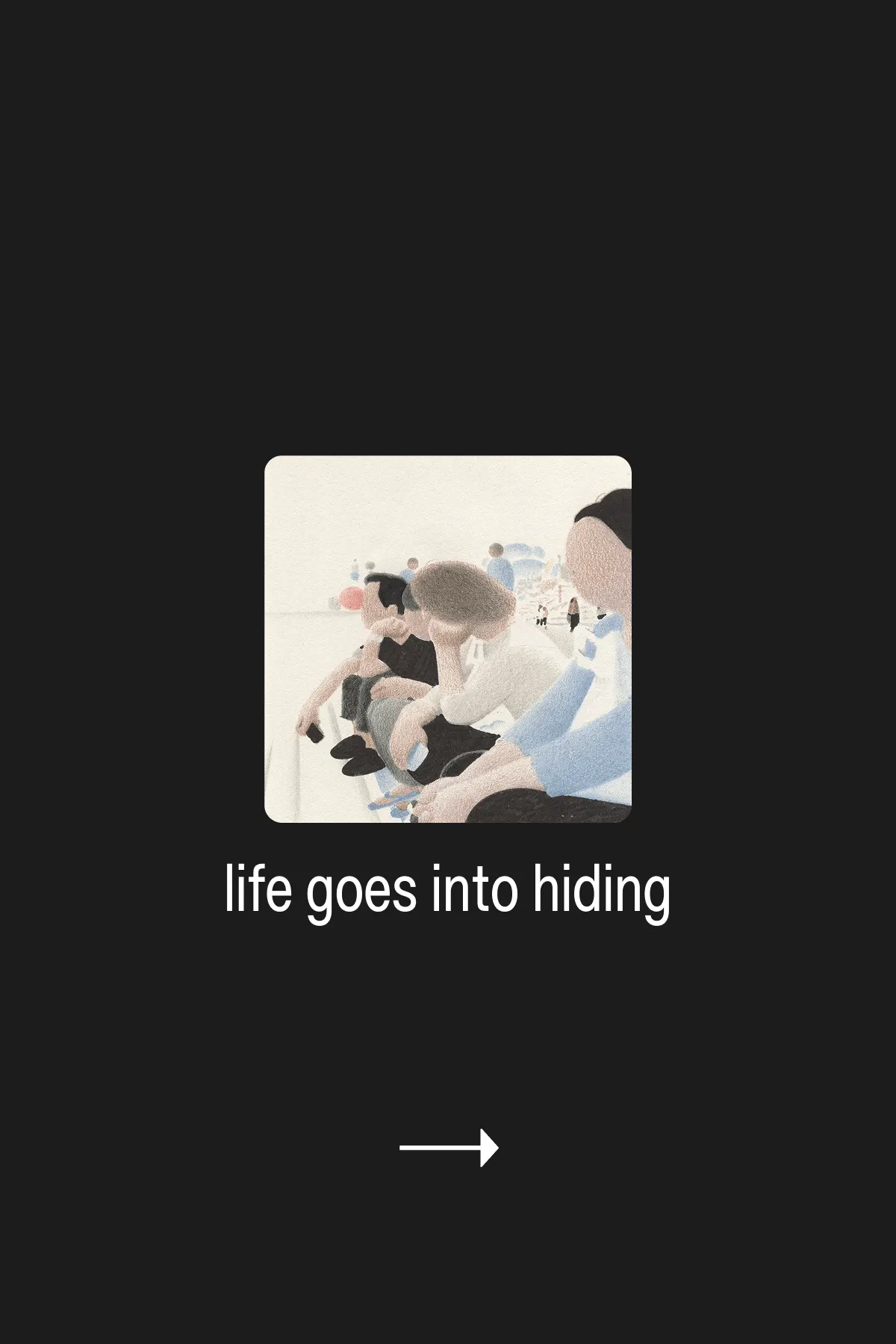
The world gradually changed. The wind wore the world down. People learned to hide. Cities divided into fenced areas and closed courtyards; houses became fortresses. The planet became dry, dusty and deserted. Nature began to change its shape.

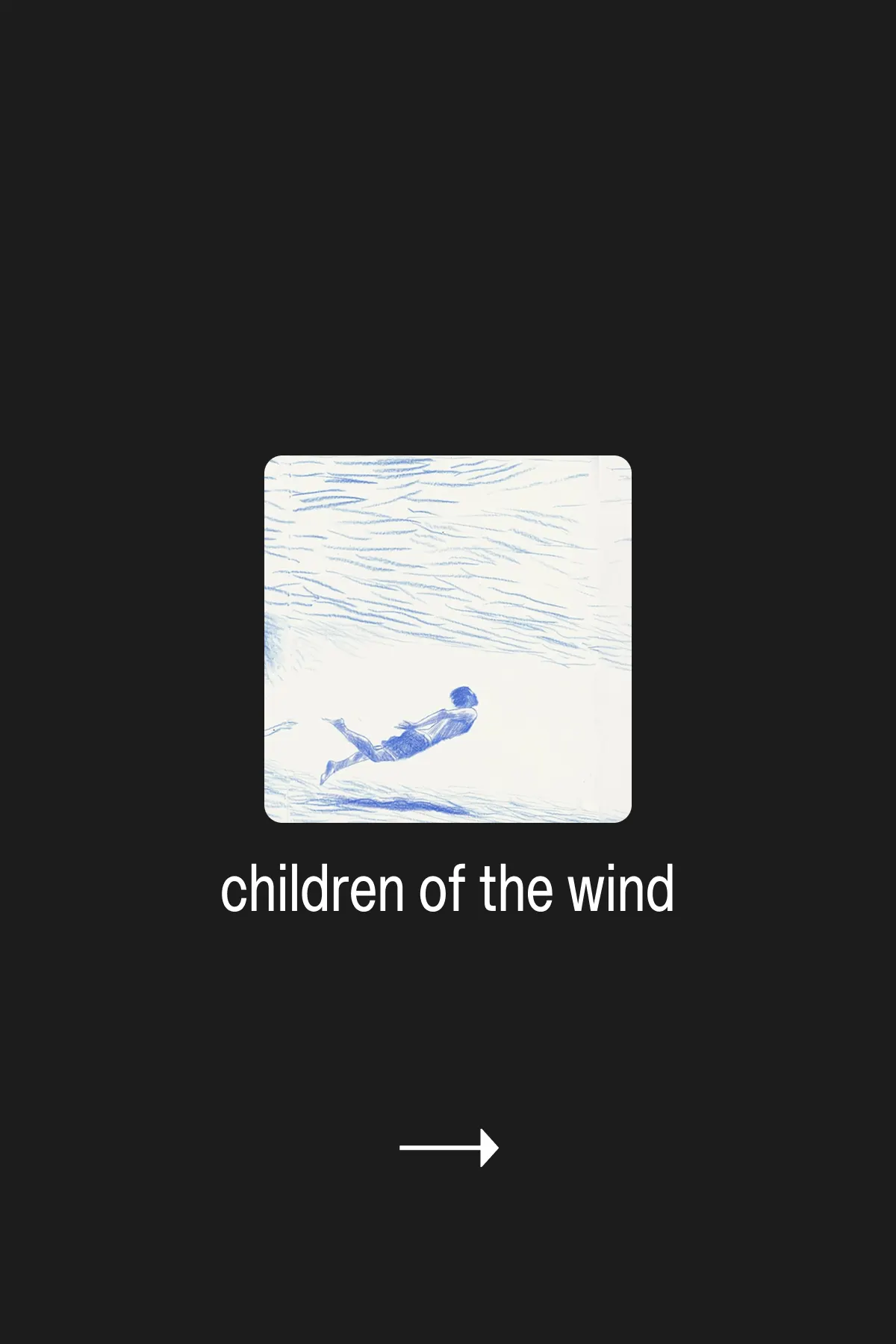
And many years later, children born after the wind began started coming out into the streets. For them, the wind was not a reason to seek shelter, but a reason to take one another by the hand and hold on so tightly that no one would be blown away.

The children of the wind began to change the closed-off world everyone had grown used to. They held on to one another and taught the adults to do the same. The world had a chance.

The world was never the same again. The wind kept blowing. But people learned to live with it, holding on to one another as their children had done.

A landscape-format book, approximately 500 x 200 mm. Around 60–64 pages (30–32 spreads).

At the heart of the diary is Espen’s coming of age. Age 12 — fear, escape, a new home. Ages 17–29 — a friend, the sea, a forest, a field, birds, clouds. Ages 30–38 — the children of the wind, conflict with adults, crisis, open gates, Jason’s birth.

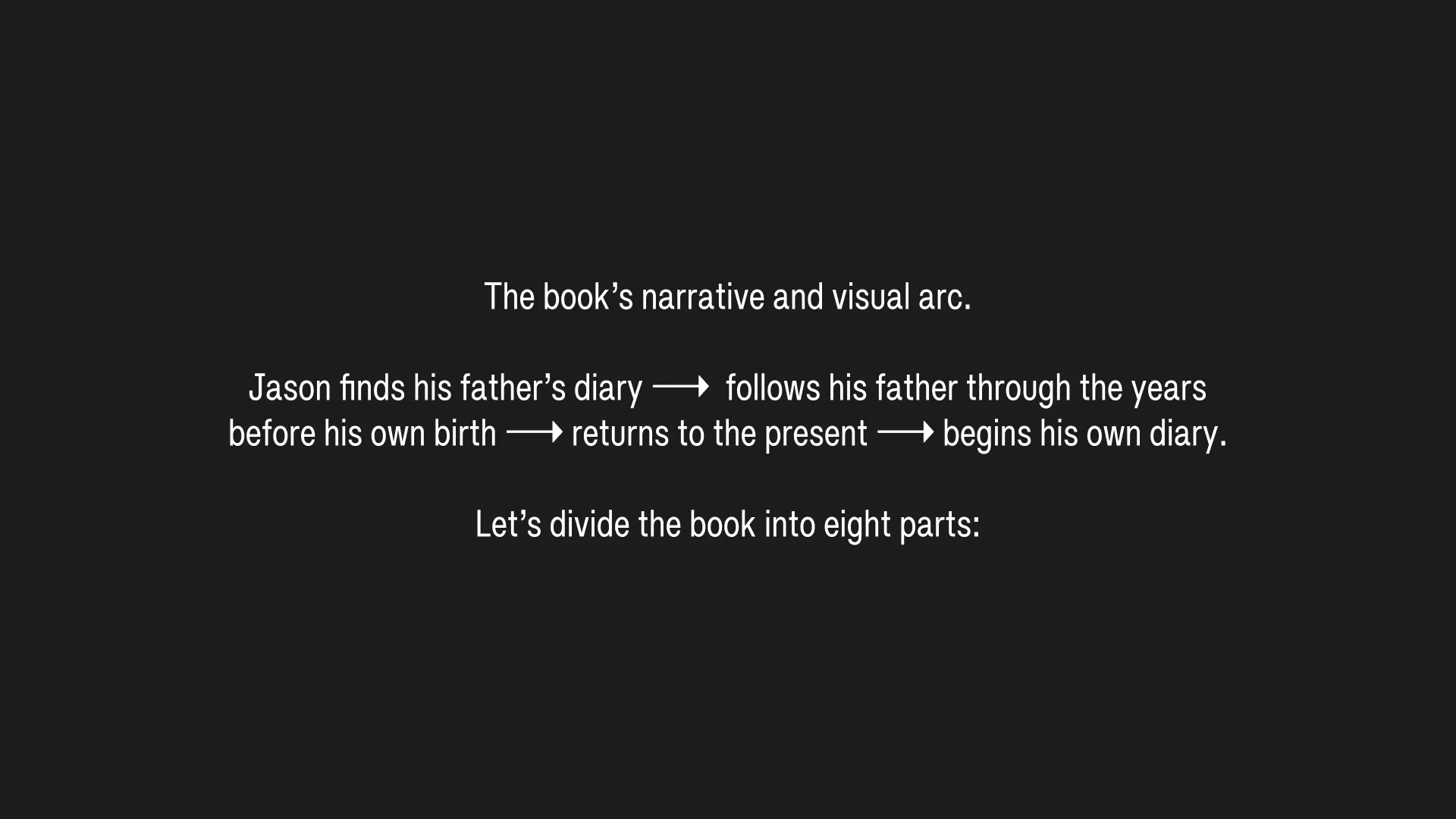
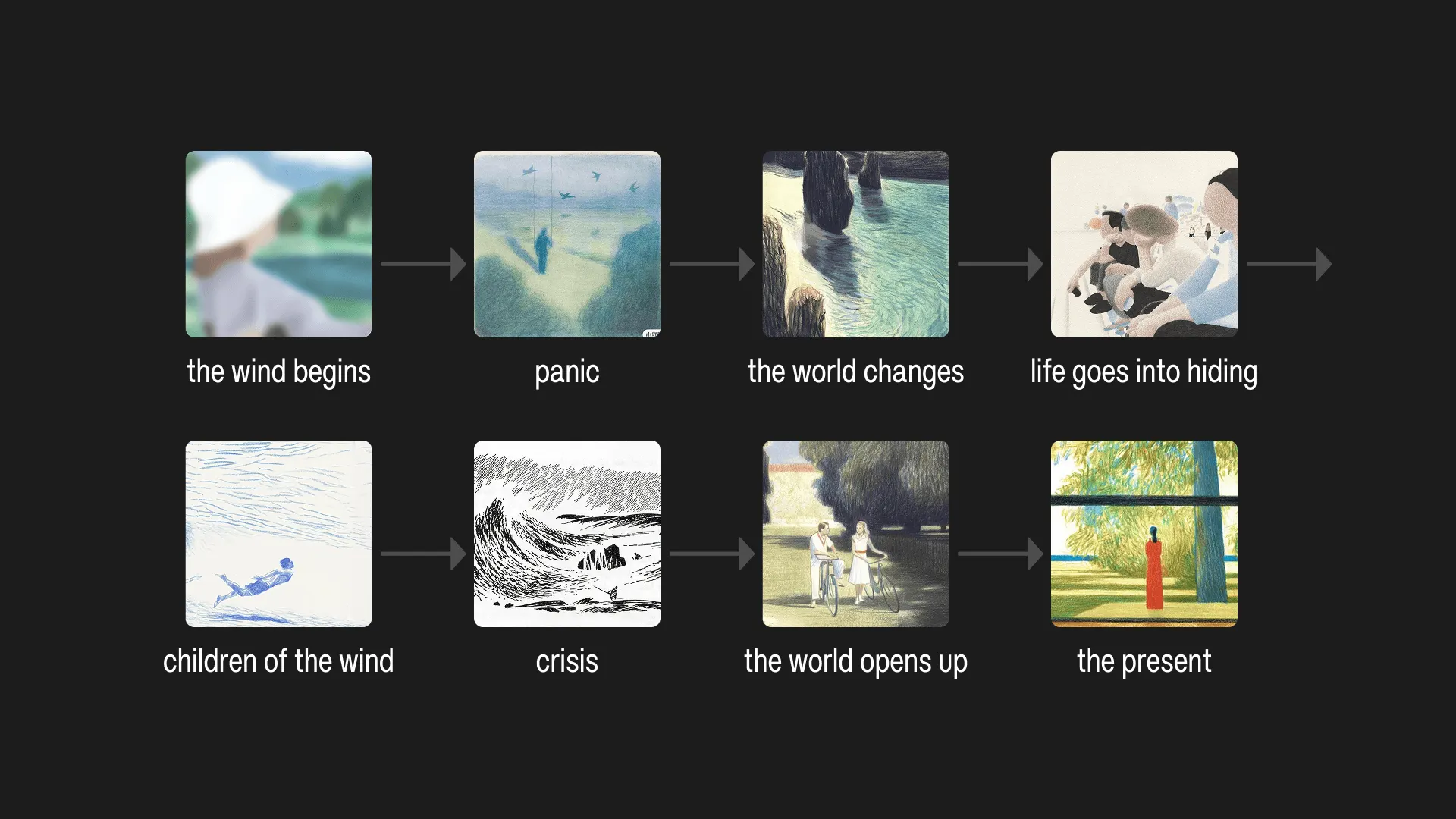
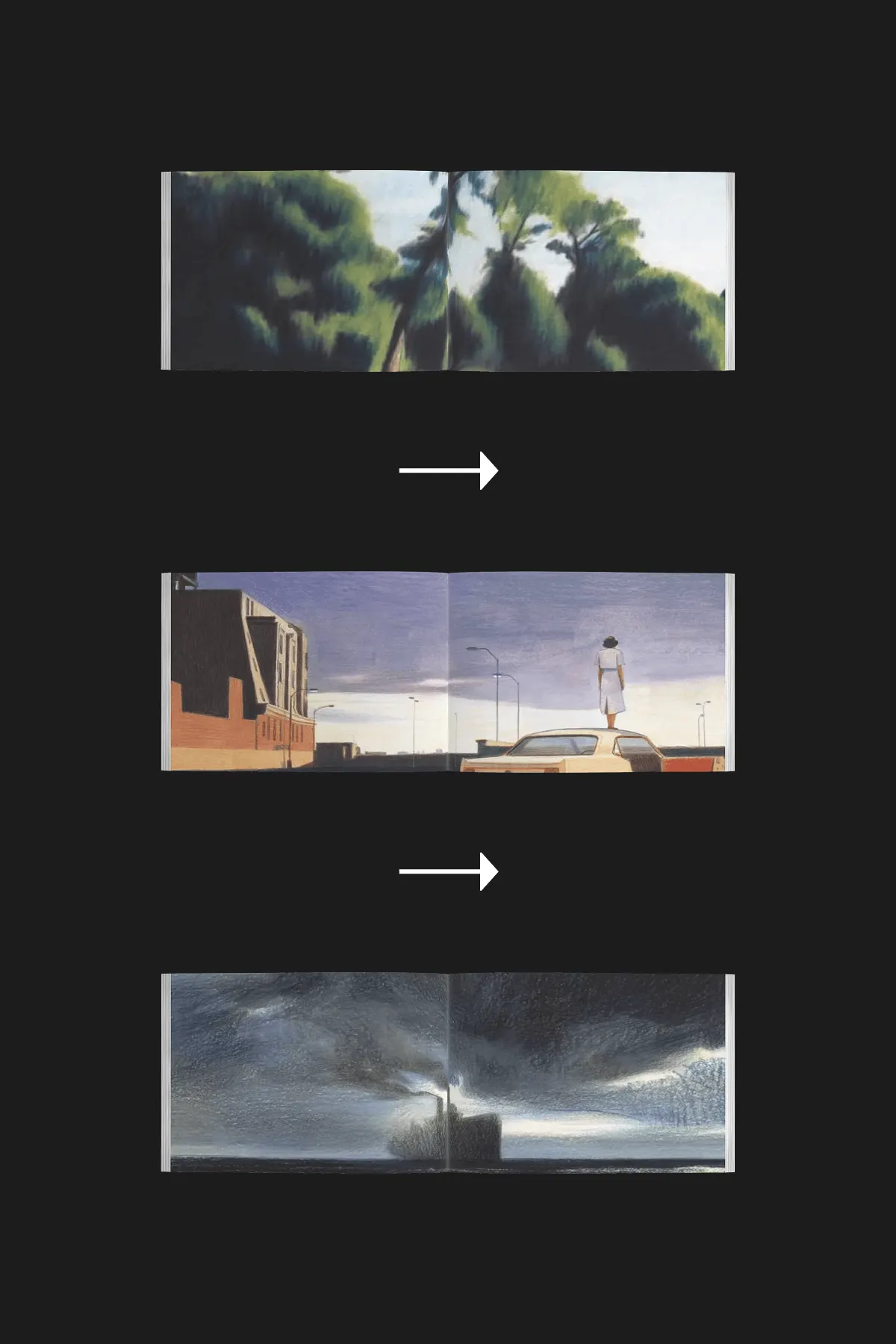
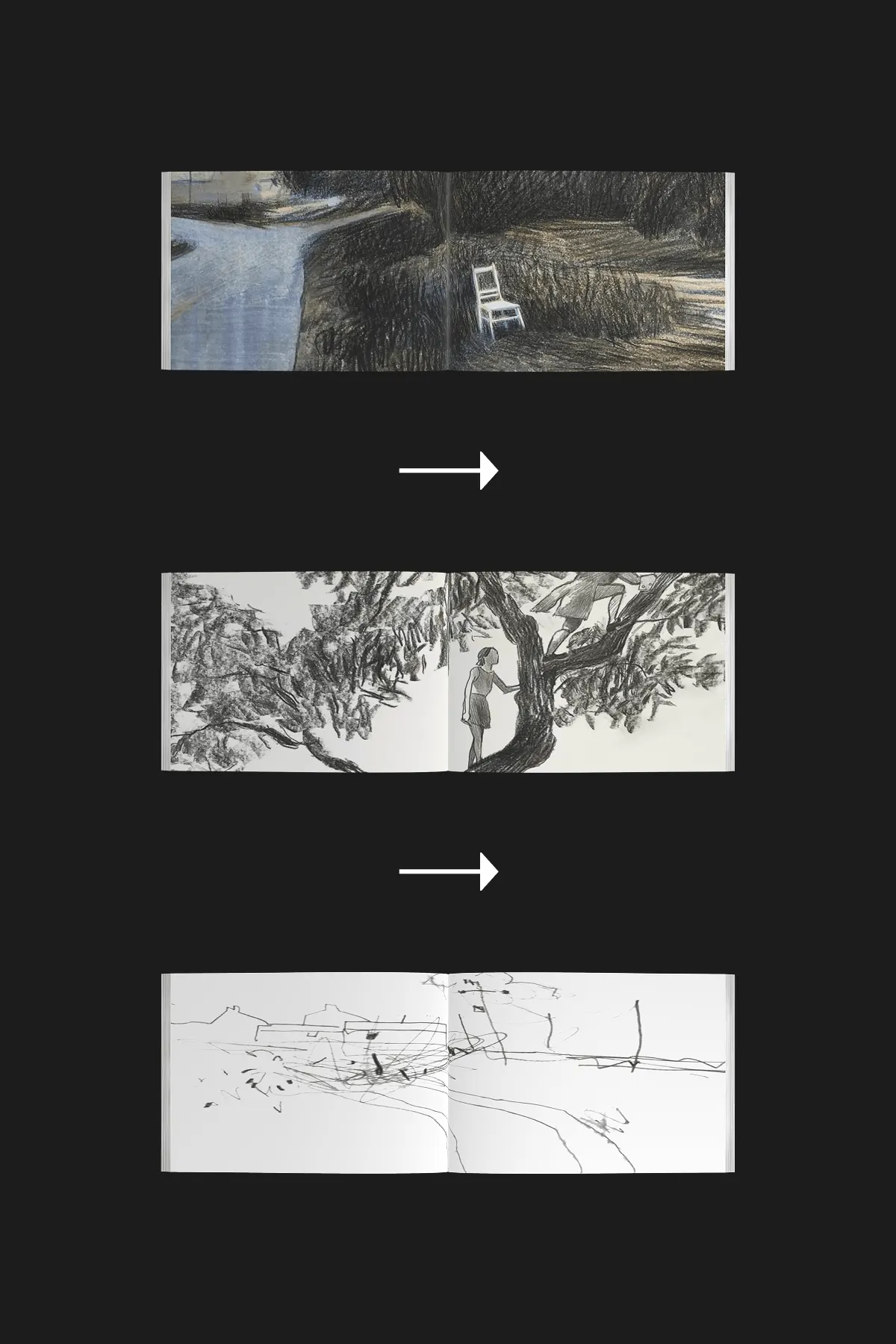
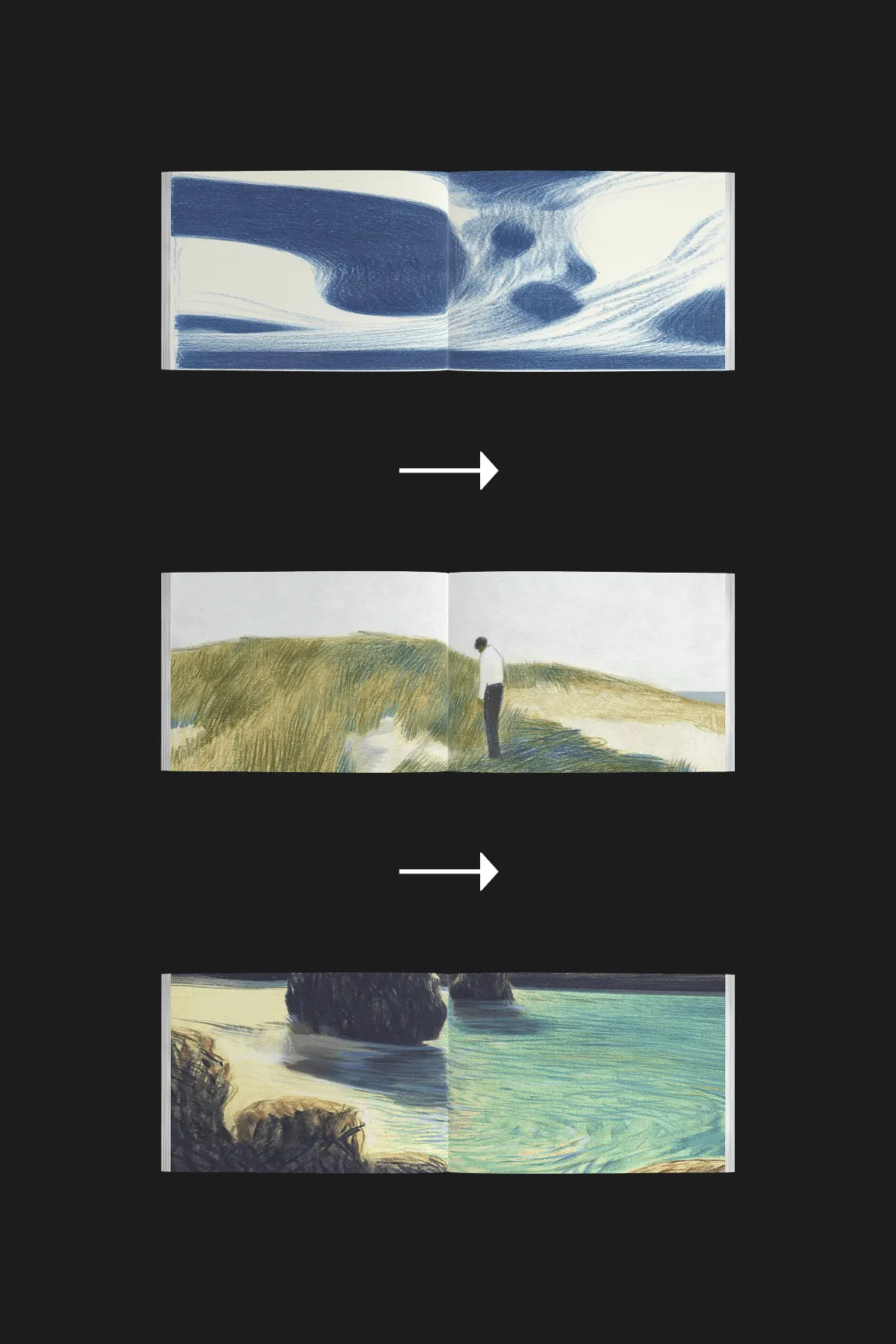
The book’s narrative and visual arc. Jason finds his father’s diary → follows his father through the years before his own birth → returns to the present → begins his own diary. Let’s divide the book into eight parts:

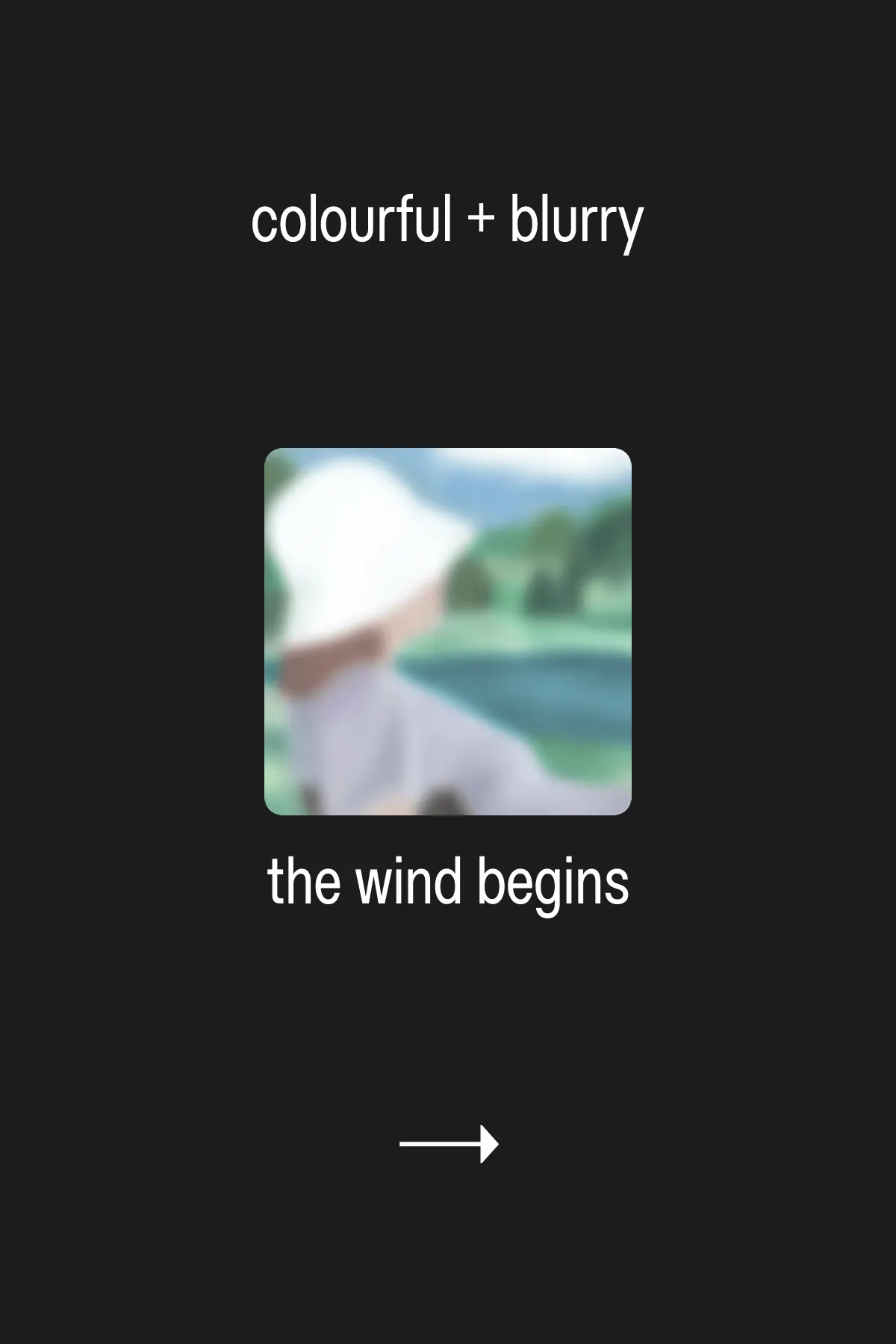
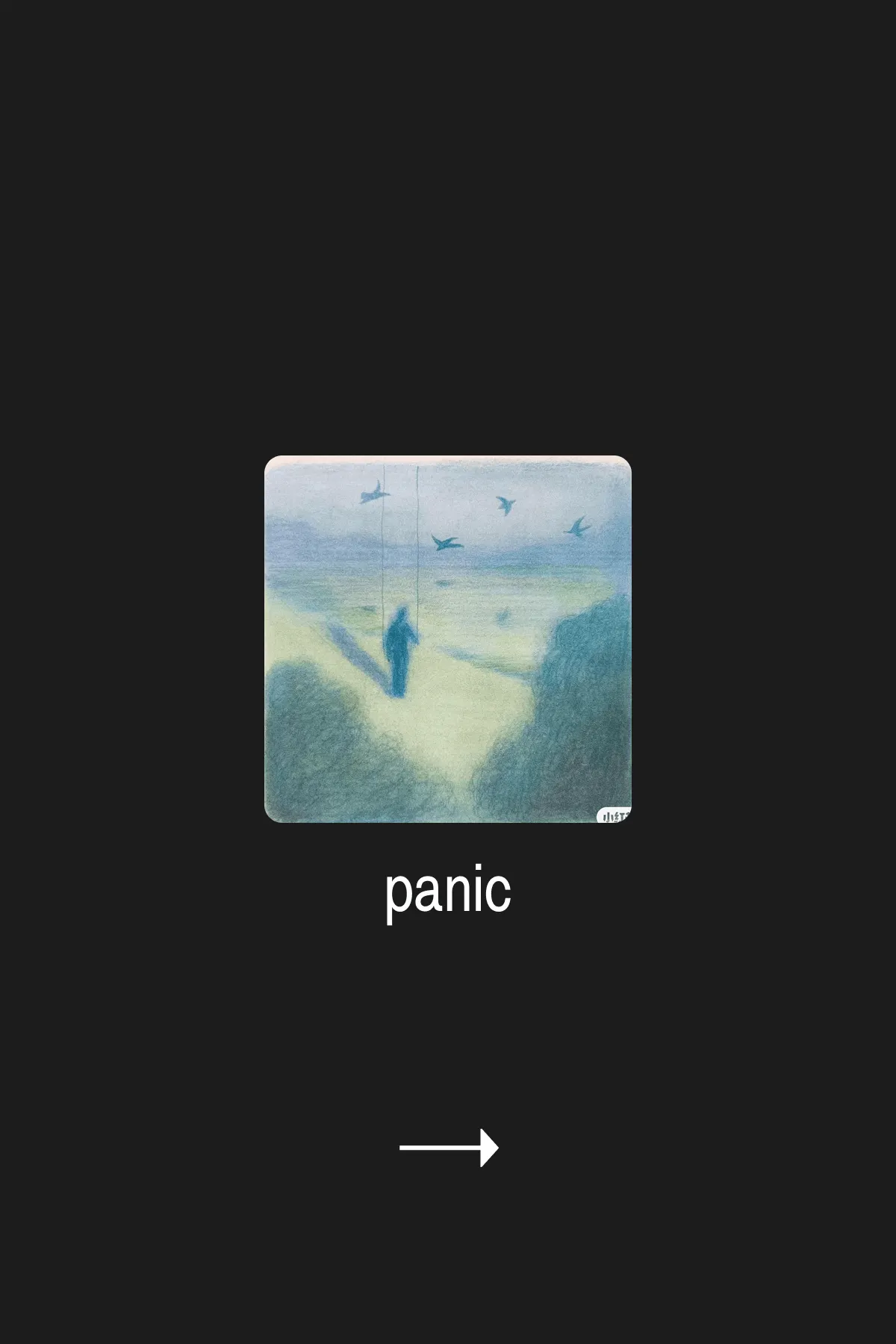
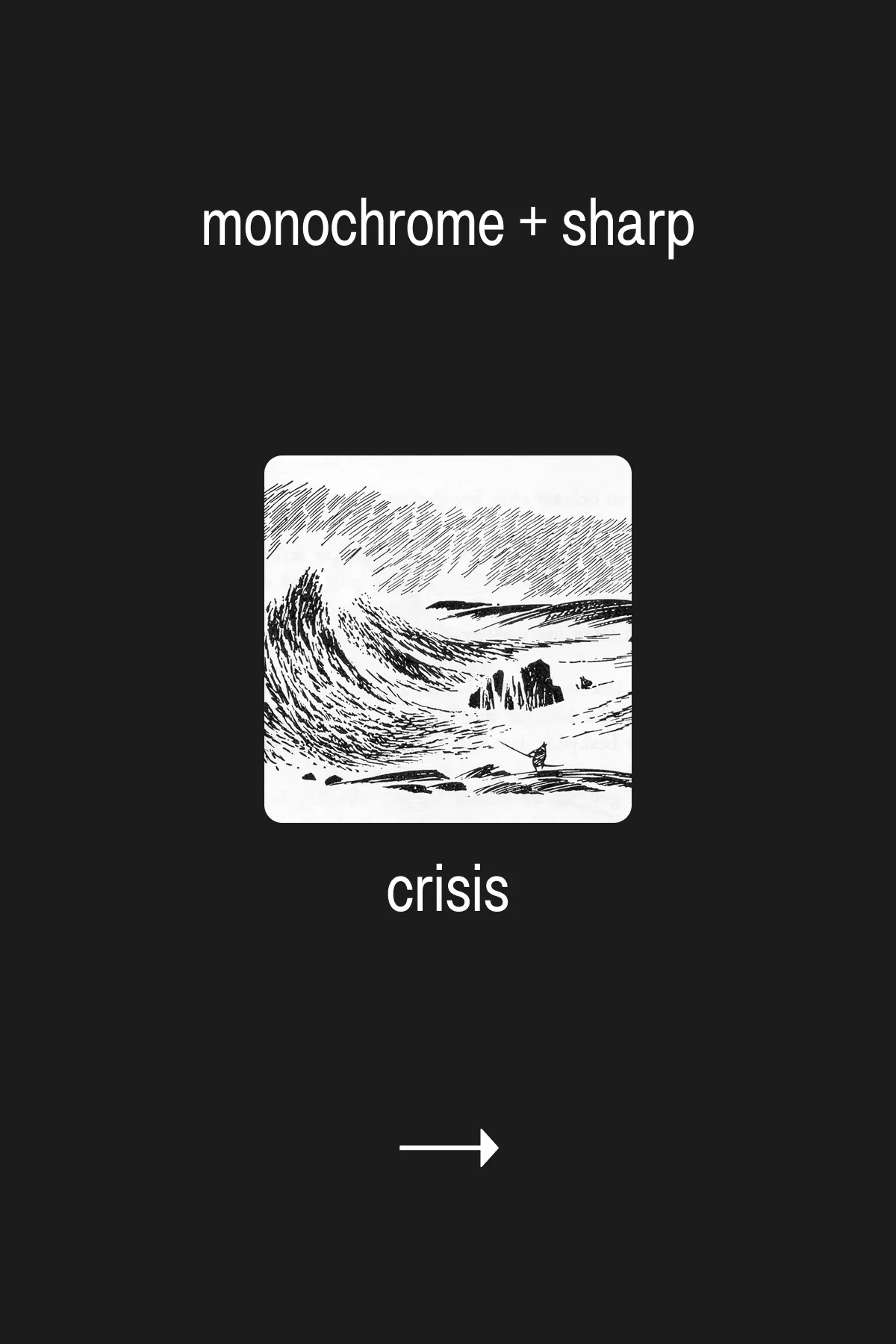
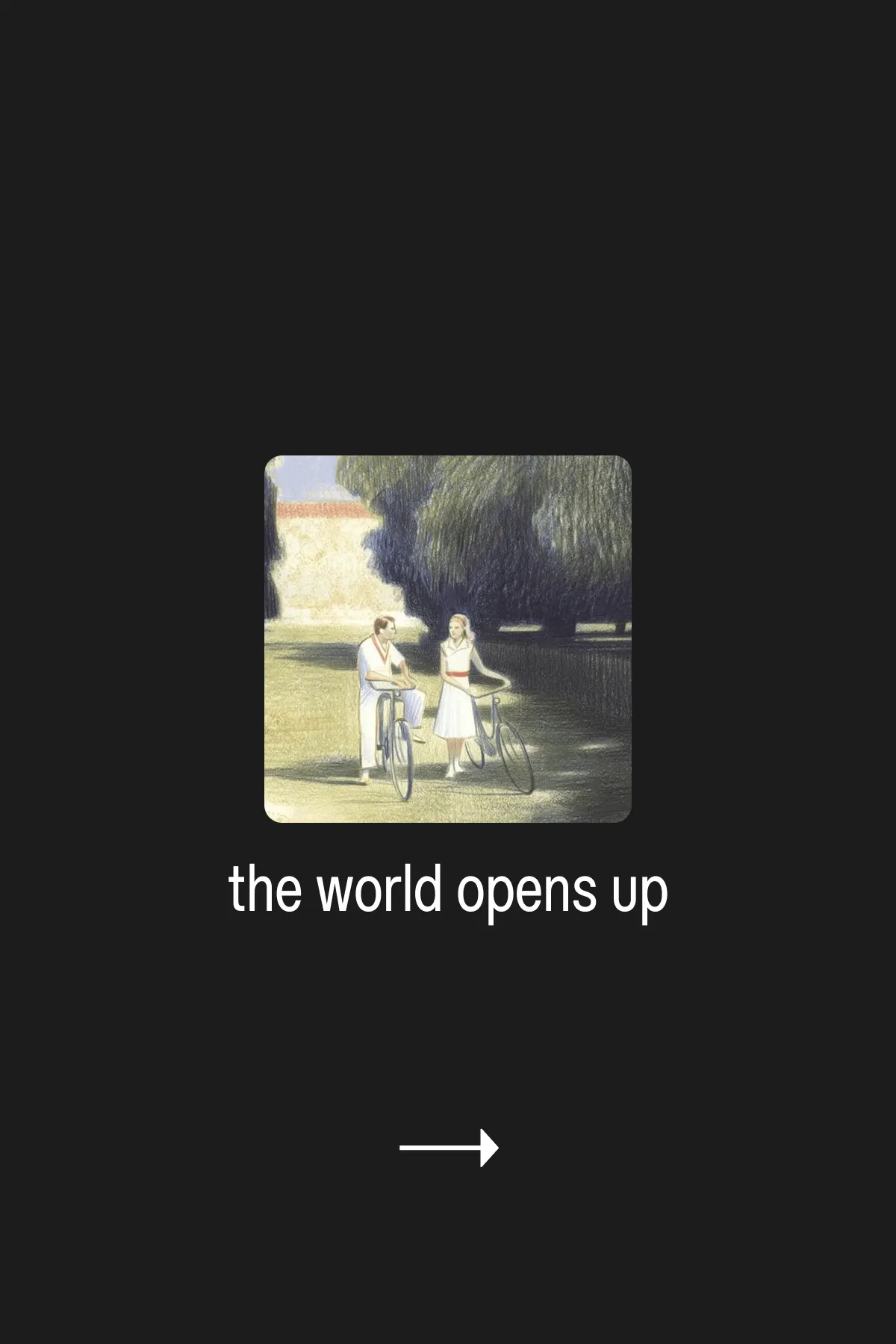
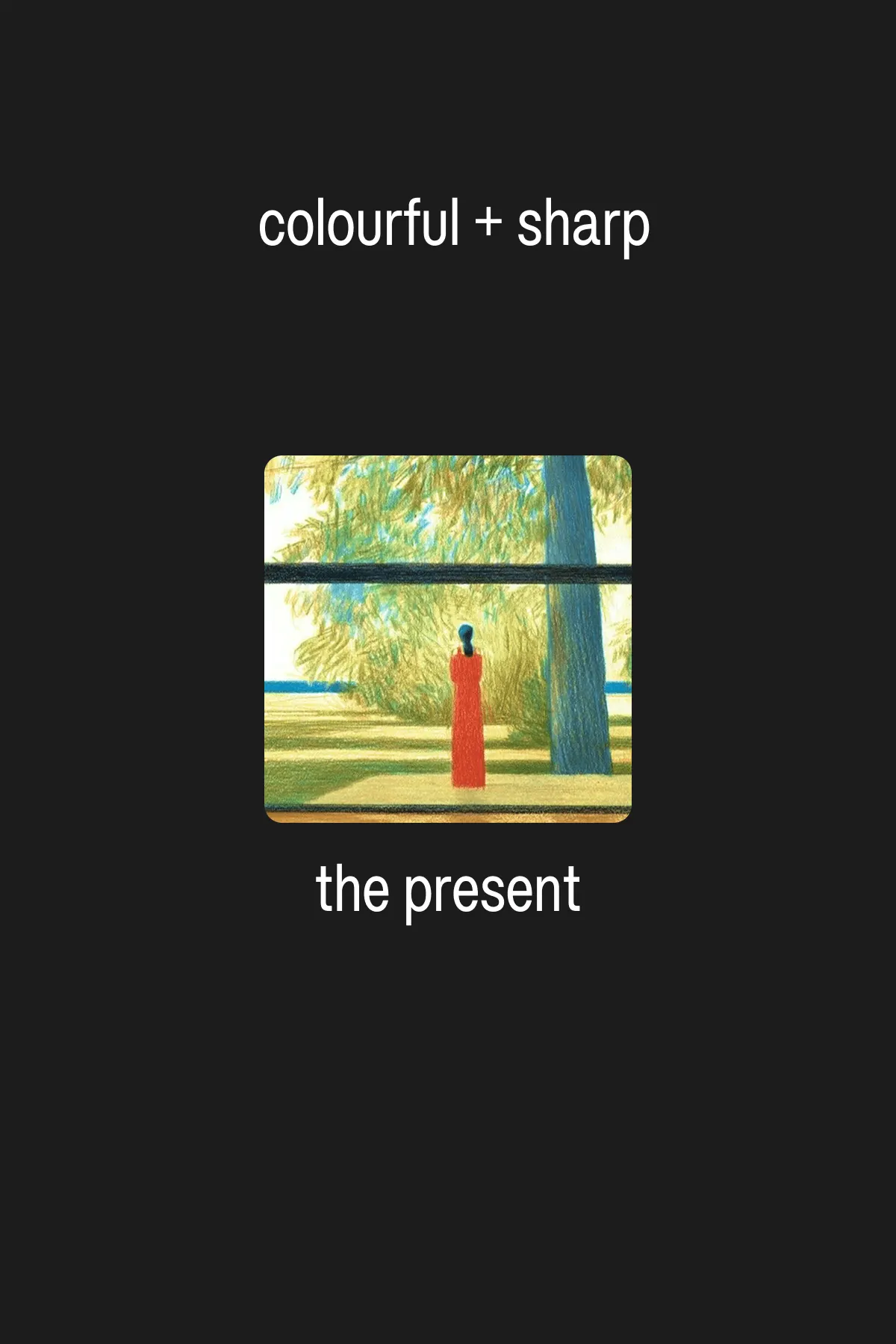
the wind begins → panic → the world changes → life goes into hiding → children of the wind → crisis → the world opens up → the present

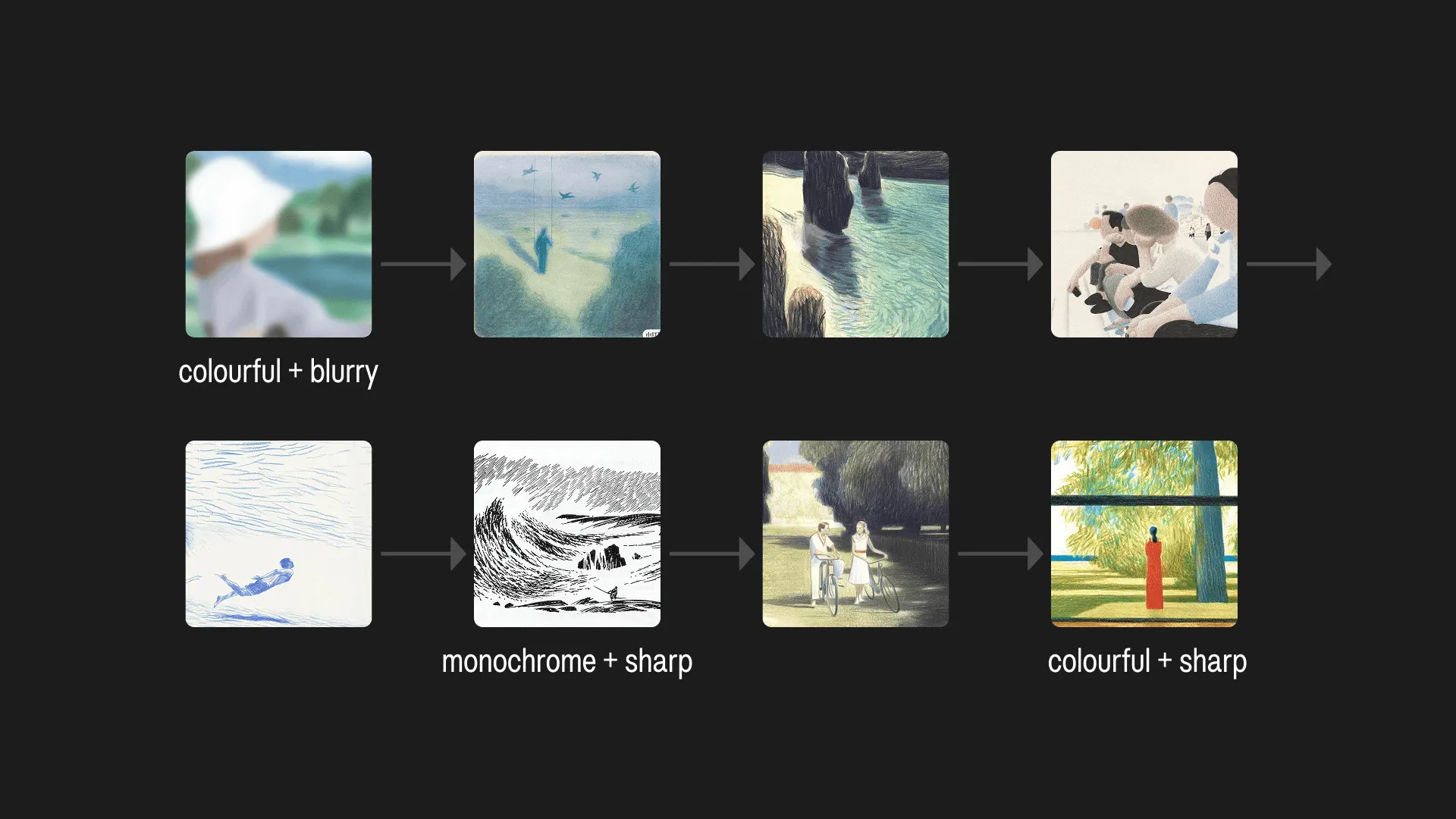
colourful + blurry / monochrome + sharp / colourful + sharp

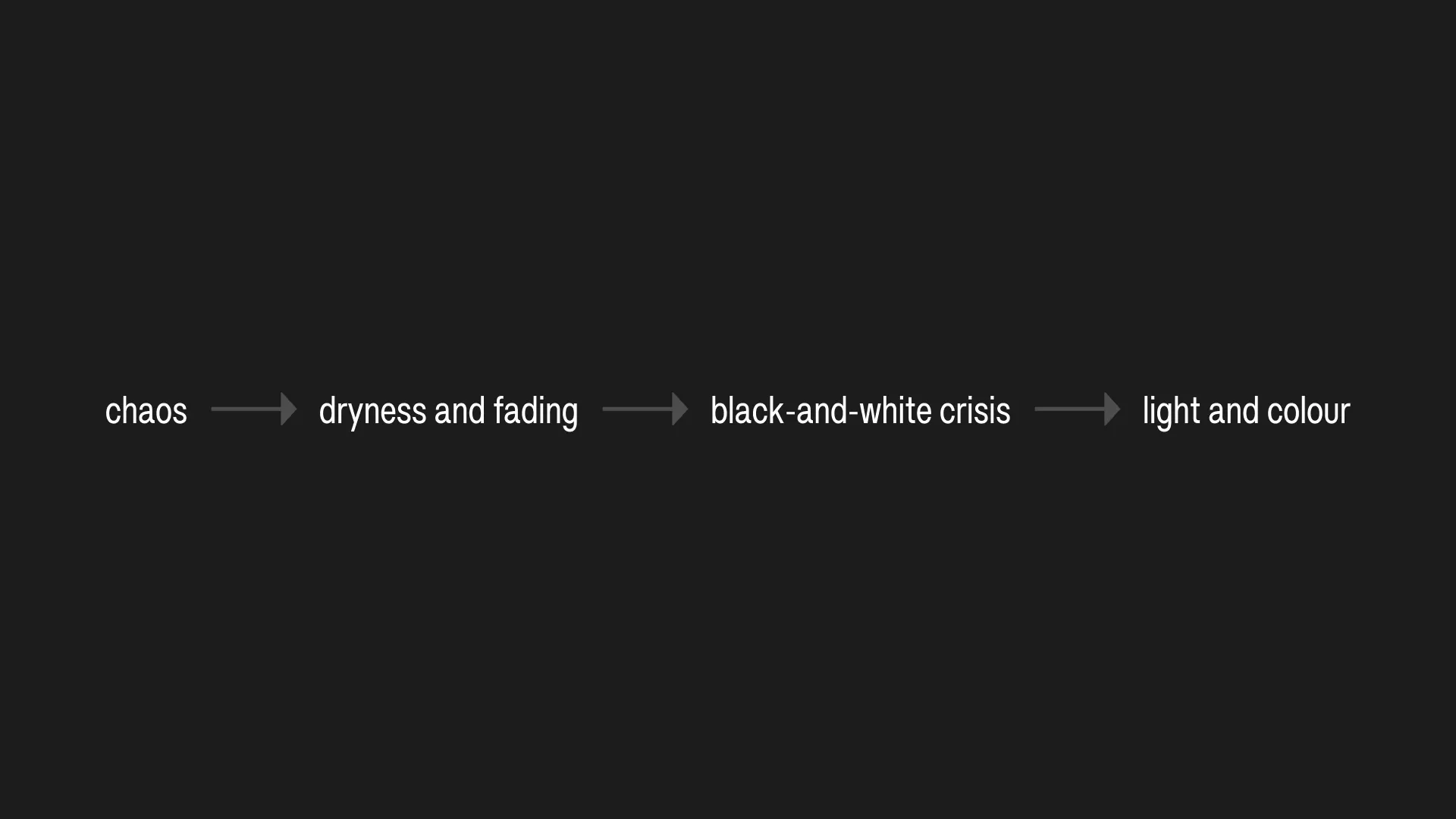
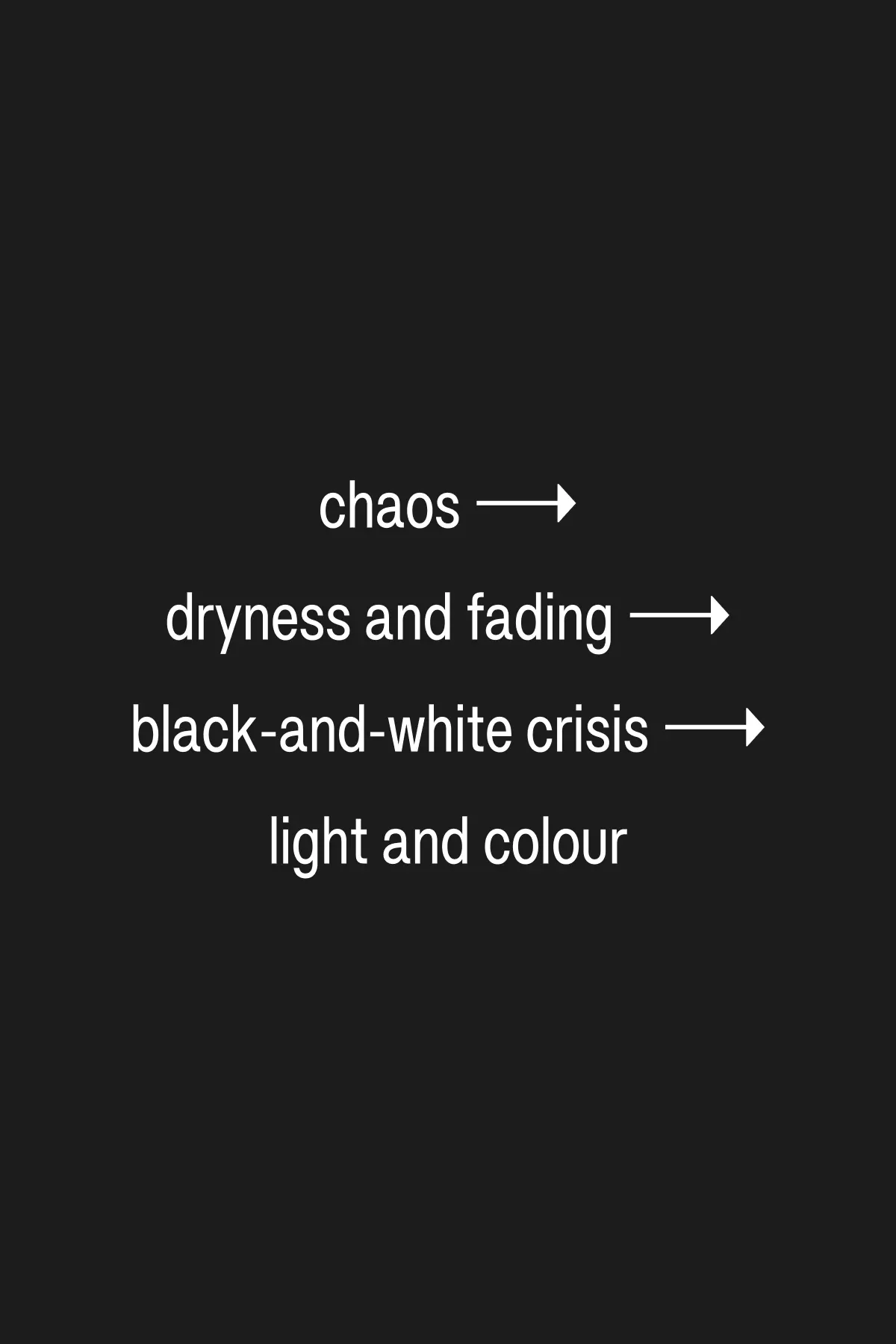
chaos → dryness and fading → black-and-white crisis → light and colour

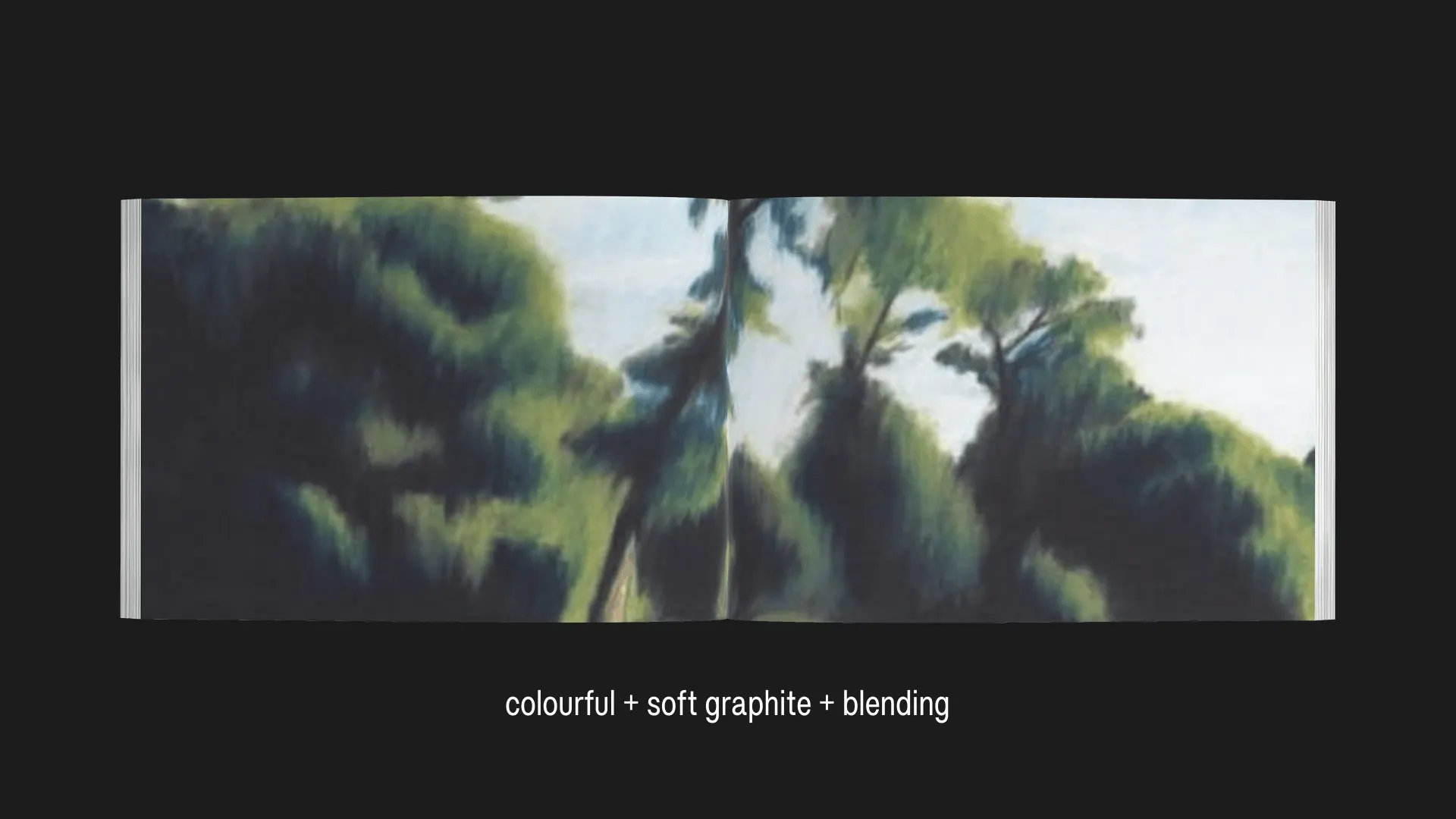
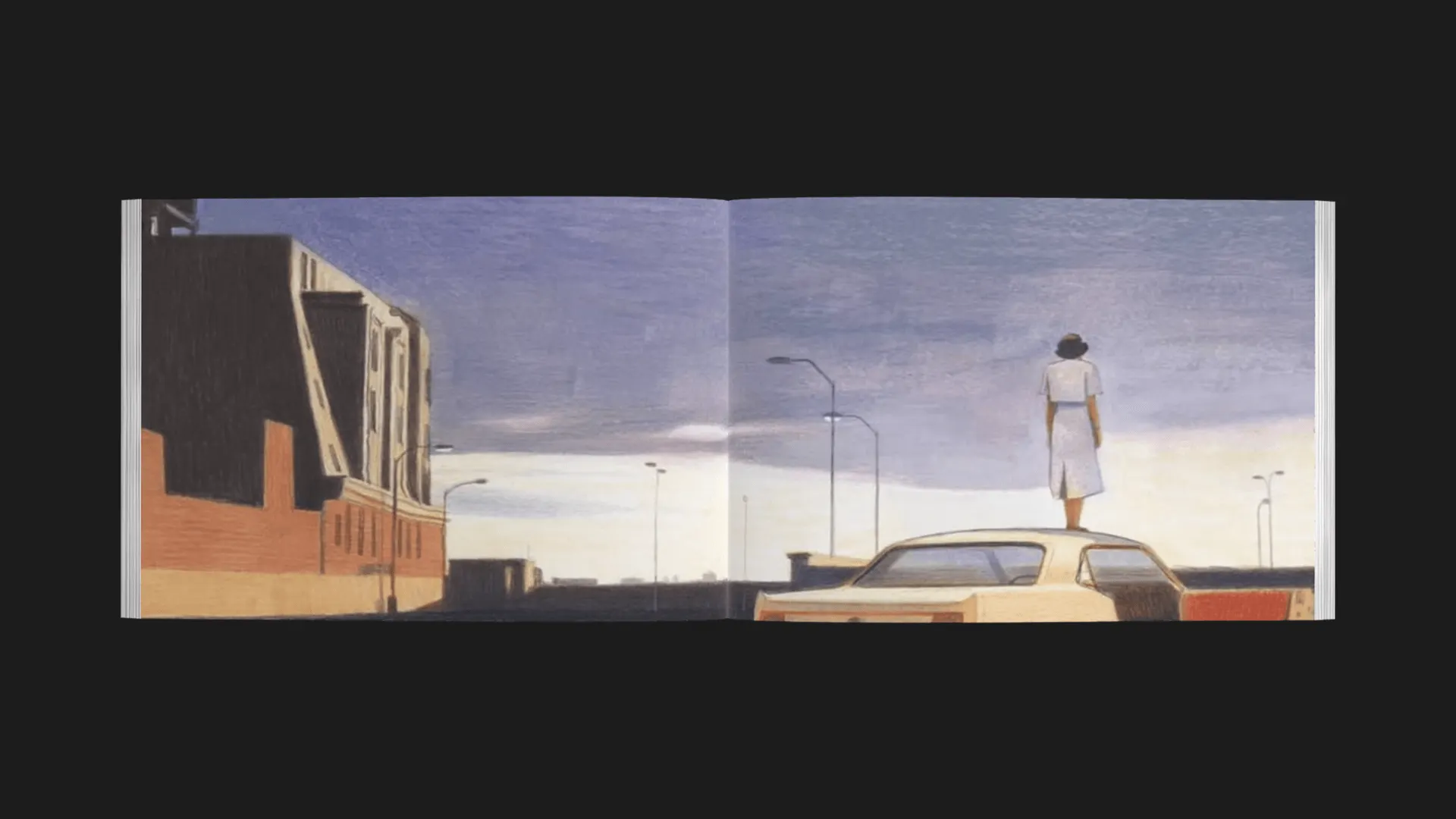
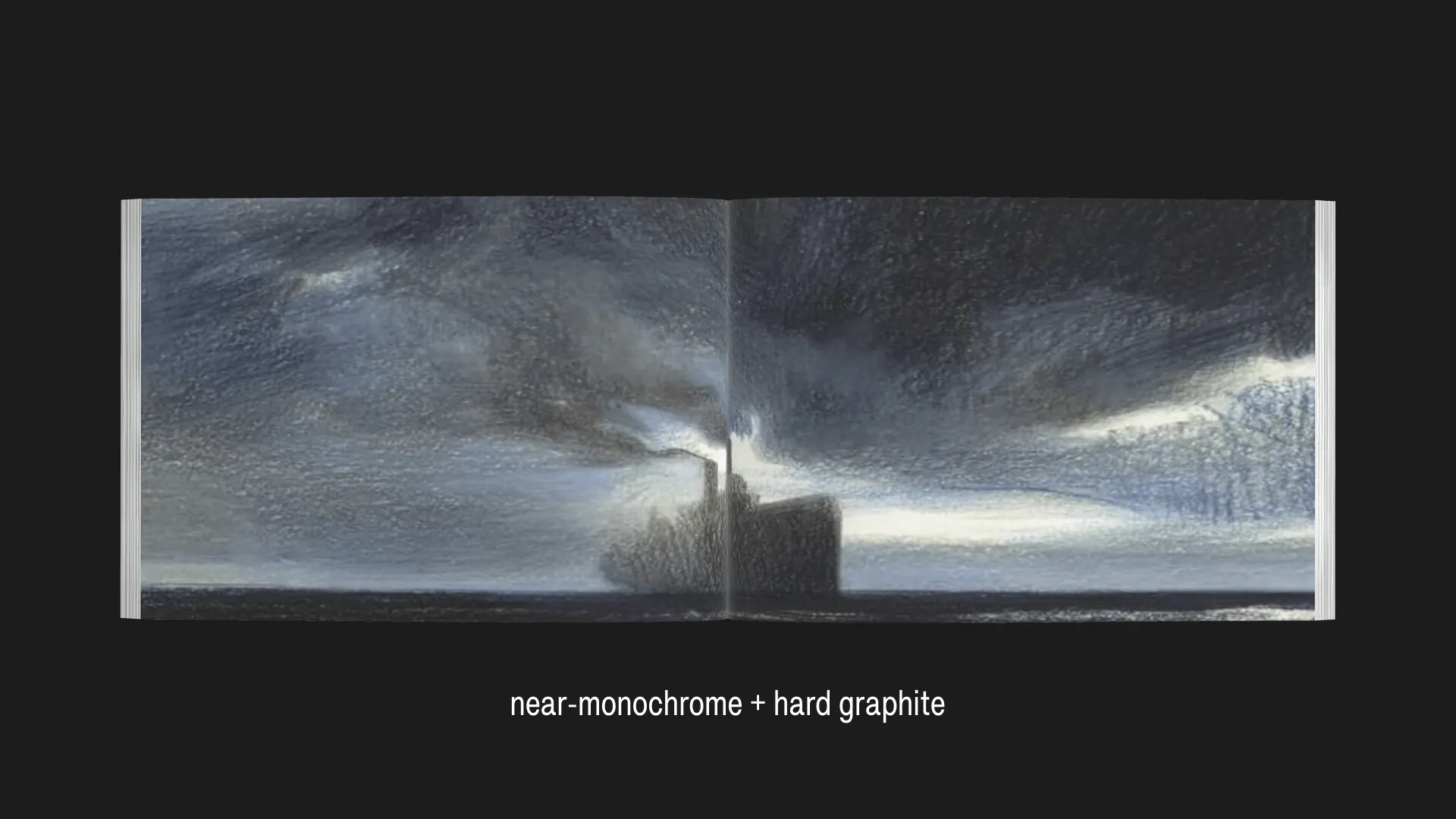
Style transformation.

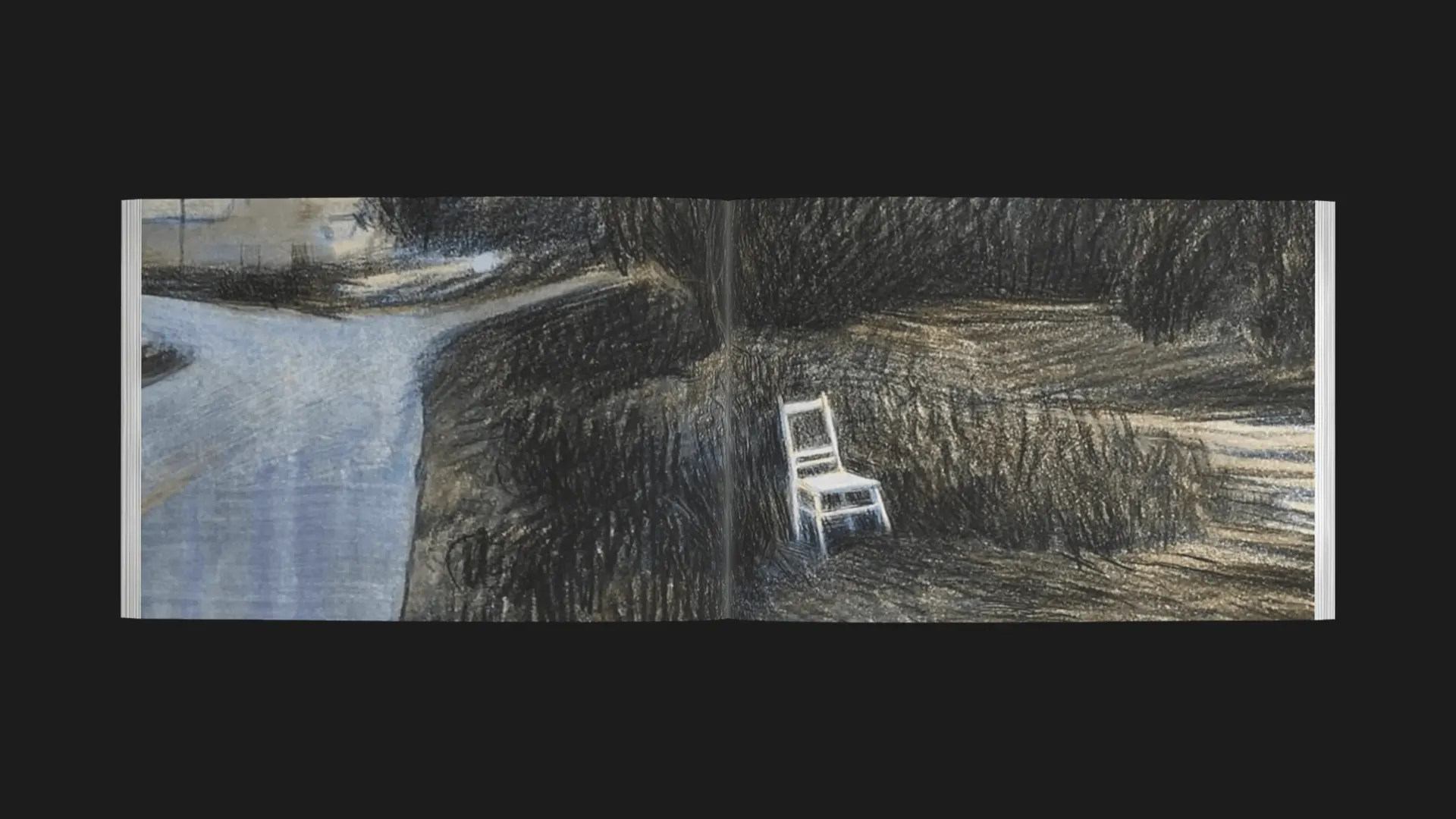
colourful + soft graphite + blending

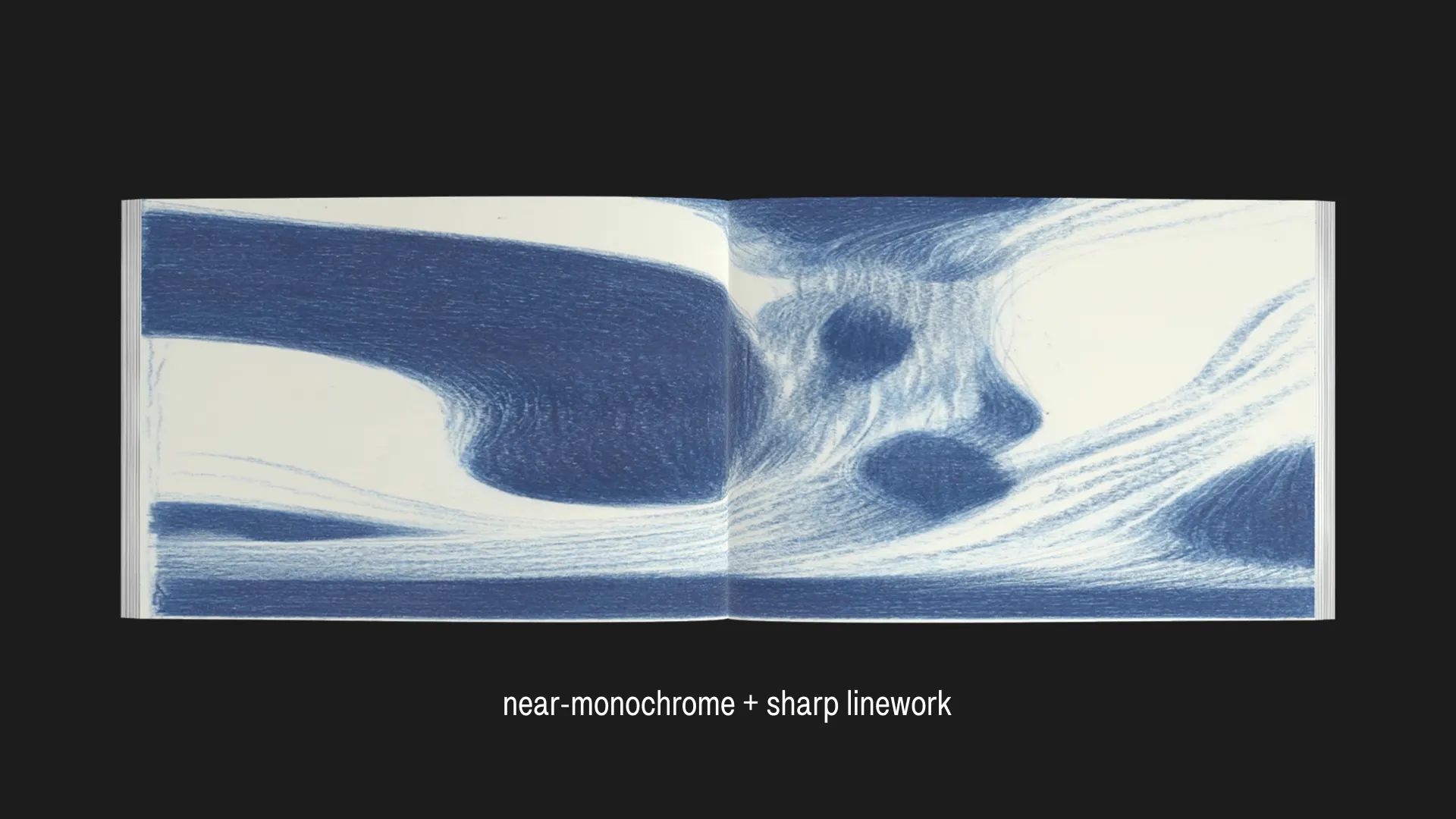
near-monochrome + hard graphite

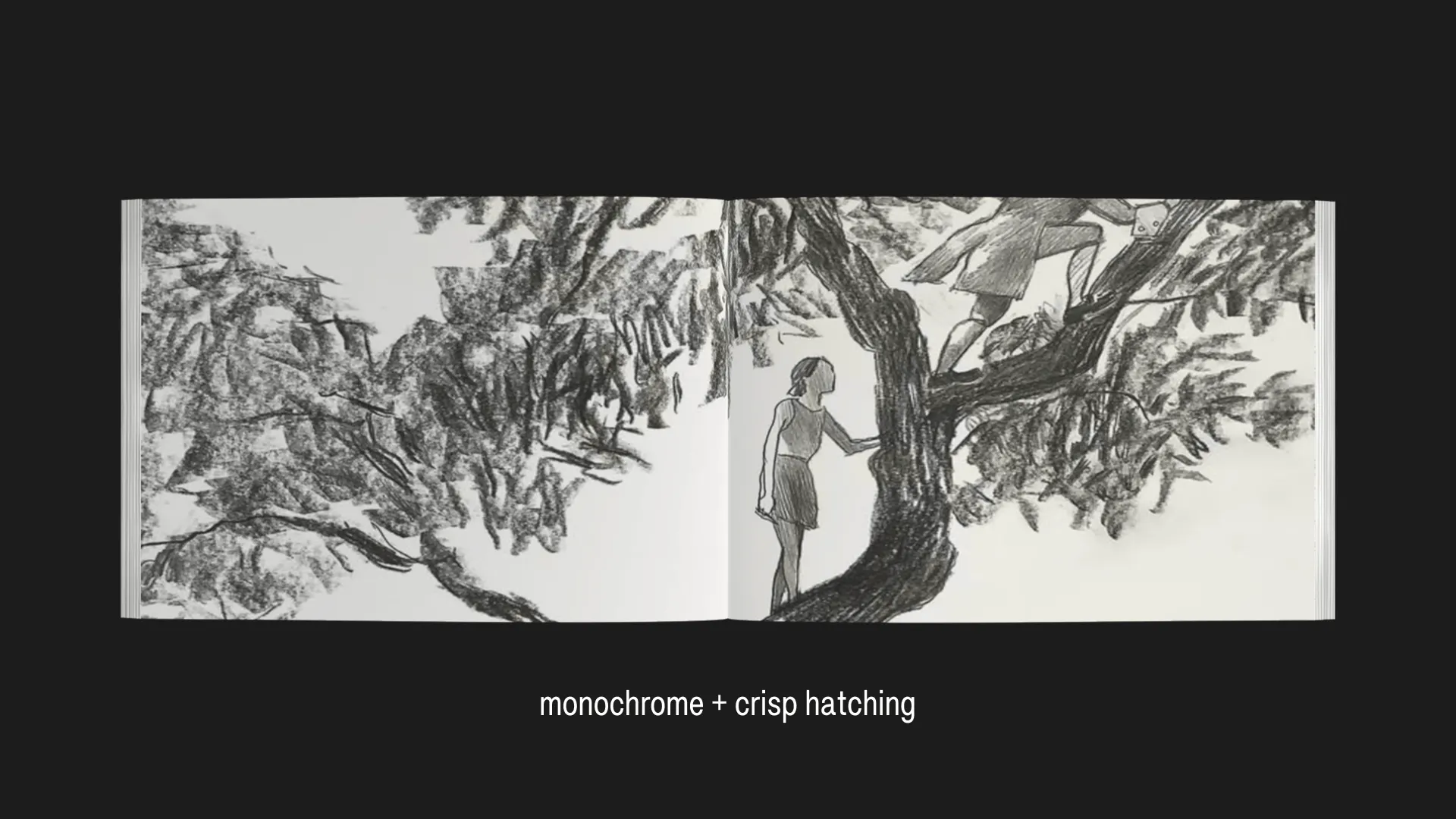
monochrome + crisp hatching

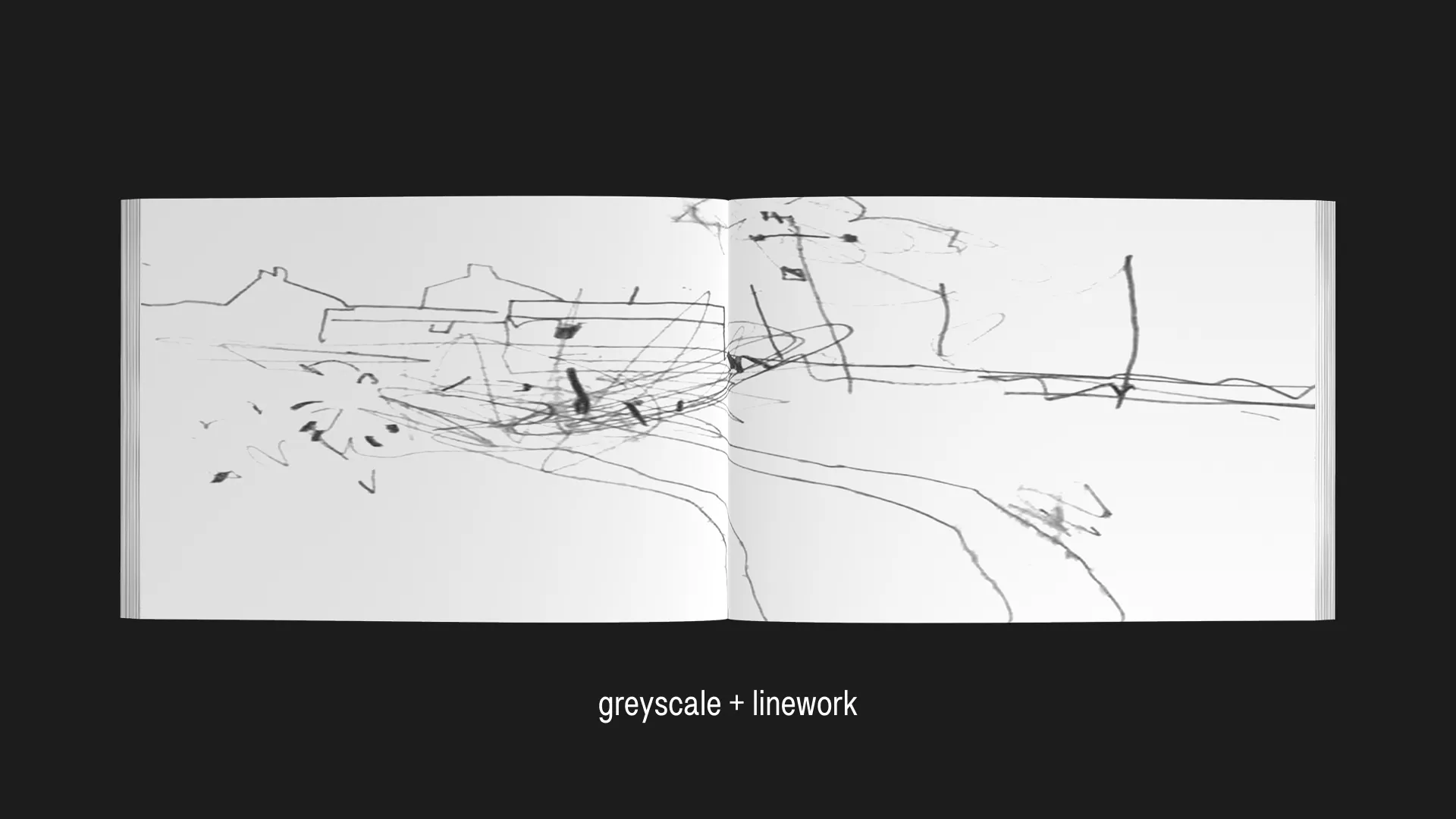
greyscale + linework

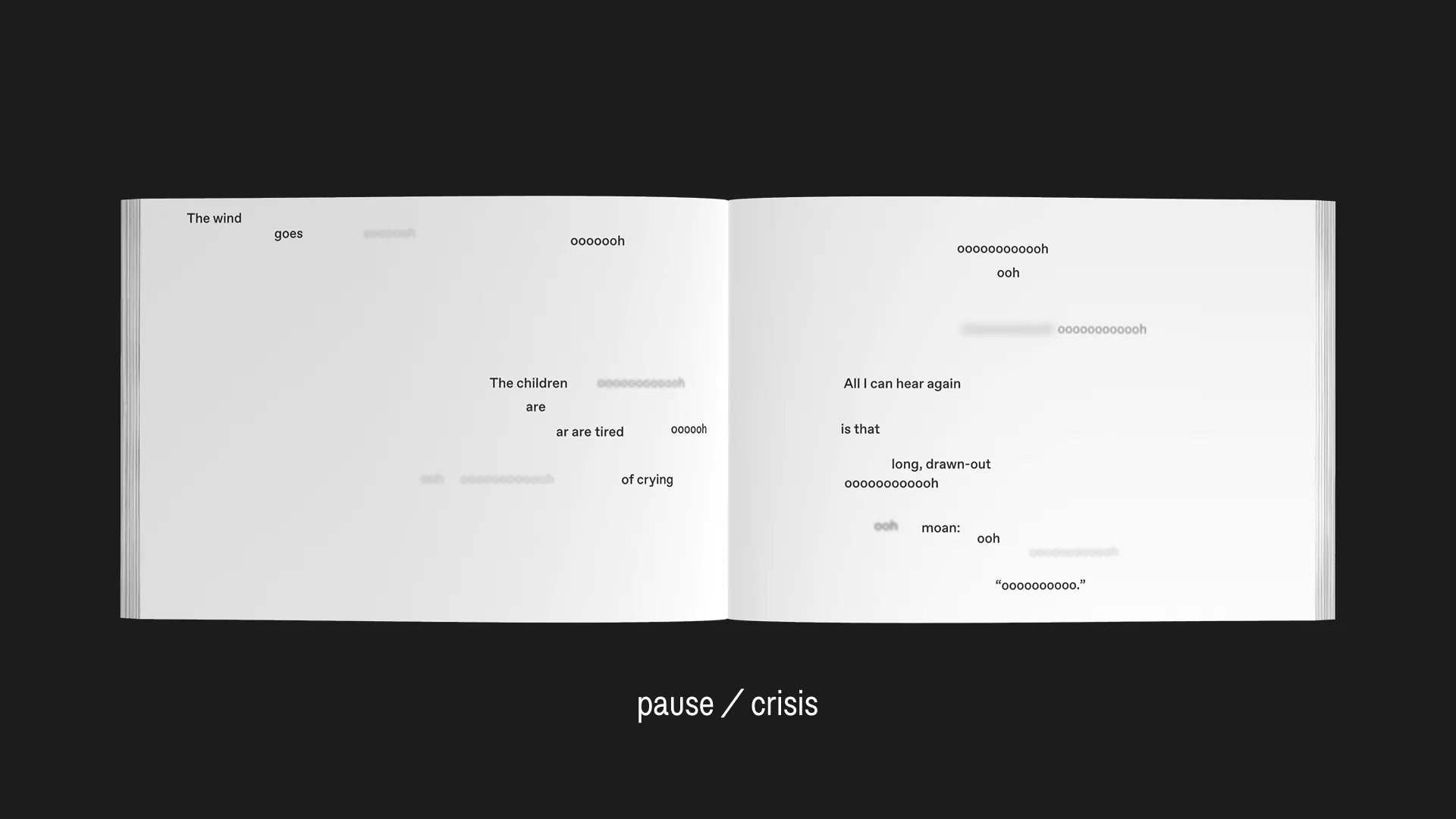
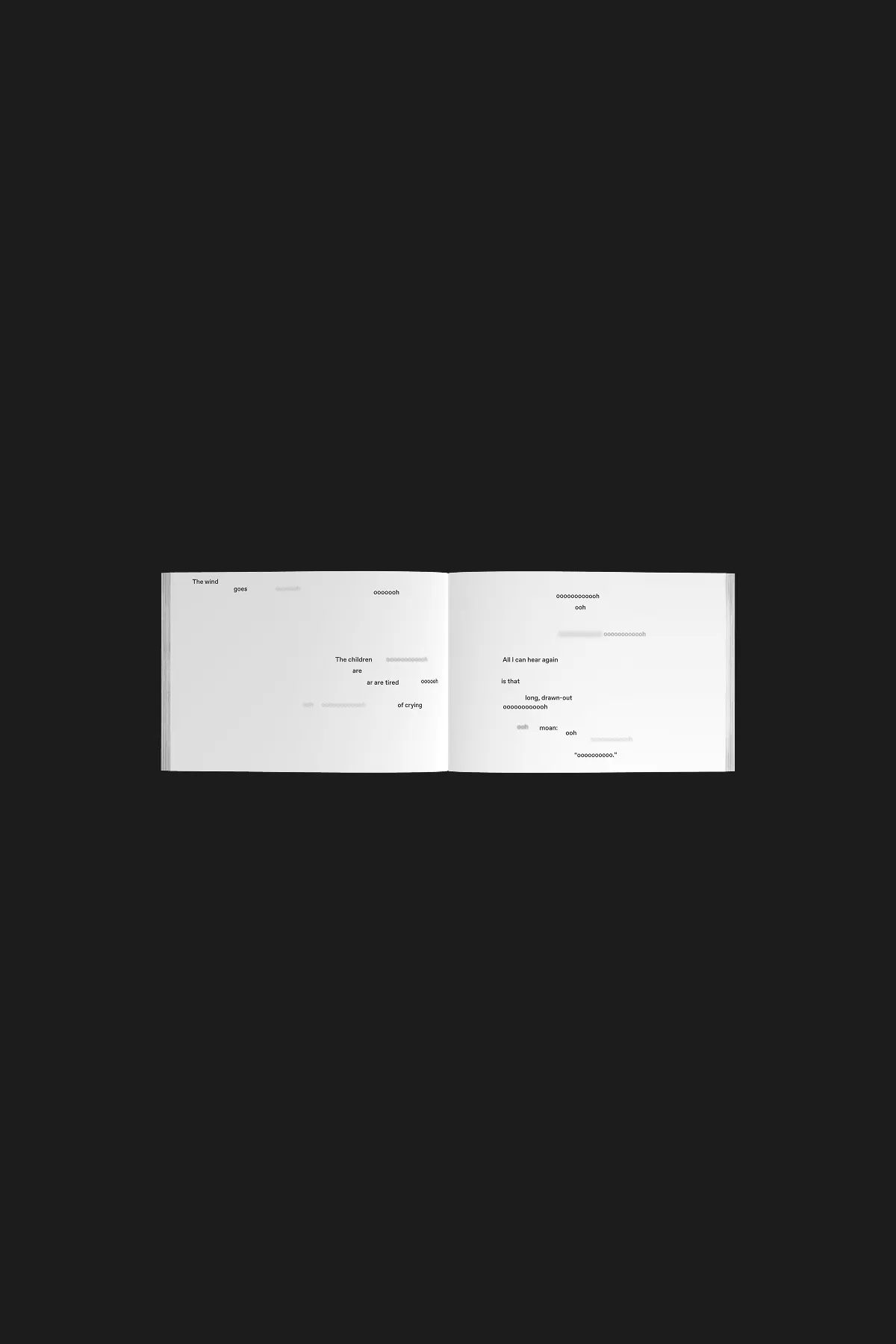
pause / crisis. On the spread: “The wind goes ooooooh… All I can hear again is that long, drawn-out moan: ooh…”

near-monochrome + sharp linework

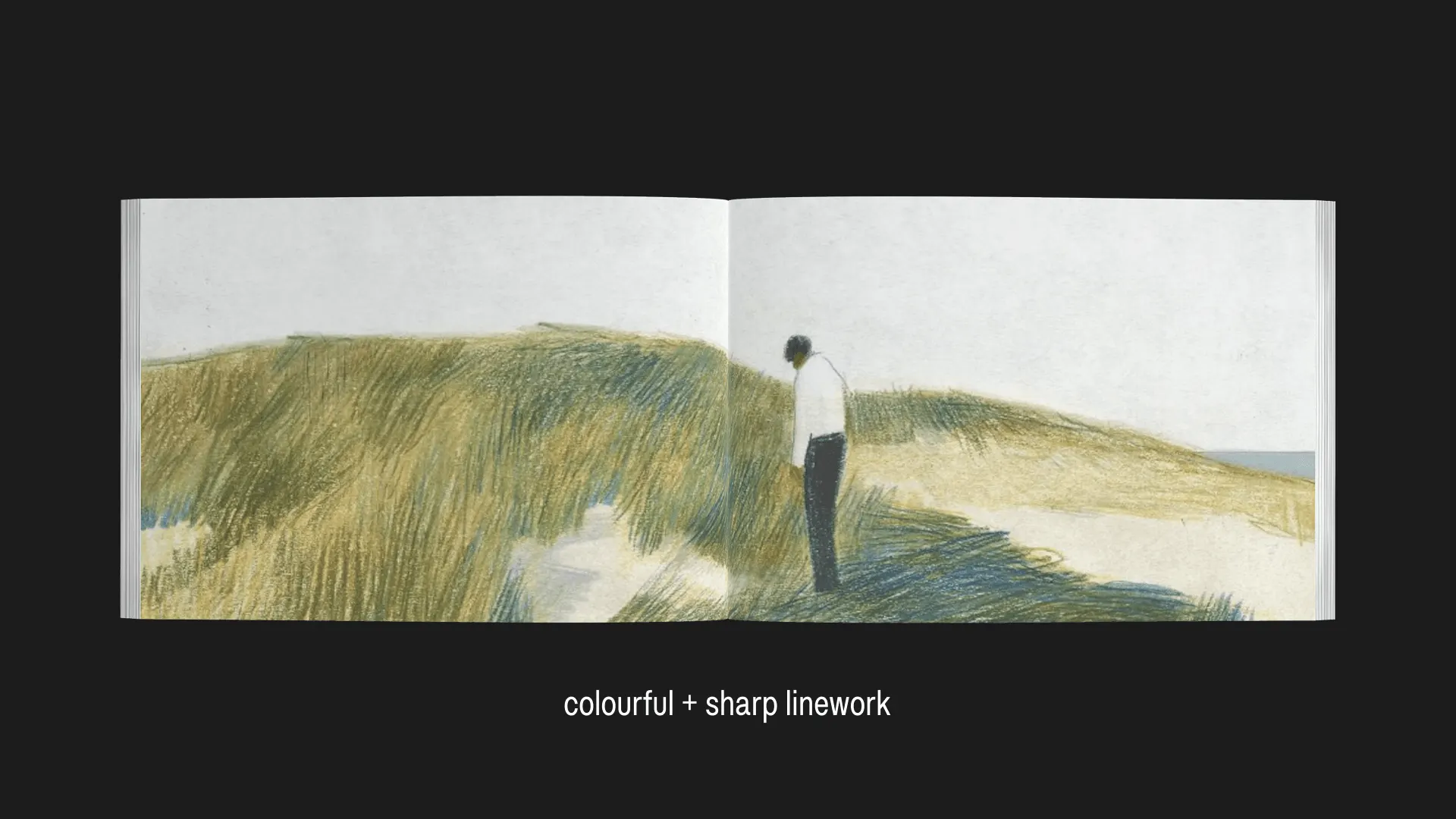
colourful + sharp linework

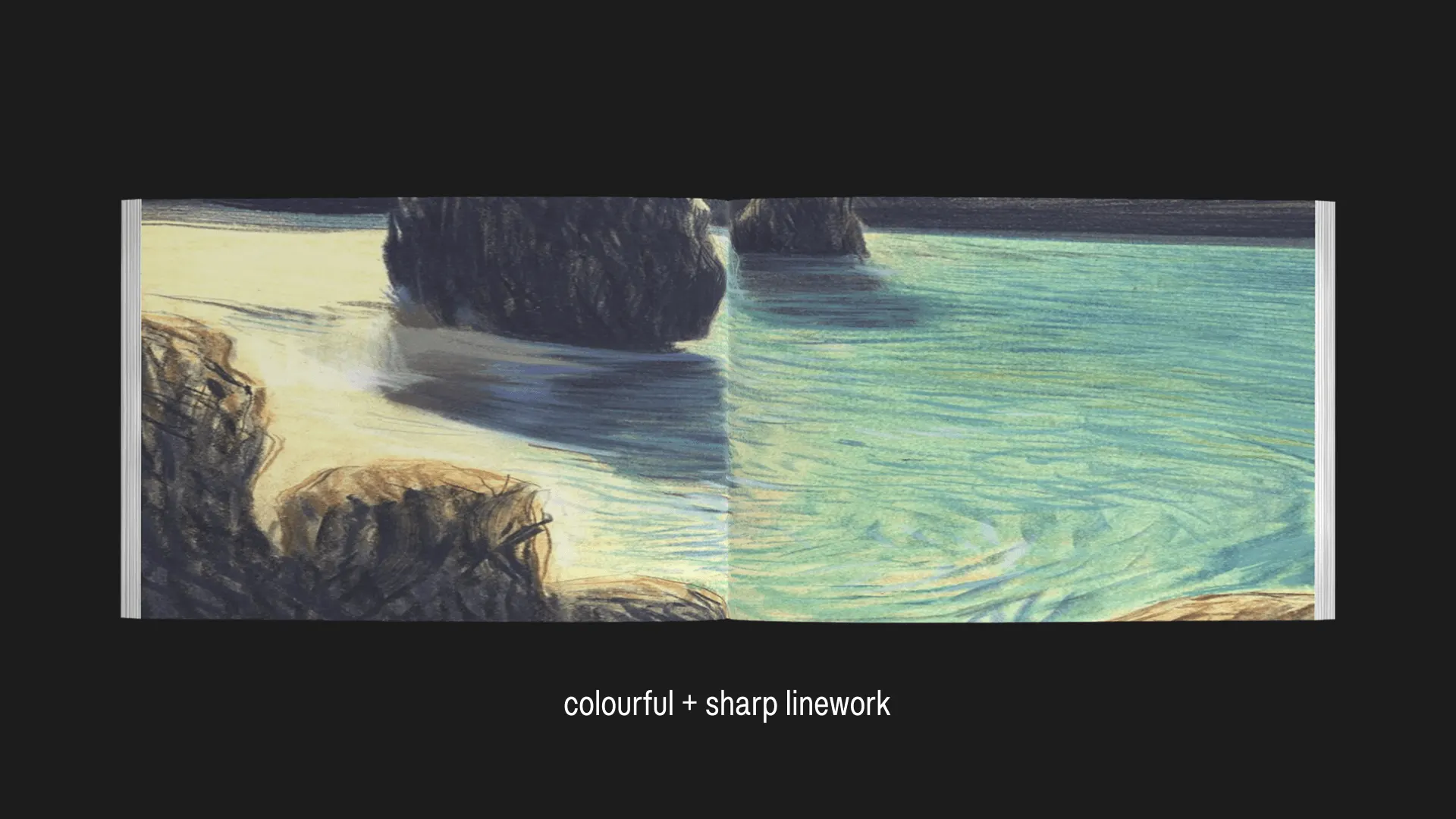
colourful + sharp linework

Completed so far: — a draft of the text / — an illustration concept. Next steps: — preparing sketches for every spread / — adapting the text / — drawing the illustrations

Other books:

The Book of Questions

Mom, do you even have
an imagination?
Mom, do you even have
an imagination?

A family book for children at the intersection
of philosophy and contemporary art
A family book for children at the intersection
of philosophy and contemporary art

Open the Cover
Vdokhnoles

Awakening the Spark,
or a Journey into the Vdokhnoles
Awakening the Spark,
or a Journey into the Vdokhnoles

A story about how friendship and
talents reveal themselves
A story about how friendship
and talents reveal themselves

Open the Cover